What numbing behaviors should I watch for?
6 min read
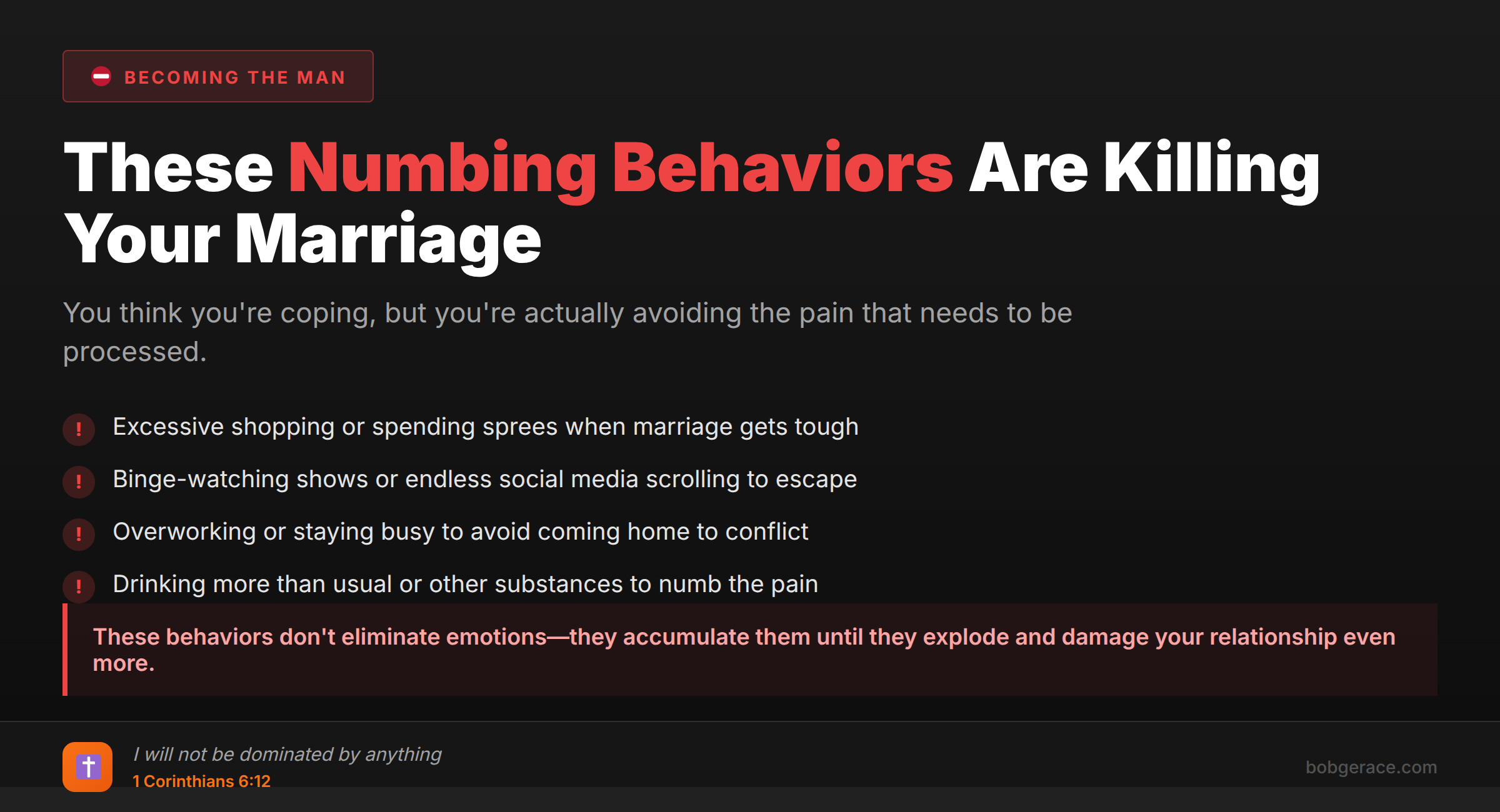
Numbing behaviors are ways we unconsciously avoid feeling difficult emotions - and they're more common than you think. Watch for patterns like excessive shopping, binge-watching shows, overworking, social media scrolling, drinking more than usual, or throwing yourself into busyness to avoid facing pain in your marriage. These behaviors aren't inherently bad, but when they become your go-to response to marital stress, they prevent real healing. Instead of processing hurt, disappointment, or fear, you're pushing it down. The problem? Those emotions don't disappear - they accumulate and eventually surface in ways that damage your relationship even more.
The Full Picture
Let me be straight with you - we all numb sometimes. When your marriage is struggling, your nervous system is looking for relief, and numbing behaviors provide temporary escape from emotional overwhelm.
Common numbing patterns include:
- Digital numbing: Endless social media scrolling, binge-watching series, online shopping sprees - Substance numbing: Extra glasses of wine, prescription medications beyond necessity, food binges or restriction - Activity numbing: Over-exercising, workaholic tendencies, over-scheduling yourself - Social numbing: Avoiding intimacy, withdrawing from friends, or conversely, becoming a social butterfly to avoid being alone - Shopping numbing: Retail therapy that goes beyond normal purchasing patterns - Perfectionism numbing: Obsessive cleaning, controlling your environment, or hyperfocus on appearance
Here's what's tricky: many of these behaviors look productive or even healthy from the outside. Your friends might praise your work ethic or discipline, not realizing you're running from pain.
The key indicator isn't the behavior itself - it's the compulsive quality and the emotional state driving it. When you catch yourself reaching for these activities automatically when you feel hurt, angry, or scared about your marriage, that's your cue.
Numbing creates a cycle: temporary relief followed by guilt or shame, which then requires more numbing. Meanwhile, the real issues in your marriage remain unaddressed, and intimacy suffers because you're not fully present or emotionally available.
What's Really Happening
From a clinical perspective, numbing behaviors are adaptive responses that have outlived their usefulness. When we experience chronic stress in marriage, our nervous system seeks homeostasis through these temporary relief mechanisms.
What's happening neurologically is fascinating: numbing behaviors trigger dopamine release, providing momentary pleasure or distraction. This creates a reinforcement loop where your brain begins to associate these activities with emotional regulation, even though they're actually dysregulating in the long term.
The concerning pattern I see with wives is that numbing often coincides with what we call 'emotional labor fatigue.' You've been managing everyone else's feelings, carrying the mental load of the household, and trying to fix your marriage - all while your own emotional needs go unmet.
Numbing becomes a form of emotional rebellion: 'I can't control my husband's behavior, but I can control this purchase/this glass of wine/this Netflix binge.' It's an attempt to reclaim agency when you feel powerless in your relationship.
However, research shows that avoidant coping strategies (like numbing) correlate with increased depression, anxiety, and relationship dissatisfaction over time. The emotions you're avoiding don't disappear - they intensify and often manifest as physical symptoms or explosive emotional episodes.
Recognition is the first step toward healing. When you can identify your numbing patterns without self-judgment, you can begin to understand what emotions are driving these behaviors and address them more directly.
What Scripture Says
Scripture doesn't condemn our humanity or our need for comfort - but it does call us to find our ultimate comfort in God rather than temporary fixes that leave us emptier than before.
"All things are lawful for me, but not all things are helpful. All things are lawful for me, but I will not be dominated by anything." (1 Corinthians 6:12) Paul's wisdom here cuts right to the heart of numbing behaviors. The question isn't whether something is sinful, but whether it's helpful and whether it has power over you.
"He heals the brokenhearted and binds up their wounds." (Psalm 147:3) God's desire is to heal your wounds, not just cover them up. When we numb, we're essentially putting a band-aid over a wound that needs proper treatment. Healing requires feeling.
"Come to me, all who labor and are heavy laden, and I will give you rest." (Matthew 11:28) Jesus offers genuine rest and relief - not the counterfeit rest of numbing behaviors that leave you more exhausted. True rest comes through surrender and connection with God.
"Be strong and courageous. Do not fear or be in dread of them, for it is the Lord your God who goes with you. He will not leave you or forsake you." (Deuteronomy 31:6) The courage to face difficult emotions comes from knowing you're not facing them alone.
"The Lord is near to the brokenhearted and saves the crushed in spirit." (Psalm 34:18) Your pain doesn't repel God - it attracts His presence. When you numb, you miss opportunities to experience His nearness in your suffering.
God created you with emotions for a purpose. Even difficult emotions carry information about your needs, boundaries, and areas that need His healing touch.
What To Do Right Now
-
1
Track your patterns for one week - note when, where, and what emotions trigger your numbing behaviors
-
2
Create a 'pause protocol' - when you feel the urge to numb, stop and ask 'What am I really feeling right now?'
-
3
Develop healthy alternatives for each numbing behavior (call a friend instead of scrolling, take a walk instead of shopping)
-
4
Practice the 'name it to tame it' technique - verbally identify the emotion before you act on the numbing urge
-
5
Set up accountability with a trusted friend who can check in on your emotional health weekly
-
6
Schedule dedicated time to feel your feelings - even 10 minutes daily of honest emotional processing can reduce numbing urges
Related Questions
- What is self-care in crisis?
- What does healthy coping look like?
- How do I regulate my own system?
- What does my body need right now?
- How do I process without a toxic support system?
- What does healthy venting vs. rumination look like?
- How do I not lose my mind right now?
- What is 'betrayal trauma' and do I have it?
- Why do I feel physically sick?
- How do I function when my body won't calm down?
Also find Bob on
Subscribe for weekly videos on Christian marriage.
Not Sure If You're Numbing?
A coach who knows your marriage can spot the patterns you can't see in yourself. You don't have to figure this out alone.
Talk to Bob →