What does healthy coping look like?
6 min read
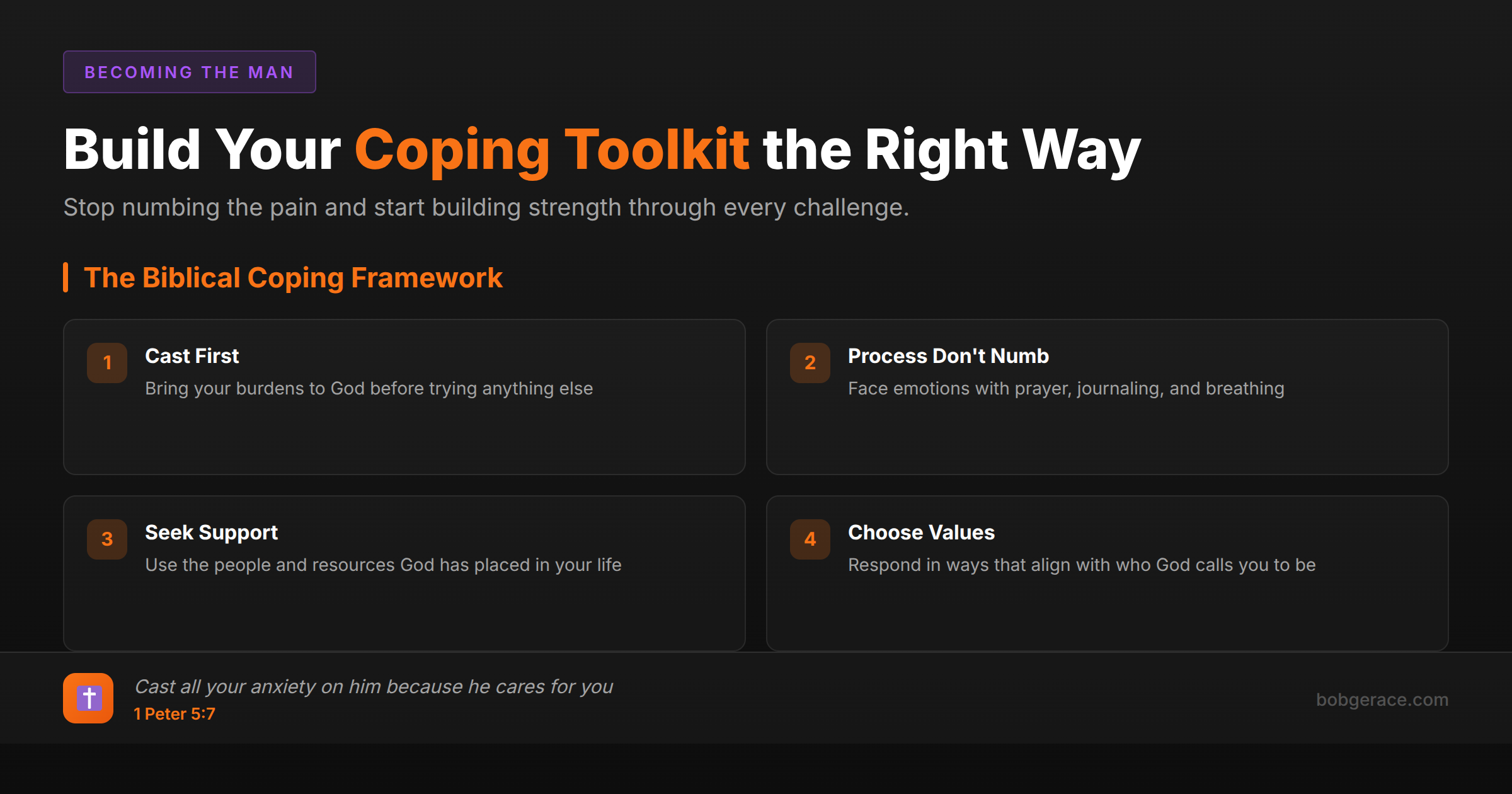
Healthy coping means having a toolkit of constructive strategies that help you process emotions, manage stress, and maintain stability during difficult times. It's not about avoiding problems or numbing pain, but learning to move through challenges in ways that strengthen rather than weaken you and your relationships. Healthy coping includes both emotional regulation techniques (like prayer, journaling, and breathing exercises) and practical problem-solving skills. It means knowing when to seek support, setting appropriate boundaries, and choosing responses that align with your values. Most importantly, it involves turning to God as your primary source of strength while also utilizing the resources and people He's placed in your life.
The Full Picture
Healthy coping isn't a one-size-fits-all approach—it's a personalized collection of strategies that help you navigate life's inevitable challenges without compromising your well-being or relationships. Think of it as building emotional resilience muscles that get stronger with practice.
Physical Coping involves caring for your body as the temple God gave you. This means regular sleep, proper nutrition, movement, and recognizing how physical health directly impacts your emotional capacity. When you're physically depleted, everything feels harder to handle.
Emotional Coping includes developing awareness of your feelings without being controlled by them. It's learning to sit with discomfort, process grief appropriately, and express emotions in healthy ways. This might involve journaling, talking with trusted friends, or simply allowing yourself to feel without immediately trying to fix or change the emotion.
Mental Coping focuses on thought patterns and perspective. It's catching negative thought spirals, challenging distorted thinking, and choosing to focus on truth rather than fear-based assumptions. This includes setting realistic expectations and practicing gratitude even in difficult seasons.
Spiritual Coping anchors everything else. It's turning to God first, not as a last resort. This means regular prayer, studying Scripture, participating in Christian community, and remembering that your ultimate security comes from Christ, not from having everything go according to plan.
Relational Coping involves knowing when and how to seek support, setting healthy boundaries, and maintaining connections that strengthen rather than drain you. It's understanding that isolation makes everything worse, while appropriate vulnerability with safe people brings healing.
What's Really Happening
From a therapeutic perspective, healthy coping mechanisms serve as regulatory systems for our nervous system. When we're stressed or triggered, our bodies naturally activate fight-or-flight responses. Healthy coping strategies help us return to a regulated state where we can think clearly and respond intentionally rather than react impulsively.
Unhealthy coping often provides temporary relief but creates long-term problems—think emotional eating, retail therapy, or conflict avoidance. These strategies might soothe anxiety in the moment but don't address underlying issues and often compound problems over time.
Healthy coping, in contrast, helps us process experiences fully rather than just managing symptoms. It involves developing distress tolerance—the ability to sit with uncomfortable emotions without immediately trying to escape them. This skill is crucial for marriage because it allows us to stay present during conflict rather than shutting down or lashing out.
Neurologically, consistent healthy coping practices literally rewire our brains. When we repeatedly choose constructive responses to stress, we strengthen neural pathways that make these responses more automatic over time. This is why developing coping skills feels difficult initially but becomes more natural with practice.
For women especially, healthy coping often involves honoring the natural rhythms and needs of your body and emotions rather than pushing through everything. It's learning to recognize your limits and work within them rather than constantly exceeding them and then crashing.
What Scripture Says
Scripture provides the ultimate framework for healthy coping, showing us how to navigate trials in ways that honor God and strengthen our character. The Bible doesn't promise a life without difficulties, but it provides clear guidance on how to handle them.
Cast Your Cares on God: "Cast all your anxiety on him because he cares for you" (1 Peter 5:7). This isn't passive resignation but active trust. God invites us to bring our burdens to Him first, not after we've exhausted all other options.
Find Strength in Weakness: "But he said to me, 'My grace is sufficient for you, for my power is made perfect in weakness'" (2 Corinthians 12:9). Healthy coping includes accepting our limitations and relying on God's strength rather than trying to be superhuman.
Think on Good Things: "Finally, brothers and sisters, whatever is true, whatever is noble, whatever is right, whatever is pure, whatever is lovely, whatever is admirable—if anything is excellent or praiseworthy—think about such things" (Philippians 4:8). This isn't toxic positivity but intentional focus on truth rather than spiraling in fear.
Bear Each Other's Burdens: "Carry each other's burdens, and in this way you will fulfill the law of Christ" (Galatians 6:2). Healthy coping includes appropriate interdependence, not rugged individualism.
Find Peace Through Prayer: "Do not be anxious about anything, but in every situation, by prayer and petition, with thanksgiving, present your requests to God. And the peace of God, which transcends all understanding, will guard your hearts and your minds in Christ Jesus" (Philippians 4:6-7).
Consider Trials as Growth: "Consider it pure joy, my brothers and sisters, whenever you face trials of many kinds, because you know that the testing of your faith produces perseverance" (James 1:2-3).
What To Do Right Now
-
1
Identify your current coping patterns—write down how you typically respond to stress and evaluate whether each strategy helps or hurts long-term
-
2
Establish a daily prayer and Scripture reading routine as your foundation for emotional regulation and spiritual strength
-
3
Create a self-care toolkit including physical activities (walking, stretching), emotional outlets (journaling, calling a friend), and spiritual practices (worship music, meditation on Scripture)
-
4
Practice the pause—when you feel triggered or overwhelmed, take three deep breaths and ask God for wisdom before responding
-
5
Build your support network by identifying 2-3 trusted people you can reach out to when you need encouragement or advice
-
6
Set healthy boundaries around activities, relationships, and commitments that consistently drain your emotional resources without providing meaningful benefit
Related Questions
Ready to Build Stronger Coping Skills?
Let's work together to develop healthy strategies that strengthen both your personal well-being and your marriage.
Get Support →