What is self-care in crisis?
5 min read
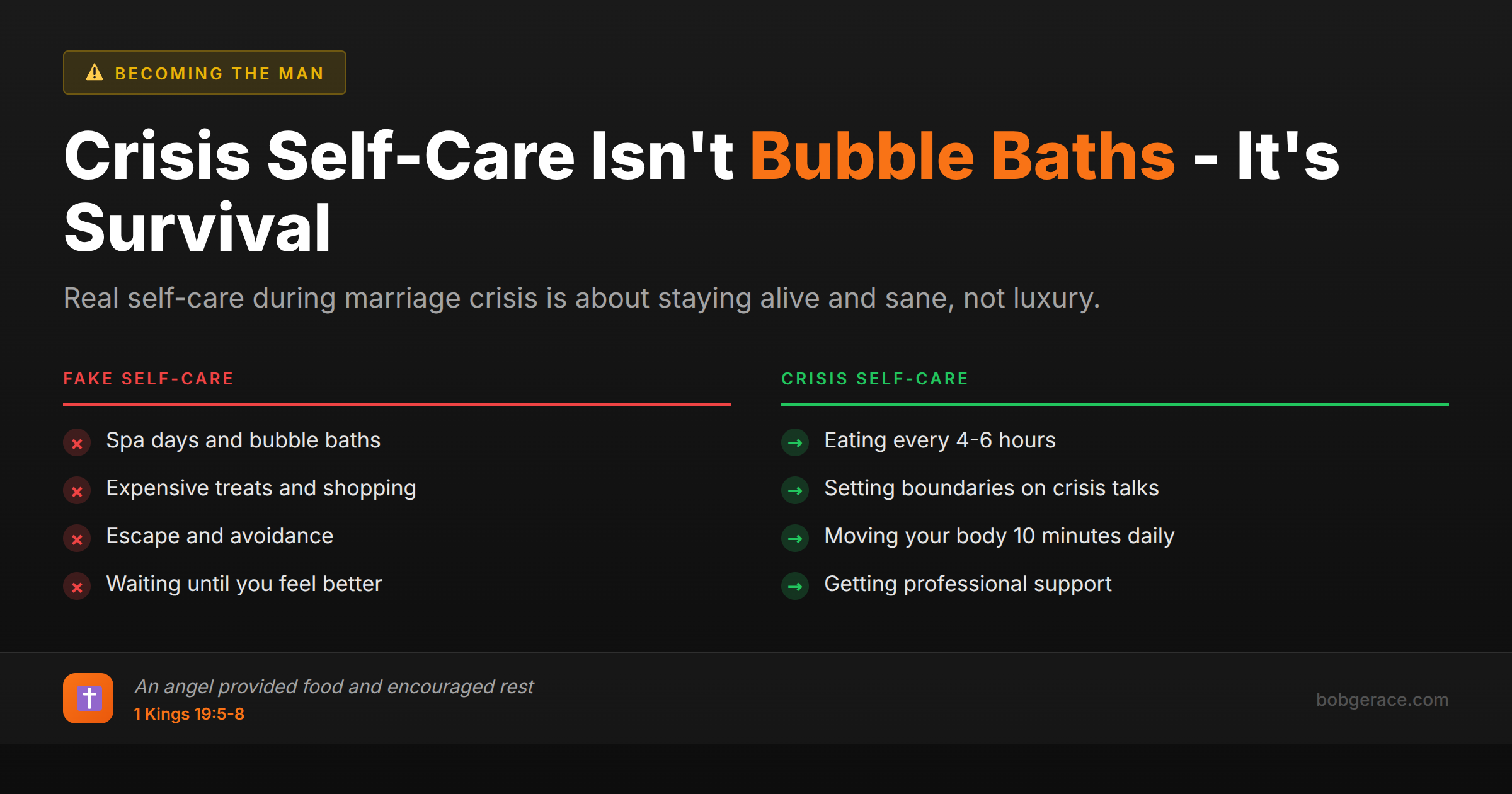
Self-care in crisis isn't bubble baths and spa days - it's the essential maintenance of your physical, emotional, and spiritual well-being when your world is falling apart. During a marriage crisis, true self-care means making deliberate choices to preserve your health and sanity while navigating the storm. This includes basics like eating regularly, sleeping when possible, and staying hydrated, but goes deeper into emotional boundaries, spiritual practices, and getting professional support. Crisis self-care is about survival and stability first, not luxury or indulgence. It's recognizing that you can't pour from an empty cup, and that taking care of yourself isn't selfish - it's necessary for making wise decisions and having strength for the long haul.
The Full Picture
When your marriage is in crisis, the word 'self-care' can feel almost insulting. How can you think about taking care of yourself when everything is falling apart? But here's what I've learned after years of coaching women through the worst seasons of their lives: self-care in crisis isn't optional - it's survival.
Crisis self-care looks completely different from normal-times self-care. This isn't about pedicures and girls' nights (though those aren't wrong). This is about basic human maintenance when your nervous system is in overdrive and your emotional resources are depleted.
Physical self-care in crisis means eating something - anything - when you have no appetite. It means forcing yourself to sleep even when your mind is racing. It means moving your body when you feel like staying in bed forever. Your body is processing enormous stress, and it needs fuel and rest to function.
Emotional self-care becomes about boundaries and protection. It means limiting conversations about your situation to a few trusted people instead of rehashing details with everyone who asks. It means saying no to additional commitments and social obligations that drain your already-limited energy.
Spiritual self-care might mean shorter, more honest prayers instead of trying to maintain lengthy devotional routines. It could mean listening to worship music when you can't concentrate on reading, or simply sitting quietly with God when words won't come.
The goal isn't to feel better immediately. The goal is to maintain basic functioning so you can navigate this crisis with wisdom rather than desperation. Self-care in crisis is preparing yourself to make decisions from a place of relative stability rather than complete depletion.
What's Really Happening
From a clinical perspective, what we call 'self-care in crisis' is actually trauma-informed coping. When your marriage is in crisis, your nervous system is in a state of chronic activation - essentially living in fight-or-flight mode for extended periods.
This chronic stress state affects every system in your body. Your digestive system slows down, your sleep patterns become disrupted, your immune function decreases, and your cognitive processing becomes impaired. What feels like 'falling apart' is actually your body's natural response to sustained threat.
The key is understanding that crisis self-care serves a specific neurobiological function. Regular meals help stabilize blood sugar, which directly impacts mood and decision-making capacity. Consistent sleep (even if it's not perfect) allows your brain to process trauma and restore cognitive function. Gentle movement helps discharge the stress hormones flooding your system.
Psychologically, crisis self-care also serves as behavioral evidence that you still matter. When someone you love has betrayed or abandoned you, engaging in basic self-care becomes a radical act of self-worth. It's your actions telling your heart what your emotions can't feel right now.
I often tell clients that crisis self-care isn't about feeling good - it's about maintaining your capacity to think clearly. When you're depleted physically and emotionally, you're more likely to make reactive decisions rather than wise ones. Simple self-care practices create just enough stability for you to access your higher-level thinking and make choices aligned with your values rather than your pain.
What Scripture Says
Scripture doesn't shy away from the reality that life includes seasons of deep crisis, and it provides clear guidance about caring for ourselves during these times. God Himself models rest and restoration throughout His word.
In 1 Kings 19:5-8, when Elijah was in crisis - exhausted, depressed, and wanting to die - God's first response wasn't a spiritual lecture. An angel provided food and encouraged rest. God addressed Elijah's physical needs before his spiritual crisis, showing us that basic care isn't ungodly during difficult times.
Matthew 11:28-30 offers Jesus' invitation: *'Come to me, all you who are weary and burdened, and I will give you rest. Take my yoke upon you and learn from me, for I am gentle and humble in heart, and you will find rest for your souls.'* This rest isn't just spiritual - it's holistic care for our whole being.
Psalm 23:2-3 describes God making us *'lie down in green pastures'* and leading us *'beside quiet waters'* where *'he refreshes my soul.'* Even in the valley of the shadow of death - crisis territory - God provides restoration and refreshment.
The principle of Sabbath throughout Scripture teaches us that rest and renewal aren't luxuries but divine design. Mark 6:31 shows Jesus telling His disciples to *'come with me by yourselves to a quiet place and get some rest'* - even ministry didn't override the need for restoration.
Finally, 1 Corinthians 6:19-20 reminds us that our bodies are temples of the Holy Spirit. Taking care of this temple isn't selfish - it's stewardship of what God has entrusted to us, especially during times when that temple is under siege.
What To Do Right Now
-
1
Set a phone alarm for meals - Eat something every 4-6 hours, even if it's just crackers or a protein bar
-
2
Create a simple bedtime routine - Same time each night, phones away, one calming activity before sleep
-
3
Move your body for 10 minutes daily - Walk around the block, stretch, or do gentle yoga
-
4
Limit crisis conversations - Choose 2-3 trusted people to process with, redirect others kindly but firmly
-
5
Practice basic spiritual care - 5 minutes of prayer, worship music, or reading one Psalm
-
6
Schedule one small thing you enjoy weekly - Coffee with a friend, a favorite meal, or a creative activity
Related Questions
- What does my body need right now?
- What does healthy coping look like?
- What numbing behaviors should I watch for?
- How do I regulate my own system?
- How do I protect myself emotionally?
- What support do I need?
- How do I function when my body won't calm down?
- What is 'betrayal trauma' and do I have it?
- How do I not lose my mind right now?
- What's happening to my nervous system right now?
Also find Bob on
Subscribe for weekly videos on Christian marriage.
You Don't Have to Figure This Out Alone
Self-care in your marriage—right now, with everything you're carrying—isn't one-size-fits-all. A coach who knows your story can help you build what actually works for you.
Talk to Bob →