What support do I need?
6 min read
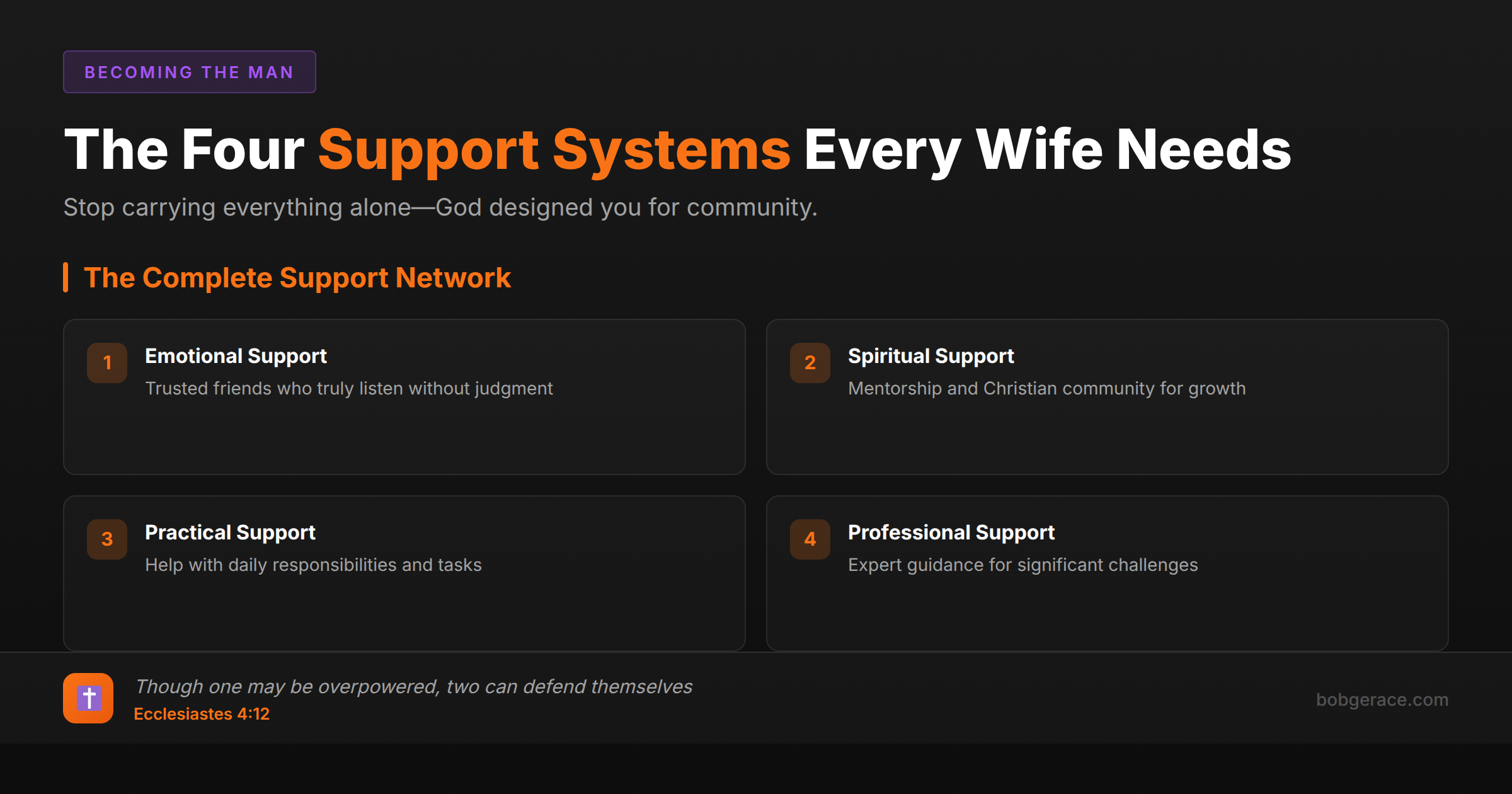
Every wife needs multiple layers of support to thrive in marriage and life. You need emotional support from trusted friends who truly listen, spiritual support through mentorship and Christian community, practical support for daily responsibilities, and professional support when facing significant challenges. Don't try to carry everything alone. The key is identifying which areas feel most lacking right now. Are you emotionally drained with no safe place to process? Do you need someone to help with practical tasks? Are you spiritually isolated? Once you know what's missing, you can take specific steps to build that support network intentionally.
The Full Picture
Support isn't a luxury—it's essential for your wellbeing and your marriage's health.
Many wives suffer in silence, believing they should handle everything independently. This isolation leads to burnout, resentment, and emotional depletion that affects every relationship.
You need different types of support:
Emotional Support comes from people who listen without judgment, validate your feelings, and offer encouragement. This might be close friends, family members, or a counselor.
Spiritual Support includes mentors, Bible study groups, prayer partners, and wise Christian women who can guide you in faith matters and provide biblical perspective on life challenges.
Practical Support involves help with daily responsibilities—childcare, household tasks, meal preparation, or professional obligations. This support creates space for you to breathe and focus on what matters most.
Professional Support includes counselors, coaches, doctors, and other experts who provide specialized help for specific challenges you're facing.
Informational Support comes from books, courses, podcasts, and educational resources that equip you with knowledge and skills.
The strongest women aren't those who need no help—they're those who know how to build and maintain healthy support systems. Your support needs will change with different life seasons. What worked in your twenties may not serve you in your forties. Regularly assess what support you need and don't hesitate to ask for help.
What's Really Happening
From a clinical perspective, adequate support systems are crucial for mental health and relationship stability. Women often experience what I call 'support deficit'—having people around them but lacking meaningful, reciprocal relationships that provide genuine care and understanding.
Research consistently shows that strong social support reduces stress hormones, improves immune function, and increases resilience during difficult times. When wives lack proper support, they're more likely to experience anxiety, depression, and marital dissatisfaction.
I frequently see women who've isolated themselves due to shame, busy schedules, or past relationship wounds. They believe asking for help shows weakness, but the opposite is true. Seeking support demonstrates emotional intelligence and self-awareness.
The quality of support matters more than quantity. One authentic friendship where you can be vulnerable trumps ten surface-level relationships. Look for people who demonstrate consistency, confidentiality, and genuine care for your wellbeing.
Many women also need to learn healthy boundaries around support—knowing when to give and when to receive, recognizing one-sided relationships, and understanding that not everyone in your life can meet every need. Building a diverse support network ensures you're not overwhelming any one person while getting comprehensive care for yourself.
What Scripture Says
Scripture consistently emphasizes the importance of community and mutual support among believers. God designed us for relationship, not isolation.
Ecclesiastes 4:12 reminds us, "Though one may be overpowered, two can defend themselves. A cord of three strands is not quickly broken." You need people standing with you in life's battles.
Galatians 6:2 commands, "Carry each other's burdens, and in this way you will fulfill the law of Christ." Allowing others to support you isn't weakness—it's obedience to God's design for Christian community.
Proverbs 27:17 teaches, "As iron sharpens iron, so one person sharpens another." The right support system doesn't just comfort you—it challenges you to grow and become more like Christ.
1 Thessalonians 5:11 encourages, "Therefore encourage one another and build each other up." You need people who see your potential and speak life into your circumstances.
Hebrews 10:24-25 warns against isolation: "And let us consider how we may spur one another on toward love and good deeds, not giving up meeting together... but encouraging one another."
Proverbs 19:20 advises, "Listen to advice and accept discipline, and at the end you will be counted among the wise." Seek out mentors and counselors who can provide godly wisdom.
God uses other people to provide comfort, wisdom, practical help, and spiritual growth. Rejecting support often stems from pride, not strength.
What To Do Right Now
-
1
Complete a support inventory: List who currently provides emotional, spiritual, practical, and professional support in your life
-
2
Identify your biggest support gap—where do you feel most alone or overwhelmed?
-
3
Reach out to one person this week who could provide the support you most need
-
4
Join one group or community where you can both give and receive encouragement
-
5
Schedule regular check-ins with your closest support people—don't wait for crises
-
6
Release guilt about needing help and practice asking for specific support when needed
Related Questions
- What is self-care in crisis?
- What does healthy coping look like?
- How do I protect myself emotionally?
- Why do I need other men?
- What should I look for in a brotherhood?
- How do I find other men?
- Should I tell anyone right now?
- What does trauma recovery look like?
- What therapies help with this kind of trauma?
- Do I need therapy, coaching, or both?
Also find Bob on
Subscribe for weekly videos on Christian marriage.
You Don't Have to Figure This Out Alone
A coach who knows your marriage can help you see what's actually missing and build the support structure you need. Not generic advice—calibrated to where you are right now.
Talk to Bob →