How do I protect myself emotionally?
6 min read
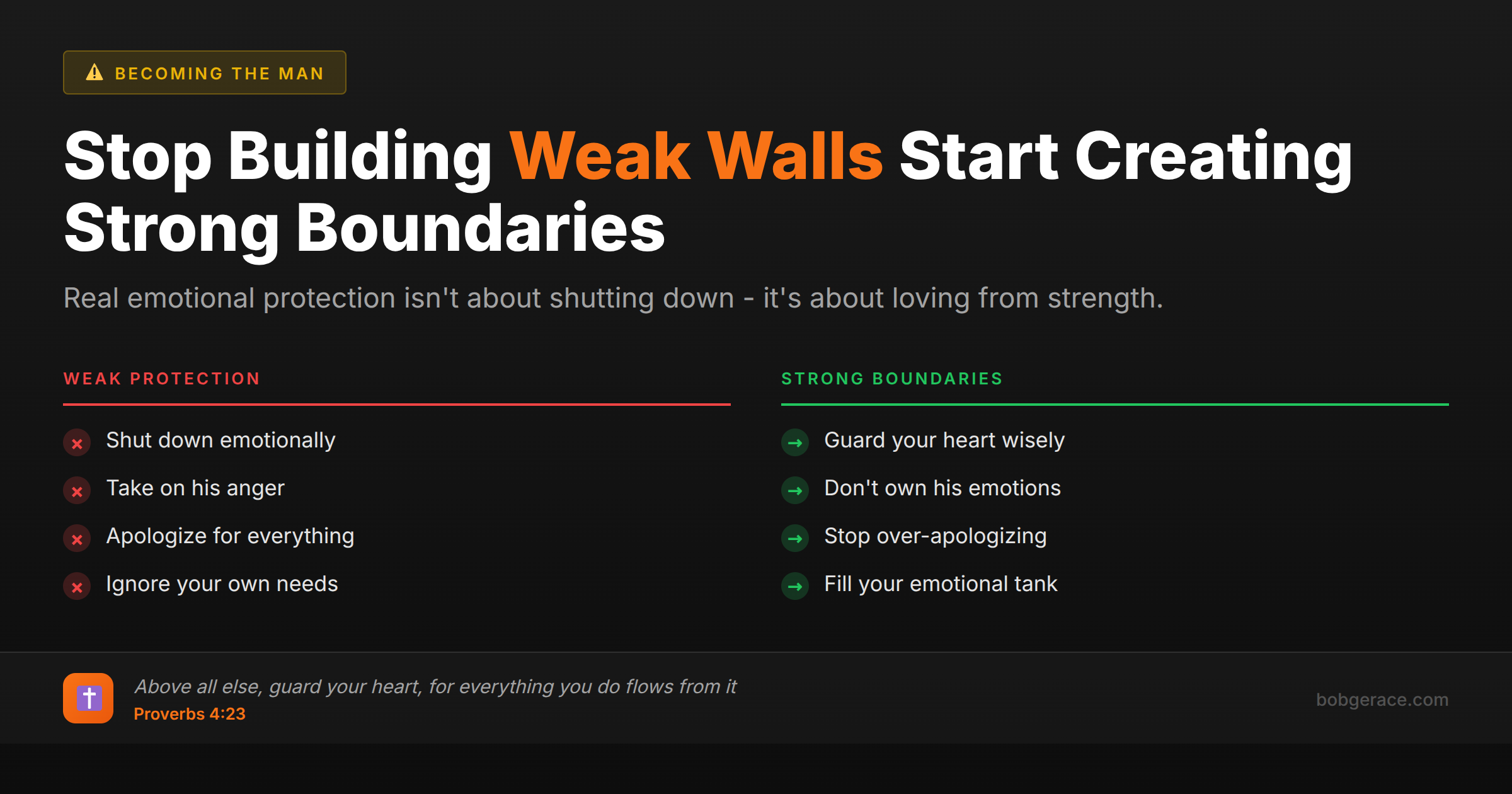
Emotional protection starts with recognizing that you have the right and responsibility to guard your heart. This isn't about building walls or becoming cold - it's about creating healthy boundaries that allow you to love without losing yourself. You protect yourself emotionally by learning to say no, not taking responsibility for others' emotions, and refusing to accept verbal abuse or manipulation as normal. The key is understanding that emotional protection is actually a form of love - both for yourself and your marriage. When you're emotionally healthy and protected, you can engage from a place of strength rather than desperation. This means setting clear boundaries about what behavior you will and won't tolerate, taking time for activities that restore your soul, and surrounding yourself with people who affirm your worth.
The Full Picture
Many women struggle with emotional protection because they've been taught that being a good wife means absorbing whatever their husband dishes out. This is not biblical love - it's codependency. True emotional protection requires understanding the difference between being loving and being a doormat.
Emotional protection involves several key areas: First, you need to recognize emotional manipulation and refuse to participate. This might mean not engaging in circular arguments, not accepting blame for things that aren't your fault, or refusing to be your husband's emotional dumping ground. Second, you need to create emotional space through healthy activities, relationships, and practices that fill your tank rather than drain it.
The challenge many wives face is guilt. They worry that protecting themselves emotionally is selfish or unloving. But consider this: when you're emotionally depleted, anxious, or walking on eggshells, what do you have to offer your marriage? Emotional protection isn't about becoming selfish - it's about becoming healthy enough to love from a place of wholeness rather than neediness.
This also means accepting that you cannot control or fix your husband's emotions. You're not responsible for managing his moods, preventing his anger, or ensuring his happiness. When you try to control outcomes you can't control, you set yourself up for emotional exhaustion and resentment. Emotional protection means staying in your lane and letting your husband own his emotional responses.
What's Really Happening
From a clinical perspective, emotional protection is about developing what we call emotional regulation and boundary-setting skills. Many women in difficult marriages have developed hypervigilance - constantly monitoring their partner's moods and adjusting their behavior to prevent conflict. This creates chronic stress and erodes your sense of self.
Emotional protection involves learning to differentiate between your emotions and your partner's emotions. This concept, called differentiation, is crucial for healthy relationships. When you're poorly differentiated, you take on your partner's anxiety, anger, or depression as if it were your own. You might find yourself apologizing for things you didn't do or changing your behavior to manage his emotional state.
Healthy emotional protection also involves developing what psychologists call distress tolerance - the ability to sit with uncomfortable emotions without immediately trying to fix or escape them. This means you can witness your husband's anger without taking responsibility for it, or experience your own disappointment without minimizing it to keep the peace.
The goal isn't emotional detachment - it's emotional intelligence. You want to remain caring and connected while maintaining your own emotional center. This requires practice and often involves grieving the fantasy that you can love someone into health or that sacrificing your emotional well-being will somehow save your marriage.
What Scripture Says
Scripture is clear about the importance of guarding our hearts and minds. Proverbs 4:23 instructs us to "Above all else, guard your heart, for everything you do flows from it." This isn't a suggestion - it's a command. God expects us to take responsibility for protecting our emotional and spiritual well-being.
Galatians 6:2-5 provides a beautiful balance: "Carry each other's burdens, and in this way you will fulfill the law of Christ... Each one should carry their own load." There's a difference between helping someone with their burdens and carrying their emotional load for them. Emotional protection means understanding this distinction.
Ephesians 4:15 calls us to "speak the truth in love." Emotional protection often requires speaking difficult truths - about boundaries, about unacceptable behavior, about your own needs. This isn't unloving; it's necessary for authentic relationship.
1 Corinthians 13:5 reminds us that love "is not self-seeking" and "keeps no record of wrongs," but this doesn't mean love has no boundaries. Ephesians 5:11 tells us to "Have nothing to do with the fruitless deeds of darkness, but rather expose them." Sometimes emotional protection means refusing to participate in destructive patterns.
Matthew 10:16 instructs us to be "as shrewd as snakes and as innocent as doves." Emotional protection requires this kind of wisdom - maintaining a pure heart while being wise about protecting yourself from harm. God doesn't call us to be naive about destructive behavior, even from those we love most.
What To Do Right Now
-
1
Identify your emotional triggers and develop a plan for how to respond when they're activated, rather than just reacting
-
2
Create a daily practice that fills your emotional tank - prayer, journaling, exercise, or time in nature
-
3
Stop apologizing for things that aren't your fault or for having needs and feelings
-
4
Develop a support system of trusted friends or counselors who can help you process your emotions
-
5
Practice the phrase 'That's not my responsibility' when your husband tries to make his emotions your problem
-
6
Set specific boundaries about verbal abuse, manipulation, or emotional dumping and stick to them consistently
Related Questions
- What is self-care in crisis?
- What does healthy coping look like?
- What numbing behaviors should I watch for?
- How do I regulate my own system?
- What does my body need right now?
- How do I process without a toxic support system?
- What is 'betrayal trauma' and do I have it?
- How do I function when my body won't calm down?
- What boundaries should I set?
- How do I stay grounded when everything feels adversarial?
Also find Bob on
Subscribe for weekly videos on Christian marriage.
You Don't Have to Figure This Out Alone
Protecting yourself emotionally in your specific marriage—without shutting down or building walls—requires someone who knows your story and can see what you can't. That's what coaching is.
Talk to Bob →