What questions can I ask to assess authenticity?
6 min read
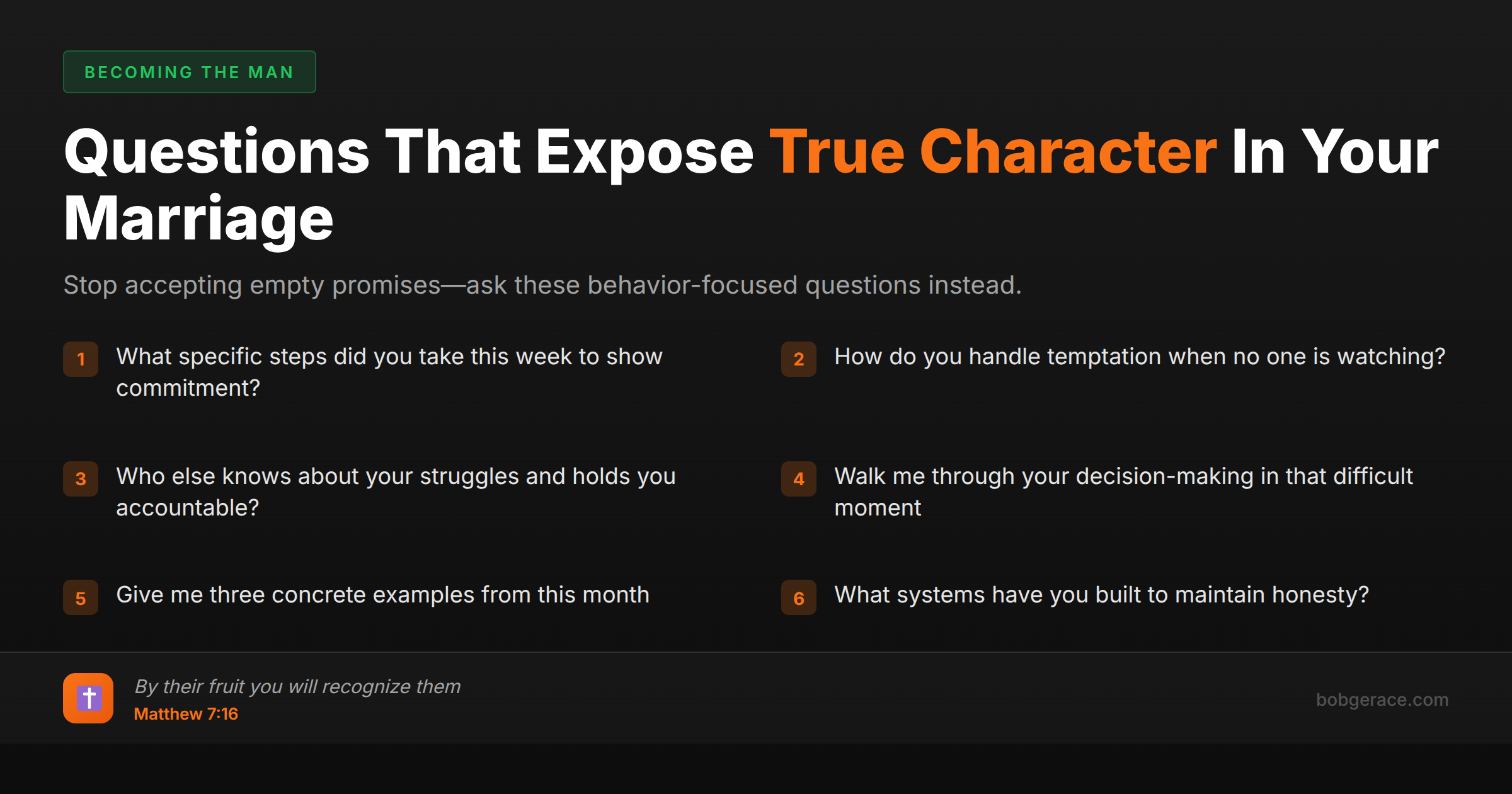
Assessing authenticity in your marriage requires asking specific, behavior-focused questions that reveal patterns over time. The most powerful questions address consistency between words and actions: 'What specific steps have you taken this week to demonstrate your commitment?' and 'How do you handle situations when no one is watching?' Look for concrete examples rather than vague promises. Effective authenticity assessment also involves questions about accountability and transparency: 'Who else knows about your struggles and holds you accountable?' and 'What systems have you put in place to maintain honesty?' These questions help you evaluate whether your spouse is building genuine safeguards or simply managing your perception.
The Full Picture
Understanding authenticity in marriage isn't about playing detective—it's about creating space for truth to emerge naturally. When trust has been damaged, you need practical tools to evaluate whether the person standing before you is genuine or performing.
Authentic change shows up in consistent patterns, not perfect moments. Your spouse might have great days and difficult days, but authentic people demonstrate steady progress over time. They don't hide their struggles; they share them proactively. They don't make excuses; they take ownership and outline specific action steps.
The questions you ask should focus on process, not just outcomes. Instead of asking 'Are you being honest?' ask 'Walk me through how you made that decision.' Instead of 'Do you love me?' ask 'What did you do this week that demonstrated love, even when it was inconvenient?'
Authentic people welcome these conversations. They don't get defensive when you ask for specifics. They don't accuse you of not trusting them. Instead, they recognize that trust is rebuilt through transparency and consistent action over time.
The goal isn't to interrogate your spouse—it's to create opportunities for them to demonstrate authenticity while giving yourself the information you need to make wise decisions about your marriage. Authenticity assessment protects both of you from false reconciliation built on good intentions rather than genuine change.
What's Really Happening
From a clinical perspective, authenticity assessment involves evaluating congruence between internal experience, verbal expression, and behavioral demonstration. Individuals in crisis often experience a gap between their intentions and their capacity to follow through consistently.
Authentic individuals demonstrate several key markers: they acknowledge their limitations without minimizing impact, they provide specific rather than general responses, and they invite verification of their claims. They understand that authenticity isn't about being perfect—it's about being honest about imperfection while taking concrete steps toward growth.
When assessing authenticity, look for what we call 'behavioral specificity.' Authentic people can describe their internal processes, their trigger points, and their coping strategies in detail. They don't rely on generalizations like 'I'm really trying' but instead offer concrete examples: 'When I felt angry yesterday, I took a ten-minute walk before responding.'
The clinical framework also emphasizes timeline consistency. Authentic change follows predictable patterns—initial motivation, encountering obstacles, developing sustainable systems, and building new habits. People who are performing rather than transforming often show inconsistent patterns: intense effort followed by complete withdrawal, or perfect behavior that feels manufactured rather than natural.
What Scripture Says
Scripture provides clear guidance on recognizing authenticity through fruit inspection. Jesus taught us to evaluate authenticity through observable outcomes: 'By their fruit you will recognize them' (Matthew 7:16). This isn't about judgment—it's about wisdom in relationships.
The biblical model emphasizes time-tested consistency over momentary sincerity. 'Above all else, guard your heart, for everything you do flows from it' (Proverbs 4:23). Authentic people demonstrate heart-level change that naturally flows into their actions, words, and decisions over extended periods.
Scripture also validates the importance of accountability and transparency in authentic relationships. 'Confess your sins to each other and pray for each other so that you may be healed' (James 5:16). Authentic people don't hide their struggles—they bring them into the light where healing can occur.
The biblical framework for authenticity includes genuine repentance, which involves both godly sorrow and behavioral change. 'Godly sorrow brings repentance that leads to salvation and leaves no regret, but worldly sorrow brings death' (2 Corinthians 7:10). You can assess authenticity by observing whether sorrow leads to sustained change or simply temporary remorse.
Finally, Scripture teaches that authentic love demonstrates itself through action, not just emotion. 'Dear children, let us not love with words or speech but with actions and in truth' (1 John 3:18). Authentic spouses show love through consistent, sacrificial behavior rather than relying solely on verbal affirmations.
What To Do Right Now
-
1
Create a weekly check-in conversation focused on specific behaviors and decisions rather than general feelings
-
2
Ask process questions: 'Walk me through your decision-making when you faced that challenge this week'
-
3
Request specific examples: 'Give me three concrete ways you demonstrated commitment to our marriage this month'
-
4
Evaluate consistency over time by keeping a simple journal of patterns you observe
-
5
Ask about accountability: 'Who else knows about your struggles and how are they helping you stay on track?'
-
6
Assess their response to your questions—authentic people welcome transparency rather than resist it
Related Questions
Need Help Navigating These Conversations?
Learning to assess authenticity while rebuilding your marriage requires wisdom and support. Let's work together to develop the skills you need.
Get Support →