What distinguishes remorse from guilt?
6 min read
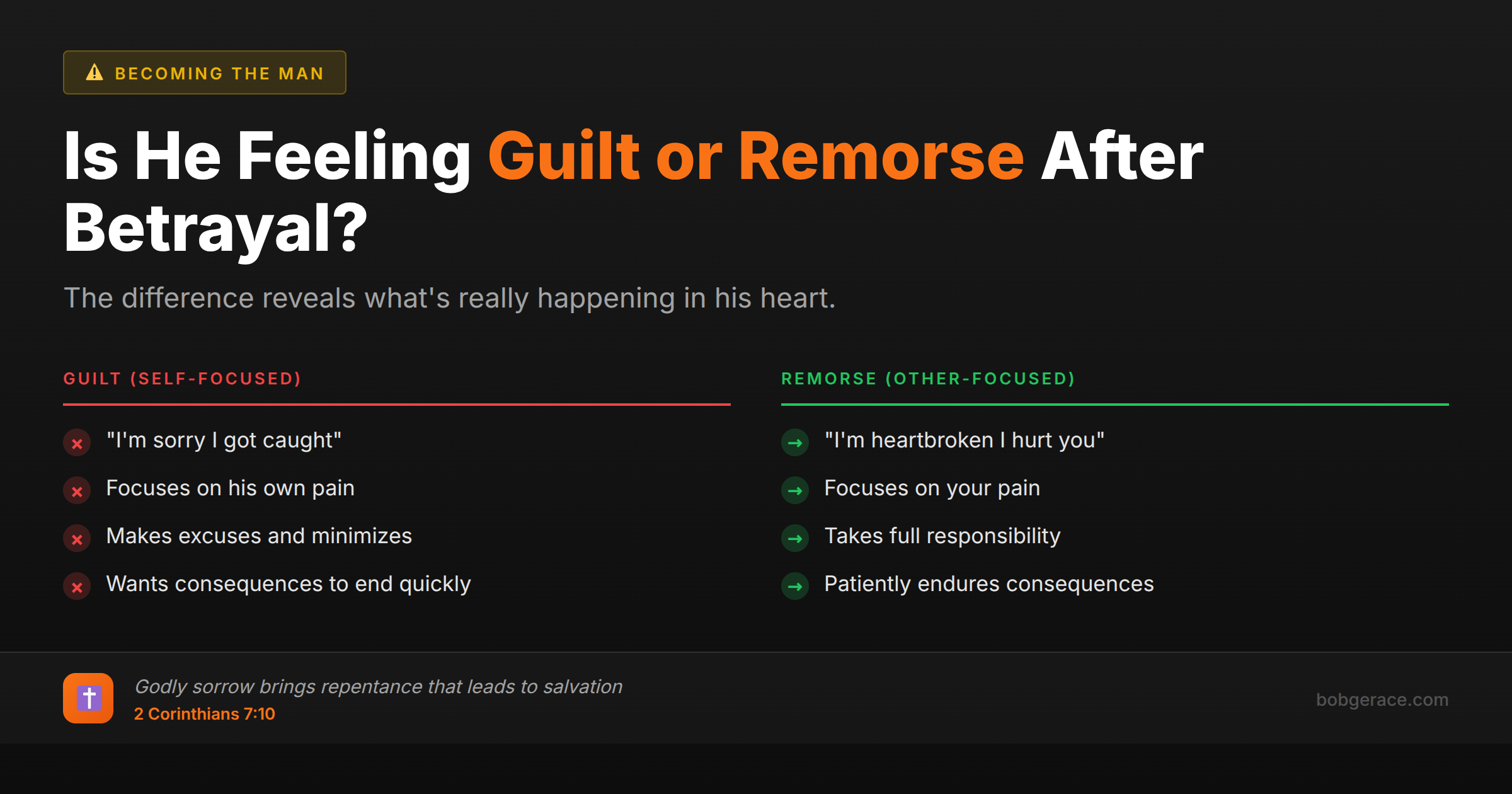
Remorse and guilt are fundamentally different emotional responses that reveal what's happening in someone's heart. Guilt is self-focused - it's about feeling bad because you got caught or because of the consequences you're facing. It says "I'm sorry I got in trouble" or "I'm sorry this is affecting me." Guilt often leads to self-pity, defensiveness, and attempts to minimize or justify harmful behavior. Remorse, on the other hand, is other-focused. It's genuine sorrow for the pain you've caused another person. Remorse says "I'm broken-hearted that I hurt you" and leads to taking full responsibility, making amends, and changing behavior. In marriage recovery, this distinction is crucial because guilt keeps couples stuck in cycles of defensiveness and surface-level apologies, while remorse opens the door to genuine healing and rebuilding trust.
The Full Picture
Understanding the difference between remorse and guilt isn't just academic - it's the difference between genuine healing and staying stuck in destructive patterns. When your husband shows guilt, you'll notice he's primarily concerned with how the situation affects him. He might say things like "I can't believe I did this" or "I feel terrible about myself." While these statements might sound remorseful, they're actually centered on his own discomfort rather than the pain he's caused you.
Guilt manifests as: - Self-pity and focusing on his own suffering - Defensiveness when confronted with the full impact of his actions - Attempts to minimize, rationalize, or shift blame - Quick attempts to "move on" without doing the hard work of repair - Anger when consequences don't go away fast enough
Remorse looks completely different: - Deep sorrow for the specific pain caused to you - Taking full responsibility without excuses or deflection - Patient willingness to endure consequences and do repair work - Proactive efforts to understand and address the root causes - Sustained commitment to change, even when it's difficult
The challenge is that guilt can sometimes masquerade as remorse, especially early in the recovery process. Someone experiencing guilt might say the "right" words, but their actions and deeper attitudes reveal their true heart posture. This is why discernment is so important - you need to look beyond words to patterns of behavior and genuine heart change over time.
What's Really Happening
From a clinical perspective, the distinction between guilt and remorse reflects different levels of emotional and moral development. Guilt is a more primitive response rooted in self-preservation - the person feels distressed because their self-image is threatened or they're facing unwanted consequences. This creates what we call "narcissistic injury" - the pain of having to confront the gap between who they thought they were and who their actions reveal them to be.
Remorse, however, indicates developed empathy and moral reasoning. It requires the ability to step outside oneself and truly comprehend another person's experience. This is why genuine remorse often takes time to develop - it requires processing through the initial self-focused distress to reach a place of genuine other-awareness.
Neurologically, guilt primarily activates the brain's threat-detection systems, while remorse engages areas associated with empathy, moral reasoning, and prosocial behavior. This is why guilt often leads to fight-or-flight responses (defensiveness or withdrawal), while remorse motivates approach behaviors and repair attempts.
In marriage therapy, I often see couples where the unfaithful partner mistakes their guilty feelings for evidence of remorse, while the betrayed partner intuitively senses something is missing. Trust your instincts - if something feels "off" about your partner's remorse, there's likely still guilt-based thinking that needs to be addressed through deeper therapeutic work.
What Scripture Says
Scripture clearly distinguishes between worldly guilt and godly remorse. 2 Corinthians 7:10 explains this perfectly: *"Godly sorrow brings repentance that leads to salvation and leaves no regret, but worldly sorrow brings death."* Worldly sorrow (guilt) is self-focused and leads to spiritual and relational death, while godly sorrow (remorse) produces life-giving repentance.
True repentance, which flows from genuine remorse, involves both confession and change. 1 John 1:9 promises that *"If we confess our sins, he is faithful and just and will forgive us our sins and purify us from all unrighteousness."* But biblical confession isn't just admitting wrongdoing - it's agreeing with God about the true nature and impact of our sin.
Psalm 51:17 reveals God's heart toward genuine remorse: *"My sacrifice, O God, is a broken spirit; a broken and contrite heart you, God, will not despise."* David's prayer shows that true repentance involves being broken over the sin itself, not just its consequences.
Ezekiel 36:26 speaks to the heart change that genuine remorse makes possible: *"I will give you a new heart and put a new spirit in you; I will remove from you your heart of stone and give you a heart of flesh."* When someone moves from guilt to true remorse, God can begin the deep work of transformation.
Matthew 3:8 reminds us that genuine repentance produces fruit: *"Produce fruit in keeping with repentance."* This is why remorse, unlike guilt, leads to sustained behavioral change rather than just temporary improvement.
What To Do Right Now
-
1
Document patterns: Keep a journal of your spouse's responses when confronted with their behavior - note whether they focus on their own discomfort or your pain
-
2
Listen to their language: Pay attention to whether apologies center on "I feel bad" versus "I hurt you" - the difference reveals their heart posture
-
3
Observe their patience level: Someone with genuine remorse will patiently endure consequences, while guilt leads to wanting quick resolution
-
4
Watch for sustained change: Guilt produces temporary behavior modification, while remorse creates lasting transformation - give it time to reveal itself
-
5
Trust your discernment: If something feels "off" about their remorse, don't dismiss that feeling - your intuition is likely picking up on guilt masquerading as sorrow
-
6
Seek professional guidance: A qualified therapist can help both of you understand and work through the difference between guilt and genuine remorse
Related Questions
- What are markers of genuine remorse vs. guilt?
- What does 'taking responsibility' actually look like?
- What does genuine repair look like for old wounds?
- What does real forgiveness look like?
- How do I make amends for years of failure?
- What does rebuilding trust require from her?
- What does 'earning back' trust actually look like?
- How do I know if he's really changing?
- What are the markers of genuine behavior change?
Also find Bob on
Subscribe for weekly videos on Christian marriage.
Not Sure What You're Actually Seeing?
A coach who knows your marriage can help you read what's real versus what's performance. You don't have to guess alone whether this is remorse or just damage control.
Talk to Bob →