What does research say about change persistence?
6 min read
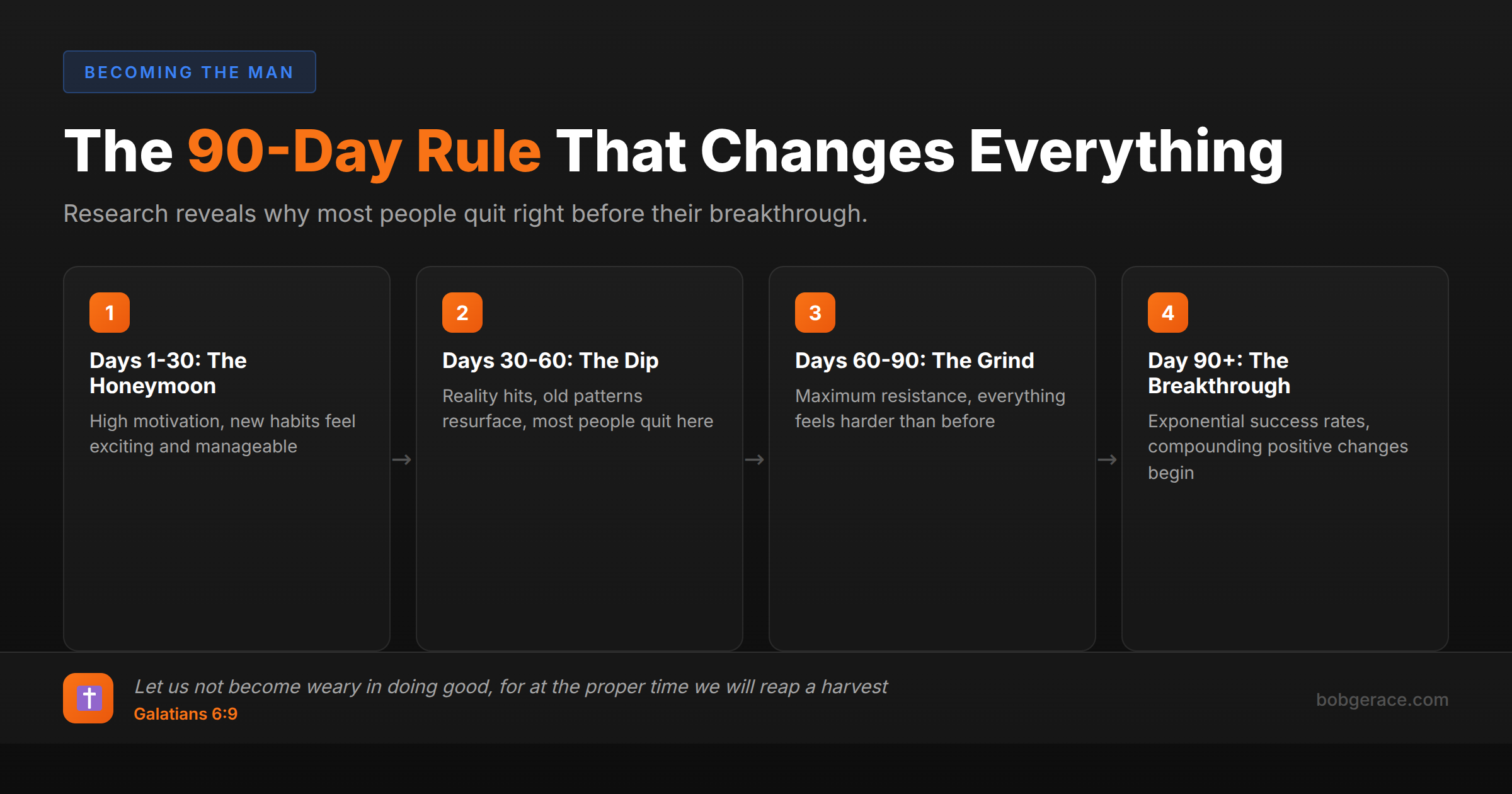
Research consistently shows that lasting change follows predictable patterns, and the data might surprise you. Studies reveal that most people abandon change attempts within 30-90 days, but those who persist past the 90-day mark see exponentially higher success rates. The breakthrough often comes right after the point where most people give up. What's particularly encouraging for marriages is that relationship changes tend to compound over time. Small, consistent changes in communication or behavior create ripple effects that accelerate transformation. The research also shows that women who approach change with both emotional intelligence and strategic planning see the most sustainable results in their relationships.
The Full Picture
The research on change persistence reveals patterns that every wife should understand. The 90-day threshold is real - neuroscience shows it takes approximately 90 days to form new neural pathways that support lasting behavioral change. But here's what most people miss: the most dramatic improvements often happen between days 60-120, right when motivation typically wanes.
Studies from the Journal of Marriage and Family show that couples who persist through initial resistance see 3x higher satisfaction rates within six months. The key finding? Change rarely feels good while it's happening. Your brain is literally rewiring itself, which creates discomfort and the urge to revert to familiar patterns.
The compound effect is particularly strong in marriages. Small changes in how you respond, communicate, or set boundaries don't just improve individual interactions - they shift the entire dynamic. Research from the Gottman Institute demonstrates that when one spouse consistently changes their approach for 90+ days, the other spouse begins responding differently, even without conscious effort.
What's fascinating is that women tend to be better at sustained change when they have clear frameworks and support systems. The data shows that wives who combine emotional awareness with practical strategies achieve lasting transformation at higher rates than those who rely on willpower alone. This isn't about perfection - it's about persistence through the messy middle where most breakthroughs actually happen.
What's Really Happening
From a clinical perspective, change persistence involves three critical neurological phases that most people don't understand. The first 30 days involve conscious effort and high motivation - this feels manageable. Days 30-90 are where the real work happens as your brain resists new patterns while old neural pathways fight for dominance.
What I see consistently in my practice is that wives often interpret the discomfort of days 30-90 as evidence that change isn't working. This is actually when it's working most powerfully. Your brain is creating new neural networks while gradually weakening old ones. The internal resistance you feel isn't failure - it's neuroplasticity in action.
The research on attachment and change shows that women with anxious attachment styles may experience more intense resistance during this middle phase, while those with avoidant styles might struggle more with initiating change. Understanding your attachment pattern helps normalize the specific challenges you'll face.
Clinically, I've observed that wives who frame persistence as self-care rather than sacrifice show dramatically better outcomes. When you view consistent boundary-setting or communication changes as acts of love toward yourself and your marriage, rather than burdens you must bear, your nervous system supports rather than sabotages your efforts. This reframing alone can be the difference between sustainable transformation and another failed attempt.
What Scripture Says
Scripture speaks powerfully about persistence and the process of transformation. Galatians 6:9 reminds us: *"Let us not become weary in doing good, for at the proper time we will reap a harvest if we do not give up."* This verse captures the essence of what research confirms - breakthrough comes to those who persist through the difficult middle.
James 1:4 teaches us about the process: *"Let perseverance finish its work so that you may be mature and complete, not lacking anything."* God designed growth to require persistence. The discomfort you feel during change isn't punishment - it's the mechanism through which maturity develops.
Philippians 1:6 offers profound encouragement: *"He who began a good work in you will carry it on to completion until the day of Christ Jesus."* When you're committed to biblical change in your marriage, you're partnering with God's ongoing work in your life. You're not depending solely on willpower.
Hebrews 12:1 provides the framework: *"Let us run with perseverance the race marked out for us."* Marriage transformation is a marathon, not a sprint. The research aligns perfectly with Scripture - lasting change requires sustained effort over time.
Romans 12:2 reveals the process: *"Be transformed by the renewing of your mind."* This describes exactly what neuroscience shows us - real change happens through mental renewal, which takes time and repetition. 2 Corinthians 3:18 adds: *"We are being transformed into his image with ever-increasing glory."* Transformation is progressive, not instant.
What To Do Right Now
-
1
Commit to a 90-day minimum for any significant change you want to make in your marriage approach
-
2
Track your progress weekly, noting both behaviors and internal resistance patterns
-
3
Identify your specific attachment style and prepare for the resistance patterns you'll likely face
-
4
Create a support system that understands the 30-90 day challenge period
-
5
Reframe persistence as self-care and love rather than burden or sacrifice
-
6
Celebrate small wins consistently while keeping your focus on the 90+ day transformation zone
Related Questions
Ready to Build Lasting Change That Actually Sticks?
The research is clear - you need the right framework and support to persist through the breakthrough zone. Let's create your personalized 90-day transformation plan.
Work With Me →