What are the markers of genuine behavior change?
6 min read
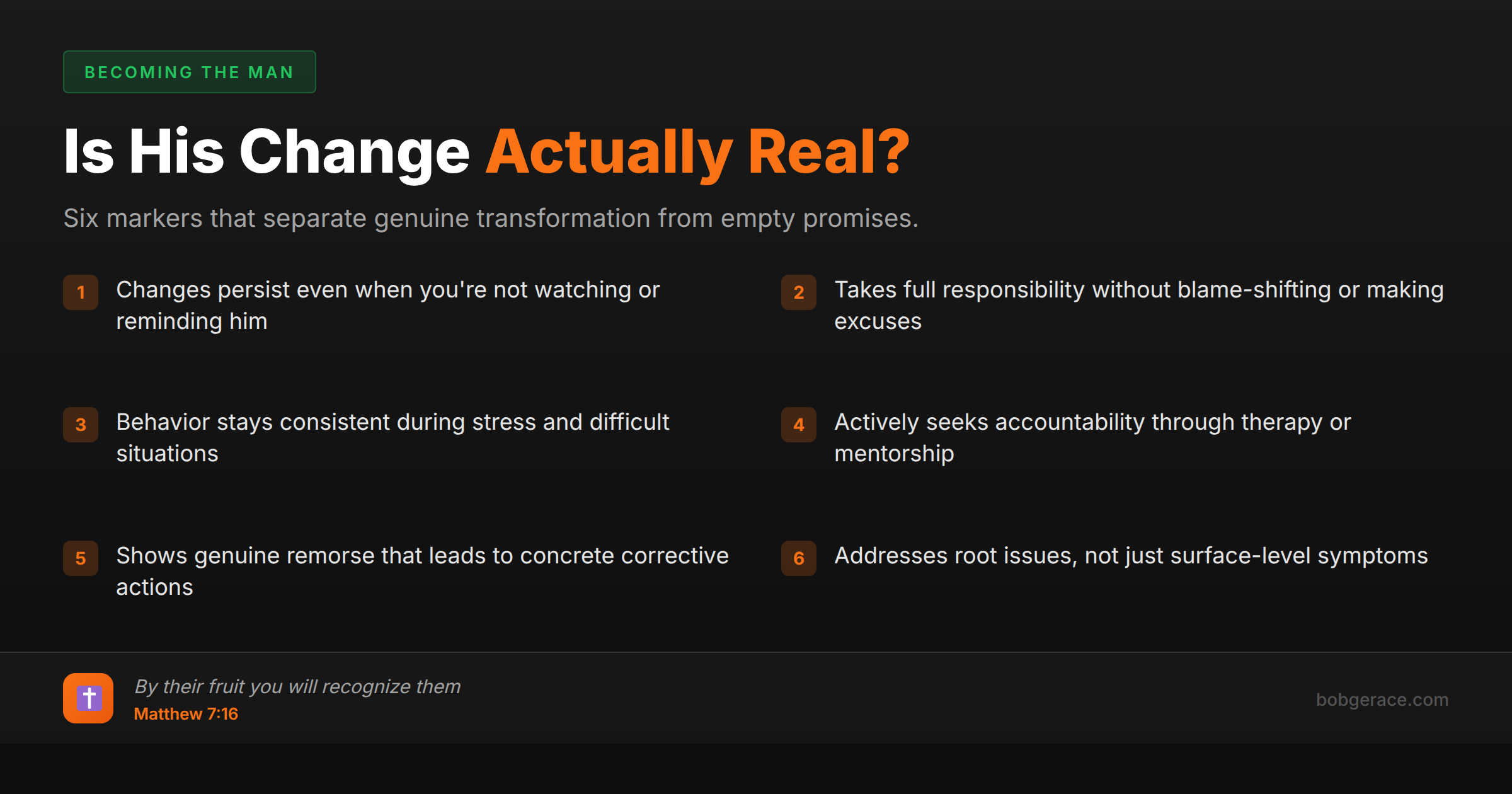
Genuine behavior change has distinct markers that separate authentic transformation from temporary fixes. Look for consistency over time, unprompted actions that align with stated commitments, and changes that persist even under stress or when no one is watching. Real change involves taking full responsibility without deflecting blame, showing genuine remorse that leads to concrete actions, and demonstrating sustained effort even when motivation fluctuates. The person actively seeks accountability, addresses root issues rather than just symptoms, and shows empathy for how their past behavior affected you. These changes become part of their character, not just performance.
The Full Picture
Understanding genuine behavior change is crucial for wives who've experienced betrayal, addiction, or destructive patterns in their marriage. After years of disappointment, you've likely become skilled at detecting surface-level changes versus authentic transformation - and rightfully so.
Consistency Over Performance is the first major marker. Genuine change maintains the same trajectory whether your spouse thinks you're watching or not. It doesn't fluctuate based on their mood, stress levels, or external circumstances. Performance-based change, by contrast, tends to be inconsistent and often correlates with external pressure or consequences.
Internal vs. External Motivation distinguishes real transformation from compliance. When change comes from internal conviction rather than fear of losing you or facing consequences, it has staying power. Your spouse begins making different choices because they genuinely believe it's right, not because they're trying to manage your reactions.
Root-Level Work is essential. Surface behavior modification addresses symptoms while avoiding underlying issues. Genuine change involves your spouse examining their belief systems, emotional patterns, and historical wounds that contributed to destructive choices. They're willing to do the hard work of therapy, recovery programs, or spiritual disciplines - not just when crisis hits, but as ongoing lifestyle commitments.
Accountability and Transparency become natural parts of their process. Instead of hiding, minimizing, or getting defensive when questioned, they proactively create systems for accountability. They understand that transparency isn't punishment but a necessary component of rebuilding trust.
Recognizing these markers helps you make informed decisions about your marriage's future while protecting yourself from getting pulled back into destructive cycles.
What's Really Happening
From a clinical perspective, genuine behavior change involves neuroplasticity - the brain's ability to form new neural pathways. This process takes time and consistent practice, which is why authentic change rarely happens overnight.
The Change Process follows predictable stages. In early recovery or transformation, motivation is often high but unstable. Real change occurs when new behaviors become automatic responses rather than conscious efforts. We look for what I call 'unconscious competence' - when healthy choices happen naturally even under stress.
Emotional Regulation is a critical marker. Individuals showing genuine change develop better distress tolerance and emotional regulation skills. They stop using old coping mechanisms (affairs, addiction, rage) when facing difficult emotions. Instead, they pause, process, and choose healthier responses.
Empathy Development is particularly significant in cases of betrayal or abuse. The ability to genuinely understand and feel concern for their spouse's pain represents a fundamental shift. This isn't performative empathy or saying the right words, but authentic emotional connection to their partner's experience.
Identity Shift represents the deepest level of change. The person begins seeing themselves differently - not just modifying behavior but experiencing a fundamental shift in self-concept. They might say things like 'That's not who I am anymore' about past destructive behaviors.
Relapse vs. Slip Patterns also matter. Genuine change doesn't mean perfection, but it does mean that setbacks become learning opportunities rather than complete reversals. The person takes responsibility for mistakes quickly and returns to healthy patterns without extended periods of destructive behavior.
What Scripture Says
Scripture provides clear markers for authentic transformation that align perfectly with clinical understanding. The Bible consistently emphasizes that genuine change produces visible fruit over time.
Fruit-Bearing Evidence - Jesus said, 'By their fruit you will recognize them' (Matthew 7:16). Authentic change produces consistent fruit - actions, attitudes, and choices that reflect inner transformation. This isn't about perfection but about a clear trajectory of growth that's evident over time.
Heart-Level Change - 'Above all else, guard your heart, for everything you do flows from it' (Proverbs 4:23). Real transformation begins in the heart, not just behavior modification. When someone's heart changes, their actions naturally follow. Surface changes without heart transformation rarely last.
Consistent Walk - 'Whoever walks in integrity walks securely, but whoever takes crooked paths will be found out' (Proverbs 10:9). Genuine change creates integrity - alignment between private and public behavior. There's no longer a split between who they are when observed versus when they think no one is watching.
Repentance vs. Regret - 'Godly sorrow brings repentance that leads to salvation and leaves no regret, but worldly sorrow brings death' (2 Corinthians 7:10). True repentance involves a complete change of direction, not just feeling sorry about consequences. It's grief over the sin itself, not just its effects.
Renewed Mind - 'Do not conform to the pattern of this world, but be transformed by the renewing of your mind' (Romans 12:2). Authentic change involves thinking differently, not just acting differently. New thought patterns create sustainable behavioral change.
Perseverance - 'Let perseverance finish its work so that you may be mature and complete, not lacking anything' (James 1:4). Real transformation includes persistence through difficulty, continuing the change process even when it's challenging or motivation fluctuates.
What To Do Right Now
-
1
Document patterns over time rather than focusing on isolated incidents - track consistency over at least 3-6 months
-
2
Observe behavior when your spouse thinks you're not watching or during stressful situations
-
3
Listen for language that shows ownership versus blame-shifting or minimizing
-
4
Notice whether changes persist without your reminders, pressure, or emotional reactions
-
5
Evaluate if they're addressing root issues through therapy, recovery programs, or spiritual growth
-
6
Trust your instincts while getting outside perspective from counselors or trusted advisors
Related Questions
- What distinguishes remorse from guilt?
- What is 'white-knuckling' vs. internalized change?
- What timeframe indicates real change?
- What does relapse tell us about change?
- What should I expect to see at 30/90/180 days?
- How do I tell performance from genuine change?
- Is he manipulating me or actually different?
- What questions can I ask to assess authenticity?
- What does real transformation look like?
- What does genuine repair look like for old wounds?
Also find Bob on
Subscribe for weekly videos on Christian marriage.
Not Sure What You're Seeing?
Evaluating change in your marriage isn't something you should do alone. A coach who knows your story can help you see what's real and what's performance.
Talk to Bob →