What timeframe indicates real change?
6 min read
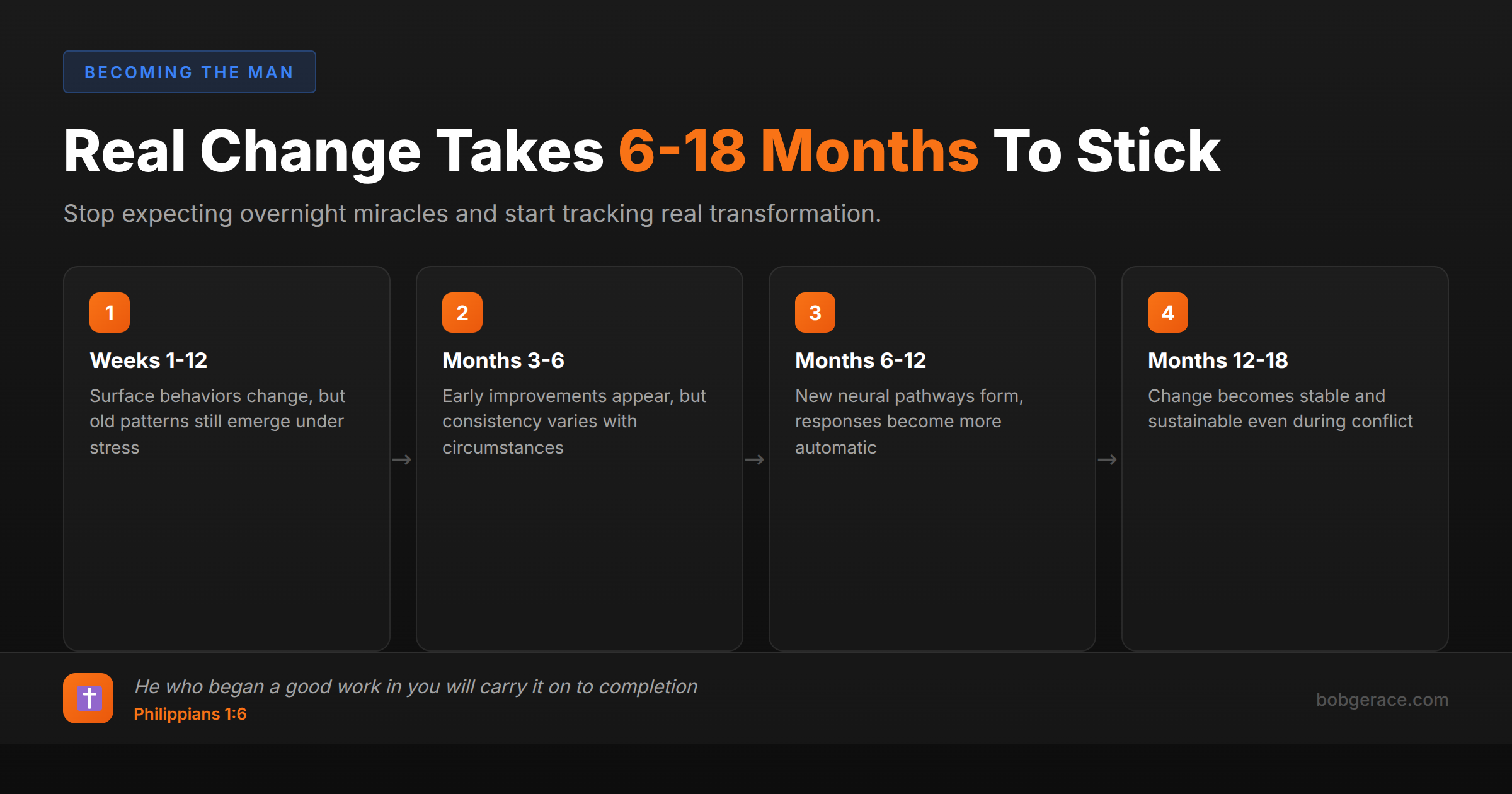
Real change in marriage typically requires 6-18 months to become stable and sustainable. While surface-level behavioral changes can happen quickly - sometimes within weeks - genuine transformation of patterns, mindsets, and emotional responses takes much longer. The timeline depends on several factors: the depth of issues, willingness of both partners, consistency of effort, and whether professional guidance is involved. Early improvements often appear within 3-6 months, but lasting change requires time for new neural pathways to form and for trust to rebuild. Don't be discouraged by temporary setbacks - they're part of the process, not proof that change isn't happening.
The Full Picture
Understanding the timeline for real change requires distinguishing between surface compliance and heart transformation. Many wives see initial improvements and wonder if they're witnessing genuine change or temporary behavior modification designed to reduce pressure.
The 90-Day Window typically shows behavioral adjustments. Your husband might start helping more, communicating differently, or showing increased attention. These changes, while encouraging, don't yet indicate deep transformation.
The 6-Month Mark reveals sustainability. Can he maintain new behaviors when stressed, tired, or triggered? Does he initiate positive changes without reminders? This period often includes setbacks that test genuine commitment to growth.
The 12-18 Month Range demonstrates integration. Real change becomes natural rather than effortful. New patterns replace old defaults. Character shifts become evident in unexpected situations, not just when he's trying to improve.
Several factors accelerate or slow this timeline. Professional intervention can speed progress significantly. Both partners engaged creates faster momentum than one-sided effort. Addressing root issues rather than symptoms produces lasting results. Consistent application of new skills builds neural pathways more effectively than sporadic attempts.
Setbacks don't negate progress - they're opportunities to practice new responses. The key indicator isn't perfection, but trajectory over time. Are conflicts resolved more quickly? Is accountability embraced rather than resisted? These subtle shifts signal genuine transformation taking root.
What's Really Happening
Neuroplasticity research shows us that meaningful behavioral change requires approximately 66 days for habit formation, but deeper personality and relational changes take 12-24 months to stabilize. What you're observing in early months is often conscious effort - your partner actively working to change behaviors. This is positive but exhausting to maintain long-term.
True integration occurs when new responses become automatic under stress. I look for several clinical markers: emotional regulation during conflict, self-initiated accountability, and consistent behavior across different contexts. A husband who treats his wife well at home but poorly in public hasn't achieved integrated change.
Trauma responses and attachment wounds significantly extend timelines. If underlying issues like childhood trauma, addiction, or personality disorders exist, surface changes may mask deeper work still needed. This doesn't mean change is impossible - it means realistic expectations prevent discouragement.
The most reliable indicator I observe is meta-awareness - when someone can recognize their patterns in real-time and self-correct. This cognitive shift typically emerges around month 8-12 with consistent work. Watch for moments when your partner catches themselves mid-pattern and adjusts without external feedback. This signals neural pathway rewiring at a fundamental level.
Beware of extinction bursts - temporary increases in negative behavior when old patterns are challenged. These often occur around month 4-6 and can feel like regression, but actually indicate the old system fighting to survive.
What Scripture Says
Scripture presents transformation as both instantaneous and progressive. While God can change hearts immediately, He typically works through process and time to develop mature character.
Philippians 1:6 assures us: *"He who began a good work in you will carry it on to completion until the day of Christ Jesus."* God's work in marriage follows this pattern - He begins immediately but completes over time. Your husband's heart change may start instantly, but behavioral integration requires seasons of growth.
2 Corinthians 3:18 describes gradual transformation: *"We all, who with unveiled faces contemplate the Lord's glory, are being transformed into his image with ever-increasing glory."* Notice "ever-increasing" - change builds momentum over time. Early improvements lay groundwork for deeper transformation.
James 1:4 teaches patience in the process: *"Let perseverance finish its work so that you may be mature and complete, not lacking anything."* Premature judgment of progress can interrupt God's timing. What appears like slow change may be God building strong foundations.
1 Corinthians 13:7 reminds us that love *"always hopes, always perseveres."* This doesn't mean accepting abuse or manipulation, but recognizing that genuine repentance deserves time to prove itself. Galatians 6:9 encourages: *"Let us not become weary in doing good, for at the proper time we will reap a harvest if we do not give up."*
Ecclesiastes 3:1 declares *"There is a time for everything"* - including a time for skepticism and a time for hope, a time to confront and a time to encourage. Wisdom discerns which season you're in and responds accordingly.
What To Do Right Now
-
1
Document patterns over 90-day periods rather than day-to-day fluctuations - keep a simple journal noting overall trends
-
2
Establish clear, measurable benchmarks for change beyond just 'being nicer' - define specific behaviors you need to see
-
3
Observe behavior when your husband doesn't know you're watching - consistency across contexts indicates deeper change
-
4
Test sustainability by noting responses during stress, conflict, or when he's tired - old patterns surface under pressure
-
5
Seek professional assessment if abuse, addiction, or personality disorders complicate the timeline - some issues need clinical intervention
-
6
Celebrate incremental progress while maintaining healthy boundaries - encouragement without enabling accelerates genuine change
Related Questions
- What are the 'stages of change'?
- How long does it take to rewire the brain?
- What makes change sustainable vs. temporary?
- What is 'white-knuckling' vs. internalized change?
- What does relapse tell us about change?
- What should I expect to see at 30/90/180 days?
- How long does recovery take?
- What is the 'trust timeline' post-affair?
- How long does real transformation take?
- How long does real change actually take?
Also find Bob on
Subscribe for weekly videos on Christian marriage.
Not Sure If Your Change Is Real?
A coach who knows your marriage can tell the difference between surface behavior and actual transformation. You don't have to guess alone.
Talk to Bob →