What spiritual practices support behavior change?
6 min read
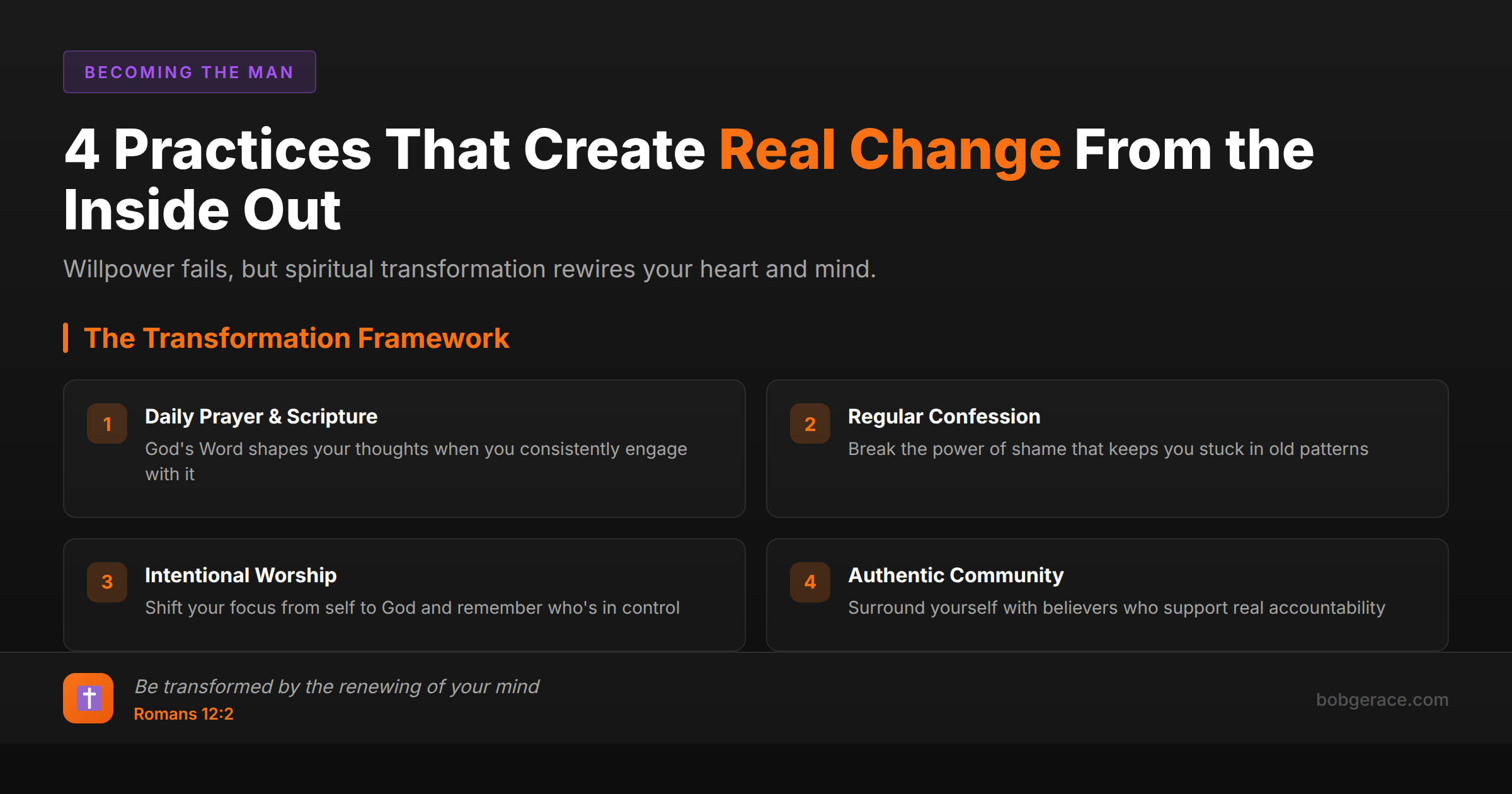
Real behavior change requires more than willpower—it needs spiritual transformation from the inside out. The most powerful spiritual practices for lasting change are daily prayer and Scripture meditation, regular confession and accountability, worship that shifts your focus from self to God, and intentional community with other believers. These aren't religious activities to check off a list. They're spiritual disciplines that actually rewire your heart and mind. When you consistently engage in prayer, God's Word begins to shape your thoughts. When you practice confession, you break the power of shame that keeps you stuck. When you worship, you remember who's really in control. These practices create the internal foundation that sustainable behavior change requires.
The Full Picture
Here's what most people miss about behavior change: you can't modify behavior without transforming the heart. You can white-knuckle your way through temporary improvements, but lasting change requires spiritual transformation that only comes through consistent spiritual disciplines.
The reason you keep falling back into old patterns isn't because you lack willpower—it's because your heart hasn't been transformed. Your default settings, your automatic responses, your core beliefs about yourself and your spouse—these all need to be renewed by the Spirit of God working through specific spiritual practices.
Prayer becomes the foundation where you actually experience God's presence and power, not just talk about it. Scripture meditation literally renews your mind with God's truth instead of the lies you've believed. Confession breaks the shame cycle that keeps you hiding and pretending. Worship shifts your focus from your problems to God's greatness. Community provides the accountability and encouragement you can't generate on your own.
These practices work together to create what Scripture calls being "transformed by the renewing of your mind." This isn't about becoming more religious—it's about becoming more like Christ. And when your heart is being transformed, your behavior naturally follows.
The key is consistency over intensity. Fifteen minutes of daily prayer and Bible reading will transform you more than occasional marathon sessions. Regular confession with a trusted friend creates more change than yearly spiritual retreats. Small, consistent spiritual practices create the internal foundation for lasting behavioral transformation.
What's Really Happening
From a clinical perspective, spiritual practices create behavior change through several powerful psychological mechanisms. First, they establish new neural pathways through repetition and mindfulness. When you consistently engage in prayer and Scripture reading, you're literally rewiring your brain's default responses.
Second, spiritual disciplines provide what we call "cognitive restructuring"—they challenge distorted thinking patterns and replace them with truth-based beliefs. Scripture meditation, for example, counters negative self-talk with God's perspective on your identity and worth.
Third, practices like confession and accountability break the shame-secrecy cycle that maintains destructive behaviors. Shame thrives in isolation, but confession brings behaviors into the light where they lose their power. This aligns perfectly with what research shows about the importance of social support in behavior change.
Fourth, worship and prayer create what psychologists call "transcendent experiences"—moments where your perspective shifts beyond immediate circumstances to a larger reality. This shift is crucial for breaking out of the tunnel vision that keeps you stuck in problematic patterns.
Finally, spiritual community provides external accountability and modeling that individual willpower cannot sustain. We know from behavioral science that environmental factors are often more powerful than internal motivation. Surrounding yourself with people who embody the changes you want to make creates a supportive context for transformation.
The most effective approach combines these spiritual practices with practical behavioral strategies, creating both internal transformation and external structure for sustainable change.
What Scripture Says
Scripture is clear that lasting change comes through spiritual transformation, not human effort alone. Romans 12:2 gives us the blueprint: "Do not conform to the pattern of this world, but be transformed by the renewing of your mind. Then you will be able to test and approve what God's will is—his good, pleasing and perfect will."
The process starts with God's Word. Psalm 119:11 declares, "I have hidden your word in my heart that I might not sin against you." Scripture meditation isn't just intellectual study—it's allowing God's truth to penetrate your heart and reshape your thinking patterns.
Prayer becomes the lifeline for real change. Philippians 4:6-7 promises, "Do not be anxious about anything, but in every situation, by prayer and petition, with thanksgiving, present your requests to God. And the peace of God, which transcends all understanding, will guard your hearts and your minds in Christ Jesus." This isn't just stress relief—it's supernatural heart protection.
Confession breaks the power of hidden sin. James 5:16 instructs, "Therefore confess your sins to each other and pray for each other so that you may be healed. The prayer of a righteous person is powerful and effective." Bringing your struggles into the light removes their power over you.
Community provides the support system for change. Hebrews 10:24-25 emphasizes, "And let us consider how we may spur one another on toward love and good deeds, not giving up meeting together, as some are in the habit of doing, but encouraging one another—and all the more as you see the Day approaching."
Finally, 2 Corinthians 3:18 reveals the ultimate goal: "And we all, who with unveiled faces contemplate the Lord's glory, are being transformed into his image with ever-increasing glory, which comes from the Lord, who is the Spirit."
What To Do Right Now
-
1
Start with 15 minutes of daily prayer and Bible reading—same time, same place, every day
-
2
Choose one verse to meditate on this week, writing it on a card you carry with you
-
3
Identify one trusted person you can confess your struggles to regularly
-
4
Join a small group or Bible study where you can practice authentic community
-
5
Create a simple worship playlist and listen to it when you feel triggered
-
6
Set up accountability check-ins with your spouse or a close friend weekly
Related Questions
- What is sanctification?
- What is the role of the Holy Spirit in pattern breaking?
- What does 'renewing of the mind' actually require?
- What is the relationship between grace and effort?
- How do I put off the old man when he keeps showing up?
- What are the means of grace for transformation?
- What does 'godly sorrow' look like in practice?
- How do I pray through this?
- What prayers help with forgiveness?
- How do I bring my whole heart to God?
Also find Bob on
Subscribe for weekly videos on Christian marriage.
Your Marriage Needs More Than Generic Advice
A coach who knows your story can help you build spiritual practices that actually fit where you are—not just what worked for someone else.
Talk to Bob →