Is he manipulating me or actually different?
6 min read
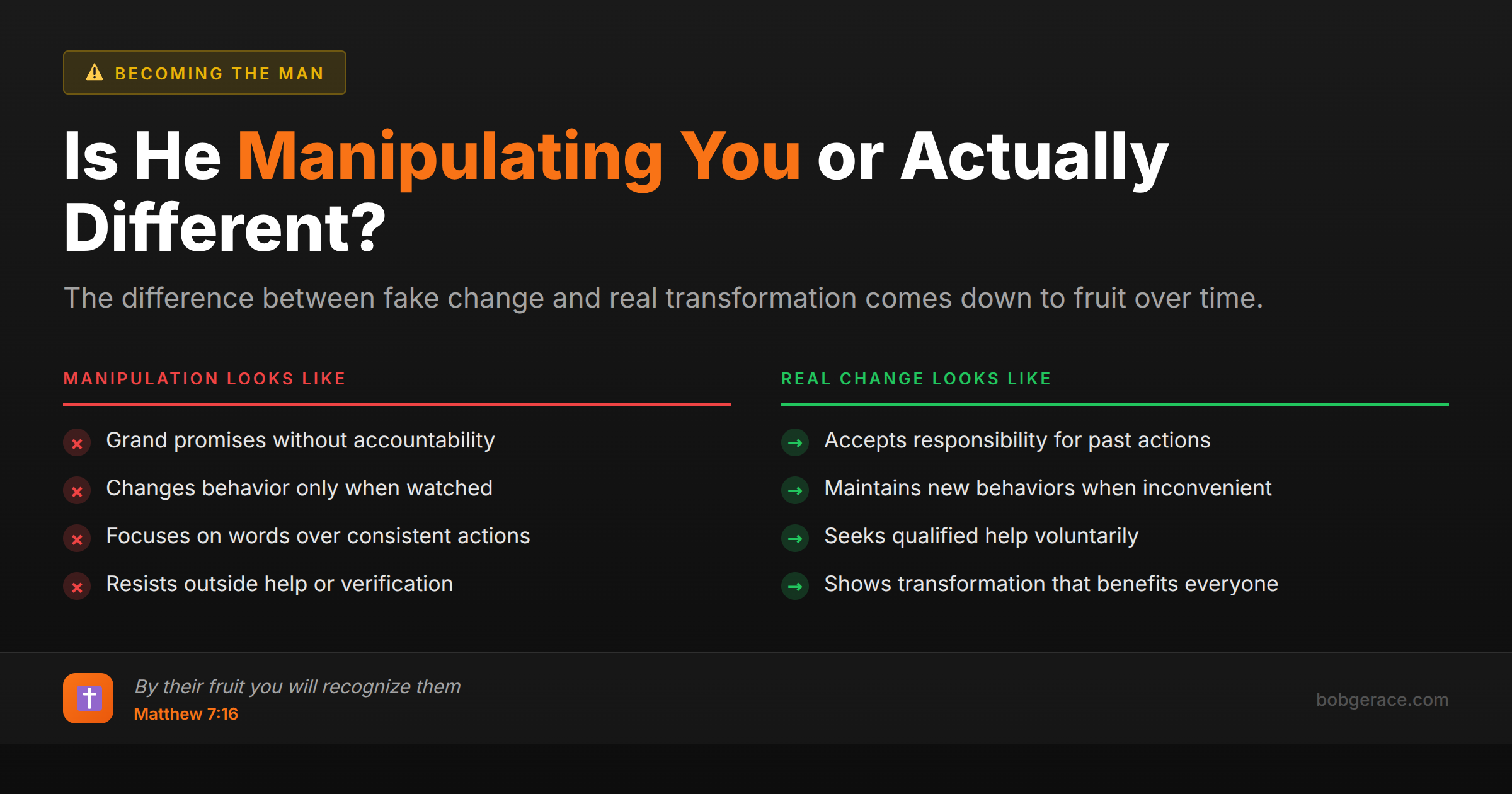
The difference between manipulation and genuine change lies in consistency, accountability, and fruit. Manipulation focuses on words and short-term behavior changes designed to get what he wants. Real change shows up in sustained patterns, voluntary accountability, and transformation that benefits everyone - not just him. Watch for these key differences: Manipulators make grand promises but resist accountability systems. Genuine change includes accepting responsibility for past actions, seeking help from qualified sources, and maintaining new behaviors even when it's inconvenient. Trust your instincts, but verify with observable evidence over time.
The Full Picture
You're asking this question because something feels off, and that instinct matters. Maybe he's saying all the right things after years of saying the wrong ones. Maybe he's being extra attentive after periods of neglect. The confusion you're feeling is normal - it's actually wisdom trying to protect you from falling into the same painful patterns.
The manipulation playbook is predictable: Grand gestures followed by gradual backsliding. Intense remorse that focuses more on his pain than the damage he's caused. Promises of change that come with timelines designed to get you to drop your boundaries. Love-bombing that feels overwhelming rather than genuine. Resistance to outside help or accountability because "we can work this out ourselves."
Genuine change looks different: It's less dramatic and more consistent. It includes taking full responsibility without making excuses or shifting blame. It involves seeking qualified help - counseling, pastoral guidance, or support groups. It respects your need for time and space to heal. It maintains new behaviors even when you're not watching or when it's inconvenient.
The timeline matters too. Manipulation operates on crisis management - intense effort until the immediate threat passes. Real transformation understands that trust is rebuilt slowly, through hundreds of small, consistent actions over months and years. If he's pressuring you to "get over it" quickly or making his continued effort conditional on your response, that's a red flag.
Your safety and sanity aren't negotiable. Whether his change is genuine or not, you have the right to protect yourself, set boundaries, and take the time you need to assess the situation. Don't let anyone - including well-meaning friends or family - rush you into trusting before you're ready.
What's Really Happening
From a clinical perspective, distinguishing between manipulation and genuine change requires understanding the neurological and behavioral patterns involved. Manipulation typically stems from anxiety about consequences - it's a survival mechanism that activates when someone fears losing control or facing accountability.
Genuine change involves what we call 'cognitive restructuring' - actual shifts in thinking patterns, not just behavior modification. This shows up in several ways: unprompted acknowledgment of harm caused, consistent behavior changes even without external pressure, and most importantly, evidence of empathy development.
The timeline is crucial here. Neuroplasticity research shows that real behavioral change typically takes 90-180 days to establish new neural pathways. If someone is claiming transformation after just weeks, that's likely surface-level behavioral compliance, not deep change.
Watch for 'accountability resistance' - this is a major red flag. Manipulators avoid systems that would expose their true intentions over time. They prefer private promises to public commitments. Genuine change embraces transparency and external support structures.
One diagnostic tool I use is observing behavior under stress. Manipulation breaks down quickly when someone is tired, stressed, or not getting the response they want. Authentic change maintains its integrity even during difficult circumstances because it's rooted in genuine conviction, not just crisis management.
What Scripture Says
Scripture gives us clear guidance for assessing the authenticity of change and protecting ourselves from deception. The Bible doesn't call us to be naive - it calls us to be wise as serpents and innocent as doves.
Matthew 7:16 reminds us: "By their fruit you will recognize them." This isn't about one apple - it's about the consistent harvest over time. Genuine repentance produces a lifestyle of different choices, not just better words.
2 Corinthians 7:10 distinguishes between two types of sorrow: "Godly sorrow brings repentance that leads to salvation and leaves no regret, but worldly sorrow brings death." Godly sorrow focuses on the harm caused to you and to God. Worldly sorrow focuses on getting caught and facing consequences.
Luke 3:8 calls for fruit that proves repentance. John the Baptist wasn't satisfied with words - he demanded evidence of genuine heart change. You have the same right to require proof over time.
Proverbs 27:14 warns us about excessive displays: "Whoever blesses their neighbor with a loud voice early in the morning will have it counted as a curse." Sometimes over-the-top demonstrations of change are actually red flags, not green lights.
1 John 3:18 instructs us: "Let us not love with words or speech but with actions and in truth." This applies to repentance too - authentic change is demonstrated through consistent actions, not persuasive speeches.
God Himself gives space and time for people to prove their repentance. You're not being unforgiving by requiring the same standard.
What To Do Right Now
-
1
Create a written record of specific behaviors and changes you're observing - documentation helps you see patterns objectively
-
2
Establish a reasonable timeline (6-12 months minimum) for assessing consistency before making major decisions about trust
-
3
Require external accountability - counseling, pastoral support, or trusted mentors who can observe his progress independently
-
4
Trust your instincts while gathering evidence - if something feels manipulative, investigate that feeling rather than dismissing it
-
5
Maintain your boundaries regardless of his response - genuine change will respect your need for protection and time
-
6
Seek your own support through counseling or trusted advisors who can help you process what you're seeing objectively
Related Questions
You Don't Have To Figure This Out Alone
Distinguishing between manipulation and genuine change is one of the hardest things you'll face. Get the clarity and support you need to make wise decisions.
Get Help Now →