He's said he'll change before — why believe him now?
6 min read
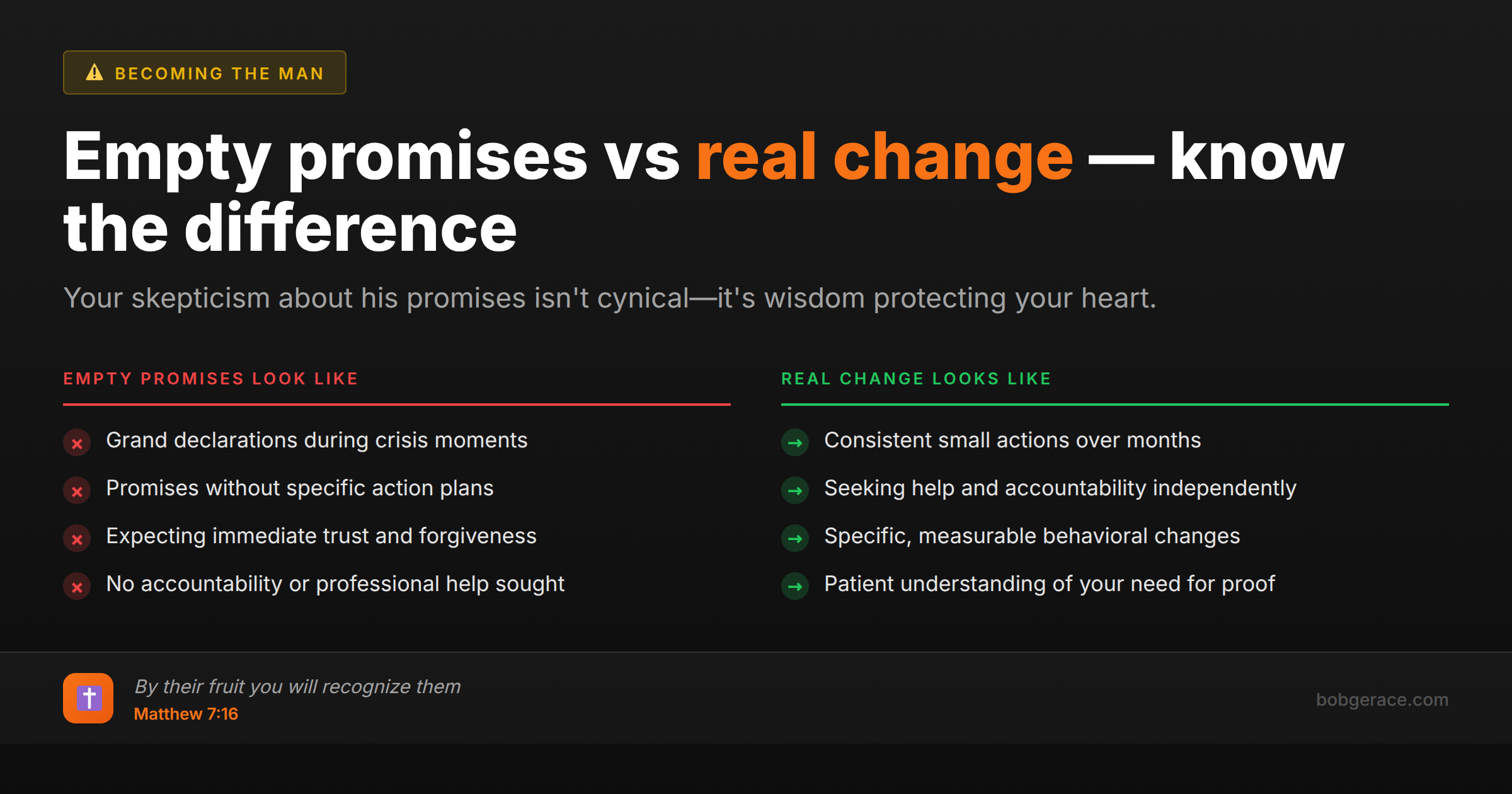
Your skepticism is completely justified. Empty promises followed by unchanged behavior create deep wounds and erode trust systematically. The difference between genuine transformation and manipulation lies in consistent actions over time, not words in moments of crisis. True change involves specific, measurable steps with accountability structures. Look for him taking initiative in seeking help, demonstrating sustained behavioral shifts over months, and showing genuine remorse through actions rather than just apologies. Your job isn't to believe his words—it's to observe his choices and protect your own emotional wellbeing while giving authentic change space to prove itself through sustained evidence.
The Full Picture
You're not being cynical—you're being wise. Repeated promises without follow-through create what psychologists call "learned helplessness" in relationships. Each broken promise doesn't just disappoint; it actively rewires your brain to expect disappointment, creating emotional armor that's both protective and potentially isolating.
The pattern typically looks like this: Crisis occurs, he realizes he might lose you, promises flood in, temporary behavior modification appears, you cautiously hope, old patterns resurface, and the cycle repeats. This isn't necessarily manipulative—many people genuinely mean their promises in the moment but lack the tools, accountability, or sustained commitment to follow through.
Here's what genuine change actually requires: First, acknowledgment of the specific damage caused by previous broken promises. Second, a detailed plan with measurable steps and external accountability. Third, sustained action over 6-12 months minimum before major trust can be reasonably rebuilt. Fourth, professional help or structured support systems that address root causes, not just surface behaviors.
The crucial distinction: Words spoken during crisis carry little weight. Actions taken during calm periods, when there's no immediate pressure, reveal true priorities. Watch for initiative he takes when you're not asking, threatening, or demanding. Observe changes in his daily routines, relationships, and personal habits that align with his promises.
Your role isn't to become a detective or probation officer. Set clear boundaries about what you will and won't accept, communicate what evidence of change looks like to you, then step back and let his choices speak. Authentic transformation will prove itself through consistency over time.
What's Really Happening
From a clinical perspective, repeated promises without follow-through often indicate what we call "change talk" versus genuine commitment to change. This pattern creates trauma bonds—cycles of hurt followed by hope that become psychologically addictive for both partners.
The neurological reality is that making promises releases dopamine, creating a temporary emotional high that can feel like actual progress. This biochemical response can become a substitute for real behavioral change. Meanwhile, your brain is simultaneously developing hypervigilance—constantly scanning for signs of disappointment to protect itself from further emotional injury.
Genuine transformation requires what we term "implementation intentions"—specific if-then planning that bridges the gap between desire and action. Without concrete accountability structures and professional guidance, most people lack the sustained motivation necessary for deep behavioral change, especially when addressing ingrained patterns.
The key indicator to watch for is whether he's addressing underlying issues or just managing surface symptoms. True change involves developing new neural pathways through consistent practice over months, not weeks. This is why couples therapy or individual counseling becomes crucial—it provides the framework and accountability that good intentions alone cannot sustain.
Your protective skepticism is psychologically healthy. Trust should be rebuilt incrementally based on demonstrated reliability in small things before expecting faith in larger promises.
What Scripture Says
Scripture speaks directly to the tension between hope and wisdom when evaluating promises of change. "Above all else, guard your heart, for everything you do flows from it" (Proverbs 4:23). This isn't about becoming hard-hearted, but about wise stewardship of your emotional wellbeing.
"By their fruit you will recognize them" (Matthew 7:16). Jesus gave us clear instruction about evaluating genuine transformation—look at sustained results, not compelling words. Actions over time reveal the true condition of someone's heart and the authenticity of their commitment to change.
"Simply let your 'Yes' be 'Yes,' and your 'No,' 'No'" (Matthew 5:37). This verse speaks to the integrity that should mark all communication. Repeated promises without follow-through violate this biblical standard and create instability that damages relationship foundations.
"Test everything; hold fast what is good" (1 Thessalonians 5:21). God calls us to discernment, not blind faith. Testing promises against sustained evidence isn't unloving—it's biblical wisdom that protects both spouses from unhealthy patterns.
"Be wise as serpents and innocent as doves" (Matthew 10:16). Christ himself advocates for protective wisdom alongside a pure heart. You can hope for transformation while requiring evidence of genuine change.
"Faith without works is dead" (James 2:26). This principle applies to promises of personal change—words without sustained corresponding actions reveal the true spiritual condition of someone's commitment to transformation.
What To Do Right Now
-
1
Define specific, measurable behaviors that would demonstrate genuine change—write them down clearly
-
2
Set a realistic timeline (6-12 months minimum) for evaluating sustained progress rather than immediate perfection
-
3
Establish your own boundaries about what you will and won't accept regardless of his promises
-
4
Look for evidence of him seeking professional help, accountability, or structured support systems independently
-
5
Focus on small, consistent changes in daily behavior rather than grand gestures during crisis moments
-
6
Protect your emotional energy by investing in your own growth and support system while observing his choices
Related Questions
- How do I know if he's really changing?
- Is he manipulating me or actually different?
- How do I tell performance from genuine change?
- What are the markers of genuine behavior change?
- What distinguishes remorse from guilt?
- What timeframe indicates real change?
- What is 'white-knuckling' vs. real transformation?
- Why do I repeat patterns I hate?
- How long does recovery take?
- What does real transformation look like?
Also find Bob on
Subscribe for weekly videos on Christian marriage.
Your Marriage Needs More Than Pattern Recognition
A coach who knows your specific history can help you see what's real change versus what's performance—and what protecting yourself actually looks like while you wait for proof.
Talk to Bob →