How do I tell performance from genuine change?
6 min read
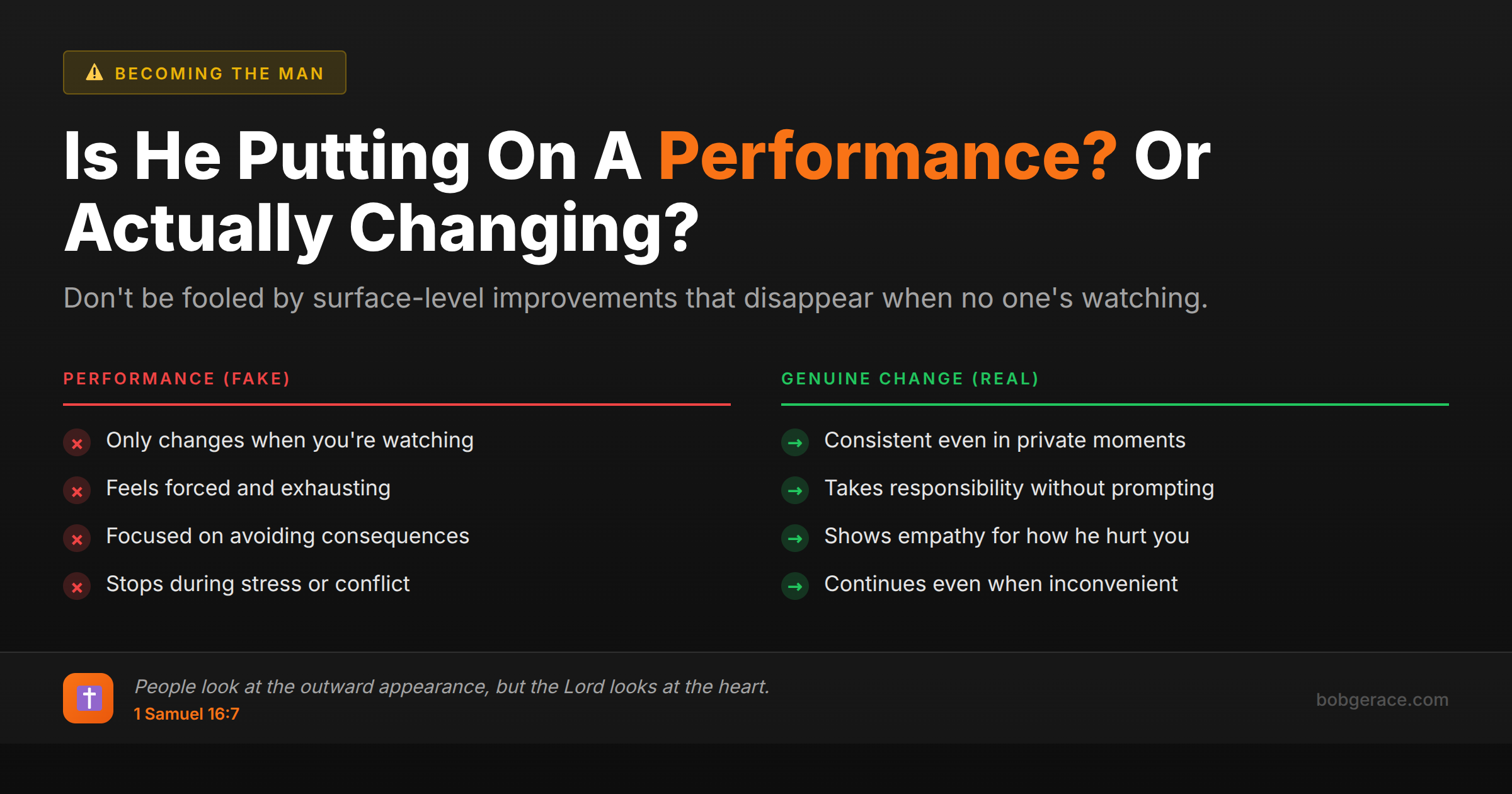
Genuine change shows up in unguarded moments and private behaviors, not just when he knows you're watching. Performance is surface-level and temporary - he's doing the right things but for the wrong reasons, often to avoid consequences or win you back quickly. Real transformation involves heart change that affects his character, motivations, and automatic responses. Look for consistency over time, especially when he thinks no one is paying attention. Genuine change includes taking responsibility without being prompted, showing empathy for how his actions affected you, and making changes that benefit the relationship even when they're inconvenient for him. Performance feels forced and exhausting; authentic change feels natural and sustainable because it flows from internal conviction rather than external pressure.
The Full Picture
This question hits at the heart of what every betrayed wife faces: Is this real, or is he just telling me what I want to hear? The distinction between performance and genuine change isn't always immediately clear, but there are reliable indicators that separate authentic transformation from elaborate theater.
Performance is about managing your reaction. When a husband is performing, his primary goal is getting you to stop being upset, resume normal life, or avoid consequences. He's focused on doing enough to get by, not on actually becoming different. You'll notice this shows up as:
- Sudden, dramatic changes that feel too good to be true - Behaviors that only happen when you're around - Defensiveness when questioned about his efforts - A timeline mentality: "I've been good for X weeks, so you should trust me now" - Changes that stop once tension decreases
Genuine change is about becoming a different person. Real transformation happens from the inside out. A man who's genuinely changing isn't just modifying behaviors - he's examining his heart, understanding the depth of damage he's caused, and committing to lifelong growth regardless of your response.
The key difference? Performance is about outcomes; genuine change is about character. A performing husband asks, "What do I need to do to fix this?" A genuinely changing husband asks, "Who do I need to become?" One is transactional; the other is transformational.
Time reveals everything. Performance is exhausting to maintain long-term. Genuine change, while requiring effort, becomes increasingly natural because it aligns with who he's becoming rather than contradicting who he still is inside.
Trust your instincts. If something feels off, it probably is. God gave you intuition for a reason. Don't dismiss that internal warning system because you want to believe the change is real.
What's Really Happening
From a psychological perspective, the difference between performance and genuine change lies in the neurological and motivational systems at work. Performance operates from the brain's threat-detection system - the amygdala is activated, driving fight-or-flight responses focused on immediate survival (avoiding consequences, managing crisis).
Genuine change engages the prefrontal cortex, the part of the brain responsible for long-term planning, moral reasoning, and self-reflection. This is why authentic transformation takes longer to develop but is more sustainable - it's literally rewiring neural pathways rather than just overriding them temporarily.
Key clinical indicators of performance include: rapid behavioral changes without corresponding emotional or cognitive shifts, external locus of control (changes depend on your monitoring), and what we call 'white-knuckling' - changes that require enormous conscious effort to maintain.
Genuine change markers include: gradual but consistent progress, internal locus of control (changes continue regardless of external monitoring), integration of new behaviors into identity, and what psychologists call 'intrinsic motivation' - change driven by internal values rather than external rewards or punishments.
Neuroplasticity research shows us that real change requires approximately 90 days of consistent practice to create new neural pathways, and 6-18 months to make those pathways dominant. This is why genuine transformation feels slow - because it literally is rewiring the brain. Performance shortcuts this process, which is why it ultimately fails.
What Scripture Says
Scripture makes a clear distinction between outward compliance and heart transformation. God has always been more concerned with the condition of our hearts than our external behaviors, because He knows lasting change only comes from internal renewal.
"The Lord does not look at the things people look at. People look at the outward appearance, but the Lord looks at the heart." - 1 Samuel 16:7. God sees past performance to the true motivations and intentions of the heart.
"Above all else, guard your heart, for everything you do flows from it." - Proverbs 4:23. This verse reveals that genuine behavior change must flow from heart change, not the other way around.
"Therefore, if anyone is in Christ, the new creation has come: The old has gone, the new is here!" - 2 Corinthians 5:17. True transformation in Christ isn't about behavior modification - it's about becoming a new person entirely.
"Create in me a pure heart, O God, and renew a steadfast spirit within me." - Psalm 51:10. David understood that lasting change requires God's work in the heart, not just external compliance.
"But when the Holy Spirit controls our lives, he will produce this kind of fruit in us: love, joy, peace, patience, kindness, goodness, faithfulness, gentleness, and self-control." - Galatians 5:22-23. Genuine spiritual transformation produces natural fruit - behaviors that flow from the Spirit's work rather than human effort.
"All a person's ways seem pure to them, but motives are weighed by the Lord." - Proverbs 16:2. God examines not just what we do, but why we do it. Performance and genuine change may look similar externally, but God sees the heart motivations behind each.
What To Do Right Now
-
1
Document patterns over time - keep a private journal tracking consistency of changes when he thinks you're not watching
-
2
Ask direct questions about his internal process - 'What's different about how you think now?' rather than just observing behaviors
-
3
Test the sustainability - genuine change should continue even during stress, conflict, or when you're not monitoring
-
4
Look for unprompted accountability - is he proactively sharing struggles and progress, or only responding when asked?
-
5
Evaluate his response to setbacks - does failure lead to shame spirals or to renewed commitment and learning?
-
6
Trust your God-given intuition while also setting measurable standards for what genuine change looks like in your specific situation
Related Questions
- What are the markers of genuine behavior change?
- What distinguishes remorse from guilt?
- What is 'white-knuckling' vs. internalized change?
- What timeframe indicates real change?
- How do I know if he's really changing?
- Is he manipulating me or actually different?
- What does real transformation look like?
- How long does recovery take?
- What are markers of genuine remorse vs. guilt?
- What does genuine repair look like for old wounds?
Also find Bob on
Subscribe for weekly videos on Christian marriage.
Not Sure What You're Seeing?
A coach who knows your marriage can help you read what's actually happening—not just what looks good on paper.
Talk to Bob →