How do I know if he's really changing?
6 min read
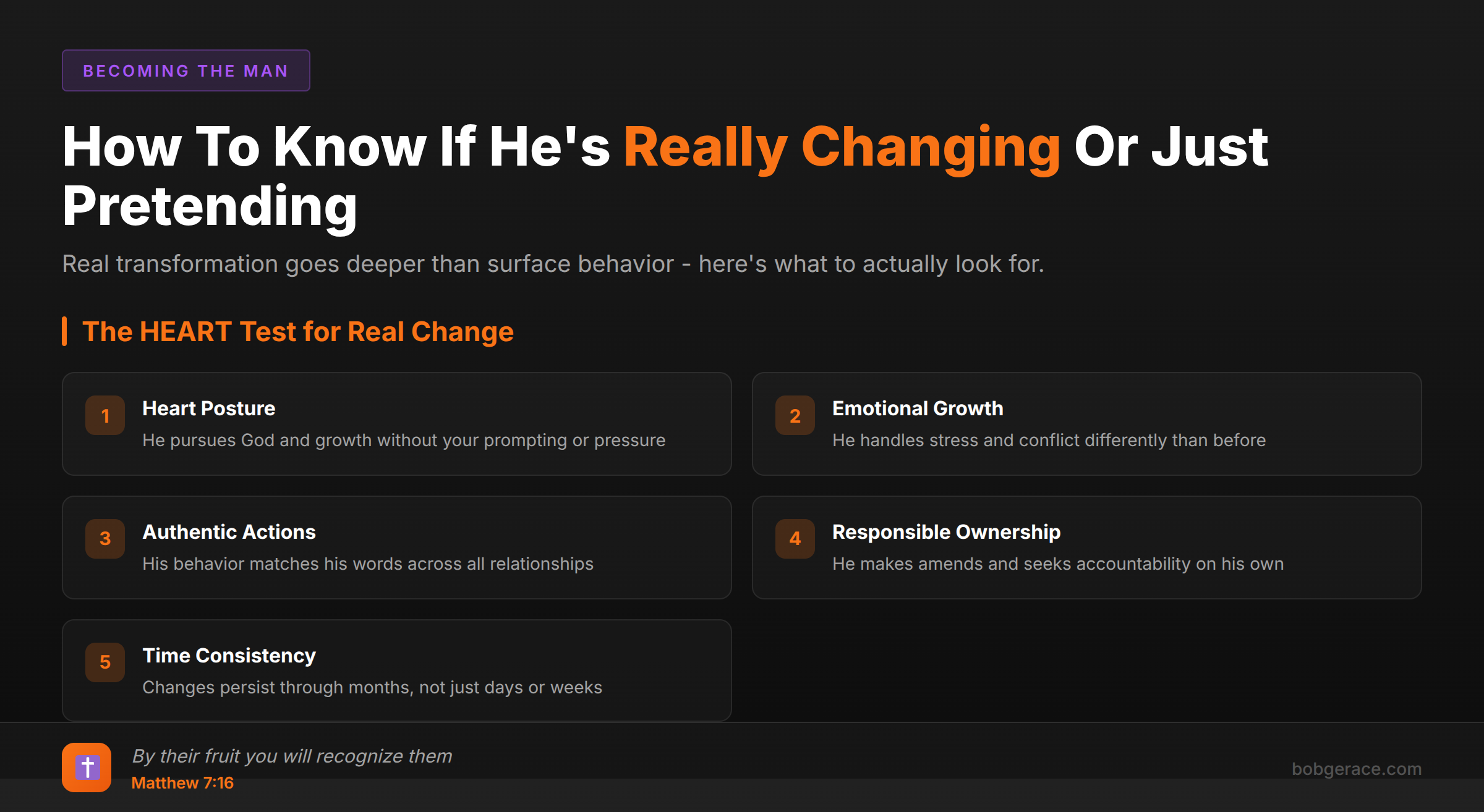
Real change goes deeper than surface behavior - it involves his heart, actions, and consistency over time. You'll know he's genuinely changing when you see sustained behavioral shifts, emotional growth, and accountability without your prompting. Look for changes in his character, not just his compliance. Genuine transformation shows up in how he responds to stress, treats others when you're not around, and takes ownership of his growth. He'll seek help, make amends without being asked, and demonstrate patience with the process. Most importantly, you'll sense a fundamental shift in his heart toward God and toward you.
The Full Picture
The difference between real change and performance is profound. When someone is merely performing, they're managing their image and controlling outcomes. When someone is truly changing, they're surrendering control and allowing God to transform them from the inside out.
Real change is messy and imperfect. If his transformation looks too polished or scripted, be cautious. Genuine growth involves setbacks, struggles, and honest admission of weaknesses. He should be wrestling with his issues, not just presenting you with neat solutions.
Look at his motivation. Is he changing to get you back, or because he genuinely sees the need for transformation? External motivations (avoiding consequences, winning you over) create temporary shifts. Internal motivations (conviction, desire for righteousness, love for God) create lasting change.
Time reveals truth. Anyone can sustain good behavior for a few weeks or even months. Real change endures through seasons, stress, and challenges. Watch how he responds when things get difficult, when he's tired, or when he thinks you're not paying attention.
Character shows in the details. Notice how he treats service workers, responds to traffic, handles disappointment, or reacts when plans change. These moments reveal his heart more than grand gestures or promises.
Accountability matters. A man who's genuinely changing will seek accountability, welcome feedback, and be transparent about his struggles. He won't hide his process or get defensive when questioned about his progress.
What's Really Happening
From a clinical perspective, genuine behavioral change involves neuroplasticity - the brain's ability to form new neural pathways. This process takes time and consistent practice, typically 18-24 months for deeply ingrained patterns to truly shift.
Watch for these psychological markers of authentic change: emotional regulation under stress, increased self-awareness without prompting, and the ability to delay gratification. Men who are truly changing will demonstrate metacognition - thinking about their thinking - and can articulate not just what they're doing differently, but why.
Be wary of what we call 'white-knuckling' - using sheer willpower to modify behavior without addressing underlying beliefs and emotions. This approach typically fails within 3-6 months because it's unsustainable. Real change involves processing emotions, challenging cognitive distortions, and developing healthy coping mechanisms.
The most reliable indicator is consistency across contexts. A genuinely changing person will show growth at work, with friends, under pressure, and when tired - not just when they know you're watching. They'll also demonstrate what we call 'integrated learning' - applying lessons from one area of growth to other areas of their life.
What Scripture Says
Scripture gives us clear markers for authentic transformation. 'By their fruit you will recognize them' (Matthew 7:16). Jesus taught us to look at results over time, not just promises or intentions.
'If anyone is in Christ, the new creation has come: The old has gone, the new is here!' (2 Corinthians 5:17). True change in believers involves the Holy Spirit's transforming work. You should see evidence of spiritual fruit: love, joy, peace, patience, kindness, goodness, faithfulness, gentleness, and self-control (Galatians 5:22-23).
'Godly sorrow brings repentance that leads to salvation and leaves no regret' (2 Corinthians 7:10). Look for genuine sorrow over sin's impact, not just sorrow over consequences. Real repentance involves turning away from harmful patterns, not just feeling bad about them.
'He has shown you, O mortal, what is good. And what does the Lord require of you? To act justly and to love mercy and to walk humbly with your God' (Micah 6:8). Genuine change produces justice (making things right), mercy (extending grace to others), and humility (teachable spirit).
'Above all else, guard your heart, for everything you do flows from it' (Proverbs 4:23). Focus on heart change, not just behavioral modification. When the heart is transformed, actions follow naturally.
What To Do Right Now
-
1
Create a private journal to document patterns you observe over 3-6 months, noting both progress and setbacks
-
2
Look for consistency between his words and actions across different situations and relationships
-
3
Pay attention to how he handles stress, disappointment, and conflict - these moments reveal true character
-
4
Notice whether he's seeking help, accountability, and growth opportunities on his own initiative
-
5
Observe his relationship with God - is he pursuing spiritual growth independently, not just for show?
-
6
Trust your instincts while staying grounded in facts, and seek wise counsel from mature believers who know you both
Related Questions
Need Help Discerning Truth from Performance?
Assessing genuine change requires wisdom, patience, and often an outside perspective. I can help you navigate this crucial season with clarity and confidence.
Get Support →