What does 'godly sorrow' look like in practice?
6 min read
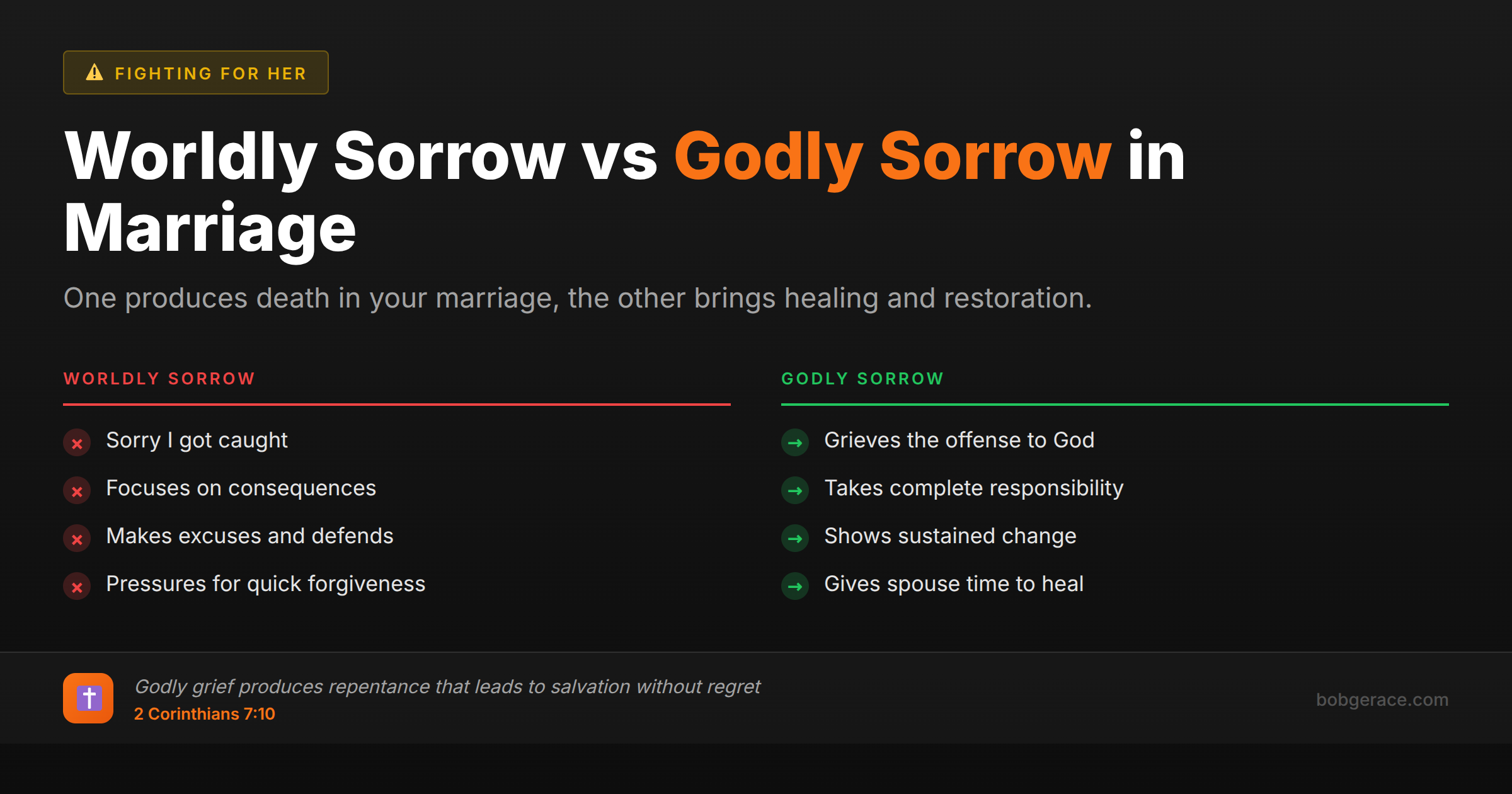
Godly sorrow is the deep, Spirit-led grief over sin that produces genuine repentance and lasting change. Unlike worldly sorrow that focuses on consequences or getting caught, godly sorrow grieves over the offense against God and the harm done to others. In marriage, this looks like taking full responsibility without excuses, demonstrating sustained behavioral change, and patiently allowing your spouse time to heal without pressuring for immediate forgiveness. Practically, godly sorrow involves confession that names specific wrongs, accepts complete accountability, and shows genuine empathy for the pain caused. It's not about dramatic displays of emotion, but consistent, humble actions over time that prove the authenticity of your repentance.
The Full Picture
Godly sorrow stands in stark contrast to the shallow remorse most men display when their marriages are falling apart. Paul distinguishes between godly sorrow and worldly sorrow in 2 Corinthians 7:10, explaining that godly sorrow leads to repentance and salvation, while worldly sorrow leads to death.
Worldly sorrow is all about you. It's the grief you feel when you get caught, when you face consequences, or when your comfortable life gets disrupted. It's the "I'm sorry you're upset" or "I'm sorry this happened" that doesn't actually take responsibility. Worldly sorrow often includes self-pity, blame-shifting, and attempts to minimize the offense.
Godly sorrow is about God and others. It's grief over the fact that your sin has offended a holy God and wounded people you claim to love. This sorrow doesn't focus on what you're losing, but on what you've done. It doesn't seek to quickly move past the offense but instead sits with the weight of it.
In marriage, the difference is unmistakable. Worldly sorrow says, "I'm sorry, can we move on now?" Godly sorrow says, "I understand the depth of what I've done, I'm committed to change, and I'll do whatever it takes for however long it takes." Worldly sorrow gets frustrated when forgiveness doesn't come quickly. Godly sorrow understands that trust must be rebuilt through consistent action over time.
The fruit of godly sorrow is what proves its authenticity. Paul lists several evidences in 2 Corinthians 7:11: earnestness, eagerness to clear yourself through action (not words), indignation at your own sin, concern for the wounded party, longing to make things right, and zeal for justice and righteousness.
What's Really Happening
From a psychological perspective, godly sorrow represents what we call 'other-focused guilt' versus 'self-focused shame.' Research consistently shows that other-focused guilt—concern about harm done to others—leads to prosocial behavior and genuine change efforts. Self-focused shame, however, leads to defensive behaviors, avoidance, and often repeated offenses.
The neurological difference is significant. When someone experiences true empathy and other-focused concern, we see activation in brain regions associated with perspective-taking and moral reasoning. This creates motivation for restorative action. Conversely, self-focused distress activates threat-response systems, leading to fight, flight, or freeze responses that actually inhibit genuine repair efforts.
In marriage therapy, I observe that partners who demonstrate authentic godly sorrow show specific behavioral patterns: they voluntarily increase transparency, proactively address related issues they weren't even confronted about, and demonstrate patience with their spouse's healing timeline. They stop defending their intentions and focus entirely on the impact of their actions.
Critically, genuine godly sorrow cannot be manufactured or performed. It emerges from a fundamental shift in perspective—from self-protection to other-concern, from consequence-avoidance to character-transformation. This shift often requires spiritual intervention beyond human willpower, which aligns with the biblical understanding that true repentance is a gift from God (Romans 2:4).
What Scripture Says
Scripture provides clear markers for distinguishing godly sorrow from worldly sorrow. *"For godly grief produces a repentance that leads to salvation without regret, whereas worldly grief produces death"* (2 Corinthians 7:10). The key word here is "produces"—godly sorrow creates tangible fruit.
David's response to Nathan's confrontation demonstrates godly sorrow. *"I have sinned against the Lord"* (2 Samuel 12:13). Notice David doesn't minimize ("I made a mistake"), blame-shift ("Bathsheba tempted me"), or focus on consequences ("What will happen to me?"). He takes direct responsibility and acknowledges the primary offense is against God.
Psalm 51 reveals the heart attitude of godly sorrow. *"Against you, you only, have I sinned and done what is evil in your sight"* (Psalm 51:4). David understands that all sin is ultimately against God, regardless of who else was harmed. This perspective prevents the self-justification that characterizes worldly sorrow.
Jesus describes the tax collector's godly sorrow in contrast to the Pharisee's self-righteousness. *"But the tax collector, standing far off, would not even lift up his eyes to heaven, but beat his breast, saying, 'God, be merciful to me, a sinner!'"* (Luke 18:13). True repentance doesn't compare itself to others or seek to minimize guilt—it acknowledges the full weight of sin.
The fruit of godly sorrow is described in 2 Corinthians 7:11. *"See what earnestness this godly grief has produced in you, but also what eagerness to clear yourselves, what indignation, what fear, what longing, what zeal, what punishment!"* Genuine sorrow produces multiple evidences over time.
James connects godly sorrow to humility before God. *"Humble yourselves before the Lord, and he will exalt you"* (James 4:10). Godly sorrow includes the humility to accept God's timeline for restoration rather than demanding immediate resolution.
What To Do Right Now
-
1
Stop defending your intentions and focus entirely on the impact of your actions on your wife and your relationship with God
-
2
Confess specifically—name what you did wrong without minimizing language like 'mistakes' or 'poor choices'
-
3
Accept full responsibility without any 'but' statements, explanations, or attempts to share blame
-
4
Ask what you can do to demonstrate your commitment to change, then follow through consistently without being asked
-
5
Give your wife complete freedom to feel hurt, angry, or distant without pressuring her for forgiveness or reconciliation
-
6
Seek accountability from other godly men who will help you maintain this changed perspective long-term
Related Questions
- How do I make amends for years of failure?
- What does repentance look like for accumulated sin?
- What is restitution and do I owe it?
- What did Zacchaeus model about making things right?
- What if I've confessed but she won't release?
- Does she need to forgive me for healing to happen?
- What does real forgiveness look like?
- What does 'taking responsibility' actually look like?
- What's the difference between explaining and defending?
- What are markers of genuine remorse vs. guilt?
Also find Bob on
Subscribe for weekly videos on Christian marriage.
Ready to Move Beyond Surface Apologies?
True repentance requires more than good intentions—it demands a complete shift in perspective that most men can't achieve alone.
Get Help Now →