How do I make amends for years of failure?
6 min read
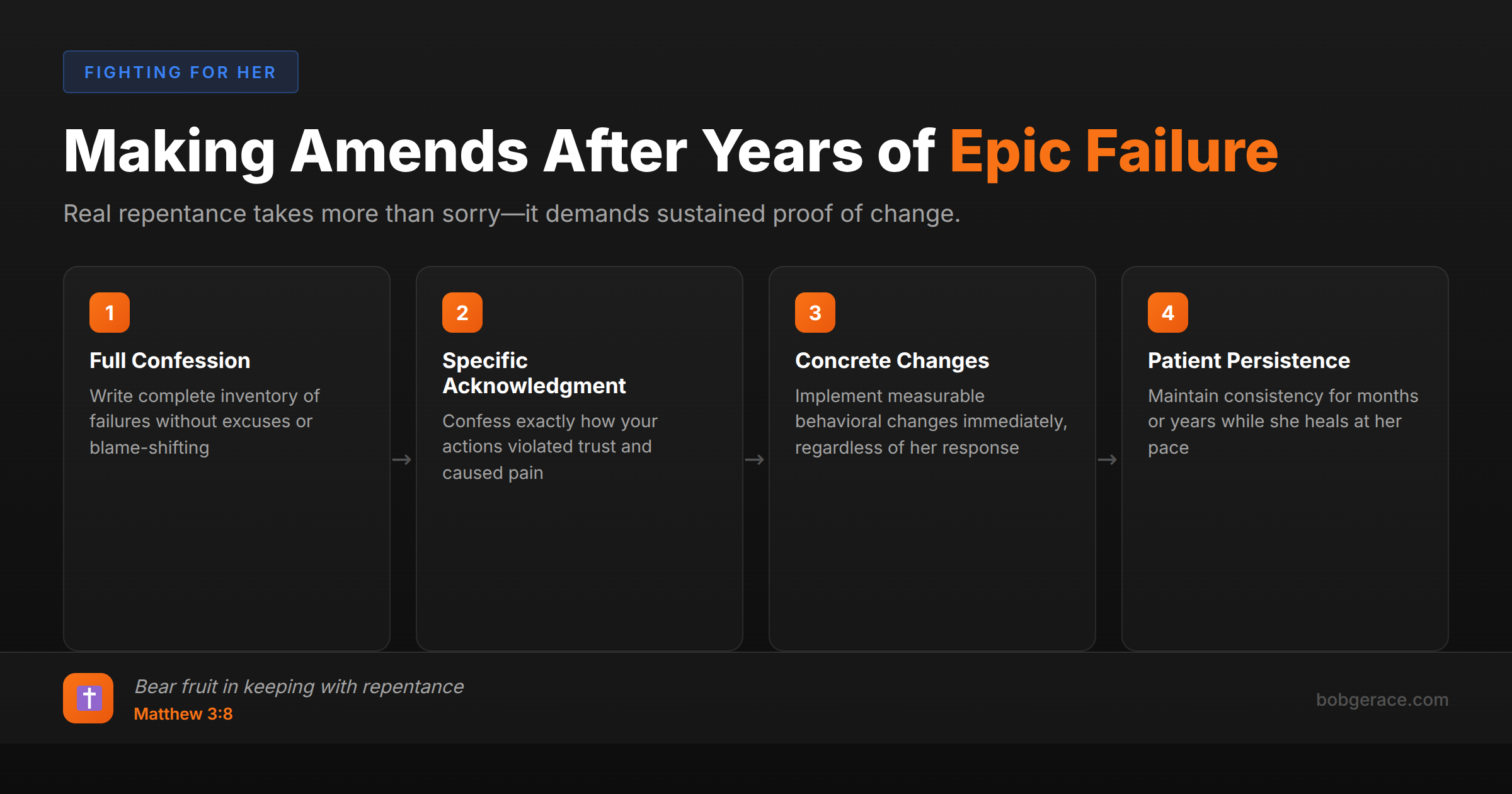
Making amends for years of failure requires more than apologies—it demands genuine repentance, consistent changed behavior, and patience with your wife's healing process. Start by taking full responsibility without excuses or blame-shifting. Confess specifically what you've done wrong, how it hurt her, and commit to concrete changes. True amends involve both confession and restitution. This means not just saying sorry, but actively working to repair the damage through your actions. Your wife needs to see sustained change over time, not just good intentions. Be prepared for this to take months or years, and understand that your timeline for forgiveness may not match hers.
The Full Picture
When you've failed your wife for years, you're not dealing with a single offense—you're dealing with accumulated pain, broken trust, and a wife whose heart has likely shut down as a protective measure. She's probably moved from hurt to anger to resignation, and now she's emotionally checked out.
The reality is harsh but necessary to face: your wife didn't arrive at this place overnight, and she won't leave it quickly. Years of failure create deep wounds that require time and consistent care to heal. She's built walls not to punish you, but to protect herself from further harm.
Your failures likely fall into patterns—maybe you've been emotionally absent, sexually selfish, financially irresponsible, or consistently put other priorities before your marriage. Perhaps you've broken promises, failed to //blog.bobgerace.com/christian-marriage-leadership-transforms/:lead spiritually, or allowed other relationships to compete with your marriage.
The damage compounds over time. Each failure reinforced her belief that you couldn't be trusted, that she wasn't a priority, that things wouldn't change. She stopped believing your words because your actions consistently contradicted them. This is why she's checked out—it's her heart's way of surviving repeated disappointment.
Making amends isn't about getting her back quickly—it's about becoming the man God called you to be and the husband she needed all along. This requires facing the full scope of your failures without minimizing, justifying, or rushing the process.
What's Really Happening
When a spouse has "checked out" after years of failure, we're observing a psychological protective mechanism called emotional disengagement. This isn't stubbornness or unforgiveness—it's often a trauma response to repeated relational injuries.
Neurologically, repeated betrayals and disappointments create hypervigilance in the injured spouse. Her brain has learned to expect failure from you, creating neural pathways that automatically trigger defensive responses. This is why she may react with skepticism even to genuine attempts at change.
The concept of 'relational trauma' is crucial here. Just as physical trauma creates protective reflexes, emotional trauma from years of marital failure creates protective emotional responses. Your wife's withdrawal isn't meant to hurt you—it's her psyche's attempt to prevent further injury.
Trust rebuilding follows predictable stages: safety, stability, and finally intimacy. Most men want to jump to intimacy (reconnection) without establishing safety (she feels protected from further harm) and stability (consistent evidence of change over time). The process requires what we call 'earned security'—trust rebuilt through consistent, trustworthy behavior over extended periods.
The paradox of making amends is that the more desperately you want forgiveness, the more pressure she feels and the slower the process becomes. Genuine amends focus on your responsibility to change regardless of her response, removing the pressure from her to forgive on your timeline.
What Scripture Says
Scripture provides a clear framework for making amends that goes far beyond human apologies. God's model of repentance and restoration shows us the depth required for true reconciliation.
True repentance produces fruit. *"Bear fruit in keeping with repentance"* (Matthew 3:8). John the Baptist demanded evidence of heart change, not just words. Your amends must be demonstrated through sustained behavioral change, not just emotional appeals.
Confession must be specific and complete. *"Whoever conceals his transgressions will not prosper, but he who confesses and forsakes them will obtain mercy"* (Proverbs 28:13). Notice the two requirements: confession AND forsaking. You must name your failures specifically and demonstrate you've stopped the harmful behaviors.
Restitution is part of biblical repentance. *"If anyone has caused grief... the punishment inflicted on him by the majority is sufficient. Now instead, you ought to forgive and comfort him"* (2 Corinthians 2:6-7). Even after genuine repentance, there's a process of restoration that takes time and community support.
Patience in the restoration process reflects God's character. *"The Lord is not slow in keeping his promise, as some understand slowness. Instead he is patient with you, not wanting anyone to perish, but everyone to come to repentance"* (2 Peter 3:9). Just as God is patient with our repentance process, you must be patient with your wife's healing process.
Your focus should be on your own transformation. *"First take the plank out of your own eye, and then you will see clearly to remove the speck from your brother's eye"* (Matthew 7:5). Making amends starts with thorough self-examination and change, not managing her response.
God's forgiveness model shows both justice and mercy. *"He is faithful and just and will forgive us our sins and purify us from all unrighteousness"* (1 John 1:9). Your amends should acknowledge the justice of her hurt while humbly appealing to mercy.
What To Do Right Now
-
1
Write a complete inventory of your failures without excuses, justifications, or blame-shifting—take full responsibility for your actions and their impact on her
-
2
Confess specifically to your wife, acknowledging the pain you've caused and how your actions violated your wedding vows and her trust
-
3
Identify concrete, measurable changes you will make and begin implementing them immediately, regardless of her response or belief in your commitment
-
4
Seek accountability through a pastor, counselor, or trusted mentor who will help you maintain consistency in your new behaviors
-
5
Give her space and time to heal without pressuring her for forgiveness, updates on your progress, or emotional connection—let your actions speak
-
6
Commit to long-term change by addressing root issues through counseling, spiritual growth, and accountability rather than just surface behavior modification
Related Questions
- She brings up things from years ago
- How do I address years of built-up hurt?
- What does genuine repair look like for old wounds?
- What is restitution and do I owe it?
- What did Zacchaeus model about making things right?
- What does repentance look like for accumulated sin?
- What does 'taking responsibility' actually look like?
- How do I change from the inside out?
- What does 'godly sorrow' look like in practice?
- What does real transformation look like?
Also find Bob on
Subscribe for weekly videos on Christian marriage.
Your Marriage Isn't a Template Problem
Years of failure means your story has layers a tool can't see. A coach who knows your specific marriage can help you rebuild trust without guessing what comes next.
Talk to Bob →