What does repentance look like for accumulated sin?
6 min read
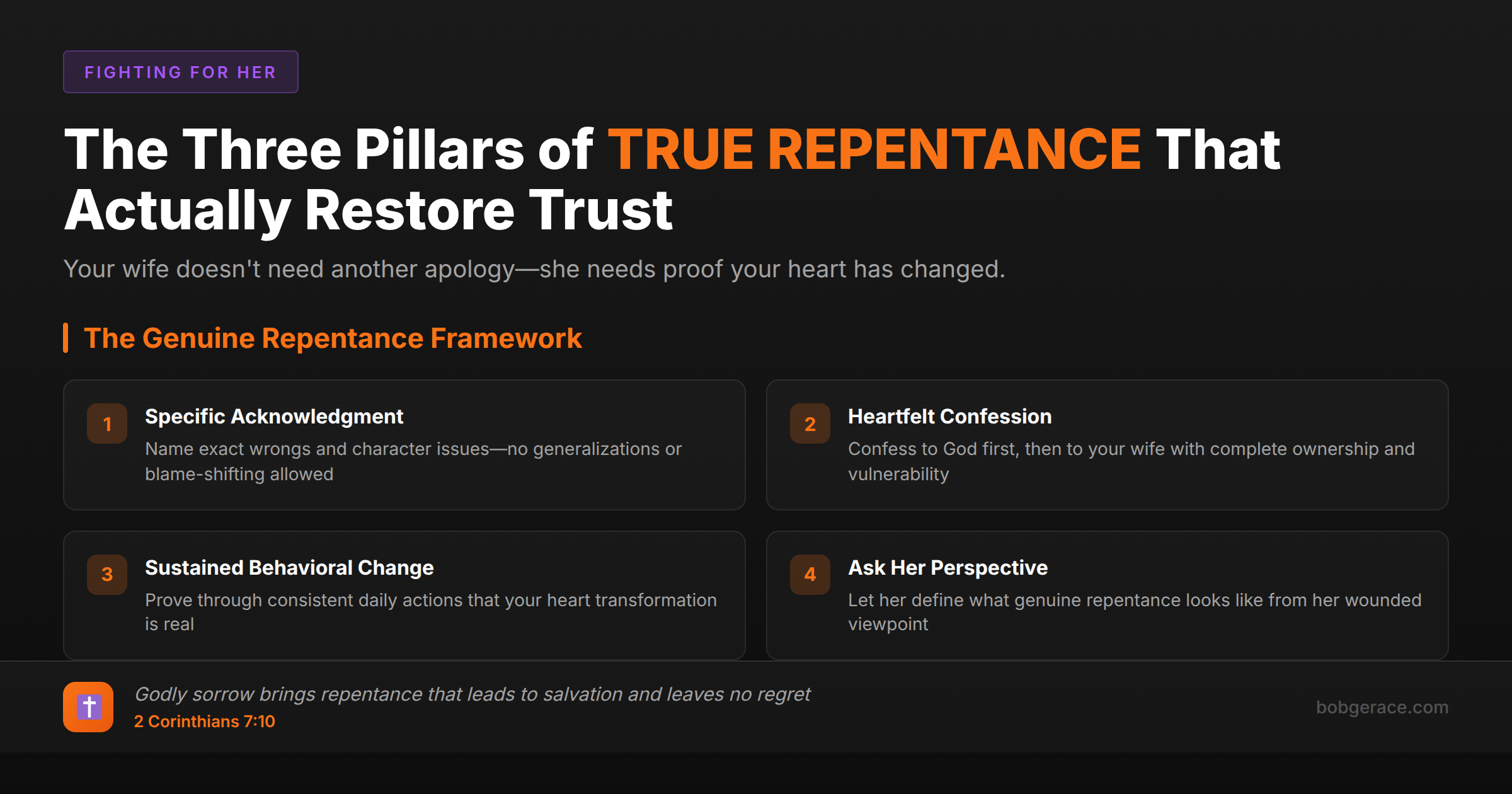
True repentance for accumulated sin involves three non-negotiable elements: genuine acknowledgment of specific wrongs, heartfelt confession to both God and those you've hurt, and sustained behavioral change that proves the repentance is real. It's not a one-time event but a process that demonstrates your heart has truly changed. This means getting specific about what you've done wrong, taking full responsibility without excuses or blame-shifting, and then proving through consistent actions over time that you're a different person. Your wife needs to see that this isn't just another round of empty promises, but a fundamental transformation of your character and priorities.
The Full Picture
When your wife has checked out, it's usually not because of one big incident—it's the accumulation of a thousand small betrayals, broken promises, and moments where you chose yourself over her and the marriage. The weight of accumulated sin creates a canyon of hurt that can't be bridged with a simple "I'm sorry."
True repentance is a process, not an event. It starts with honest self-examination where you stop making excuses and start taking inventory of the real damage you've caused. This isn't about beating yourself up—it's about getting ruthlessly honest about patterns of selfishness, neglect, or harmful behavior that have eroded your wife's trust and love.
The depth of repentance must match the depth of the offense. If you've spent years being emotionally distant, sexually selfish, or putting work before family, then your repentance needs to be proportionally deep and sustained. Surface-level sorry doesn't cut it when dealing with years of accumulated hurt.
Your wife is watching for proof, not promises. She's heard apologies before. What she hasn't seen is sustained change that proves you understand the gravity of what you've done and that you're committed to being a different man. This means your repentance needs to be visible in your daily choices, priorities, and how you treat her.
Repentance for accumulated sin requires patience—both with yourself as you do the hard work of change, and understanding that your wife's healing will take time. You can't rush forgiveness or trust. What you can do is prove through consistent action that you're worthy of both.
What's Really Happening
From a clinical perspective, accumulated sin in marriage creates what we call "attachment injury"—a deep wound to the emotional bond that requires more than surface-level repair. When someone has checked out, their nervous system has essentially concluded that the relationship is unsafe.
Genuine repentance triggers neuroplasticity—the brain's ability to form new neural pathways. But this requires consistency over time. Research shows it takes approximately 90 days of consistent behavior change for new neural patterns to begin solidifying, and much longer for deep trust to be rebuilt.
The process involves moving through what I call the "Four Rs of Repair": Recognition (seeing the full scope of damage), Responsibility (owning it without defensiveness), Repentance (demonstrating genuine remorse through action), and Rebuilding (consistent behavior that proves change is real).
Your wife's emotional withdrawal isn't punishment—it's protection. Her checking out is a survival mechanism. True repentance helps her nervous system begin to feel safe again, but this happens gradually through predictable, trustworthy behavior over time.
The mistake most men make is trying to rush this process. They want quick forgiveness and immediate restoration of intimacy. But healing from accumulated hurt requires what researchers call "earned security"—trust that's rebuilt through demonstrated reliability over months, not days.
What Scripture Says
Scripture is crystal clear about what genuine repentance looks like, and it's far more than just feeling bad about what you've done.
2 Corinthians 7:10-11 shows us the difference between worldly sorrow and godly sorrow: *"Godly sorrow brings repentance that leads to salvation and leaves no regret, but worldly sorrow brings death. See what this godly sorrow has produced in you: what earnestness, what eagerness to clear yourselves, what indignation, what alarm, what longing, what concern, what readiness to see justice done."*
True repentance produces visible fruit. Luke 3:8 commands us to *"produce fruit in keeping with repentance."* Your wife needs to see the fruit, not just hear the words.
1 John 1:9 promises that *"if we confess our sins, he is faithful and just and will forgive us our sins and purify us from all unrighteousness."* But confession here means agreeing with God about the full reality of our sin—no minimizing, no excuse-making.
Ezekiel 36:26 speaks to the heart transformation that must happen: *"I will give you a new heart and put a new spirit in you; I will remove from you your heart of stone and give you a heart of flesh."*
James 5:16 calls us to *"confess your sins to each other and pray for each other so that you may be healed."* Repentance isn't just between you and God—it involves those you've hurt.
Genuine repentance before God always translates into changed behavior toward people. You can't claim to have repented before God while continuing to harm your wife.
What To Do Right Now
-
1
Write out a specific inventory of your patterns of sin and selfishness—not just individual incidents, but the underlying character issues that created them
-
2
Confess to God first, asking Him to give you a genuinely repentant heart and the power to change, not just feel sorry
-
3
Approach your wife with specific confession (no generalizations like 'I'm sorry I hurt you') and ask what repentance would look like from her perspective
-
4
Create measurable changes in your daily routine that demonstrate your repentance—new priorities, boundaries, habits that prove you're different
-
5
Find an accountability partner or Christian counselor who will hold you accountable to sustained change, not just good intentions
-
6
Commit to a timeline of consistent changed behavior (minimum 90 days) before expecting any response from your wife—focus on proving repentance, not earning forgiveness
Related Questions
- How do I make amends for years of failure?
- What is restitution and do I owe it?
- What did Zacchaeus model about making things right?
- What does 'godly sorrow' look like in practice?
- What if I've confessed but she won't release?
- Does she need to forgive me for healing to happen?
- What does biblical forgiveness require of me?
- How do I hold both my responsibility and her agency?
Also find Bob on
Subscribe for weekly videos on Christian marriage.
Your Marriage Needs More Than Generic Repentance
A coach who knows your specific story can help you identify the exact behaviors your wife needs to see change—and hold you accountable when old patterns resurface.
Talk to Bob →