Joseph considered divorcing Mary — what does that tell us?
5 min read
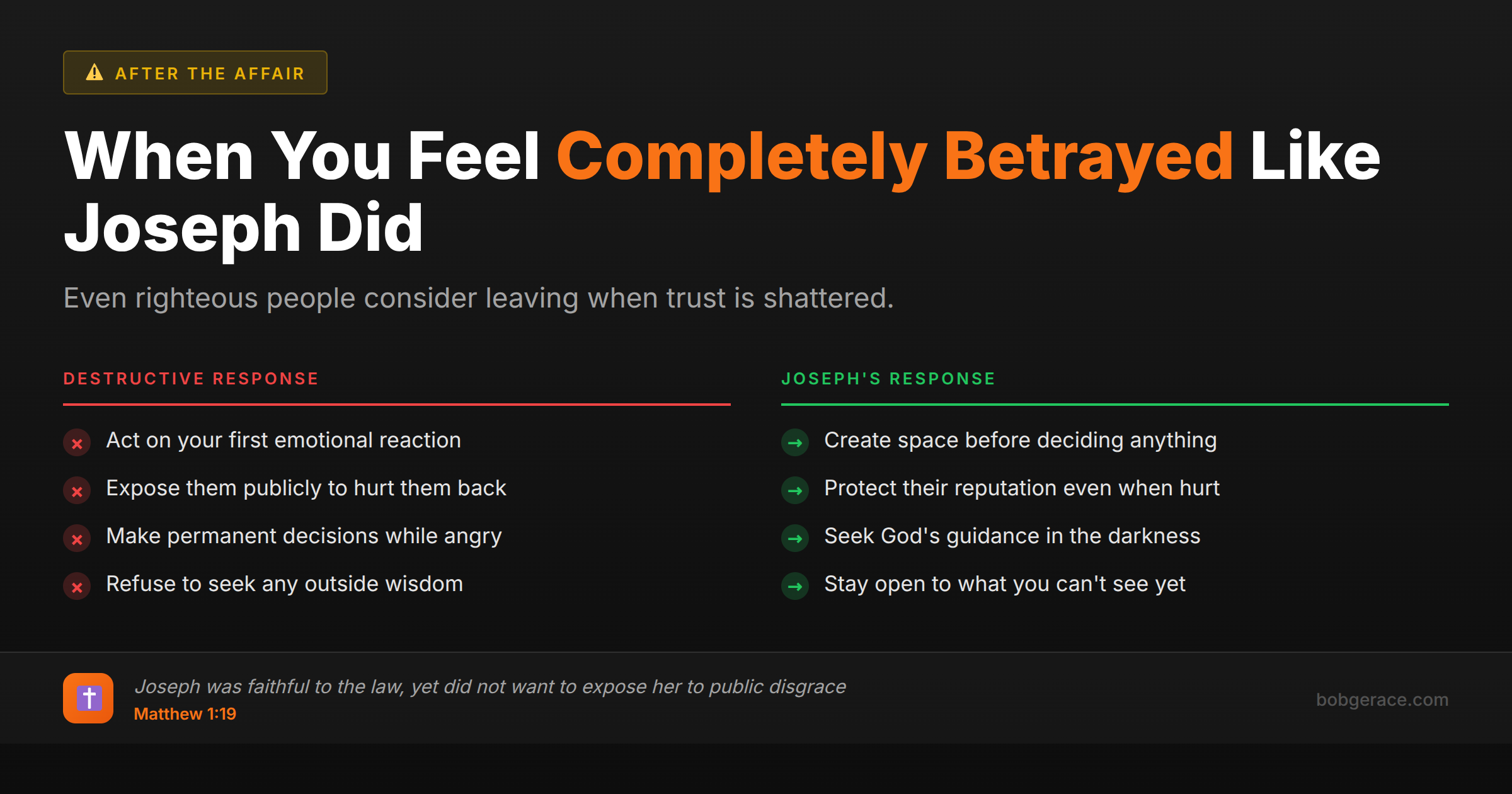
Joseph's initial reaction to Mary's pregnancy shows us that even righteous people can feel betrayed and consider leaving when trust appears broken. His response wasn't sinful—it was human. What matters is that he didn't act impulsively. Instead, he planned to handle it "quietly" to protect Mary's reputation, showing character even in his pain. This teaches us that feeling hurt and even considering separation isn't wrong, but how we respond and whether we seek God's guidance makes all the difference. Joseph's story demonstrates that God can intervene in our darkest relationship moments when we're willing to listen.
The Full Picture
Let's be honest about what happened here. Joseph thought Mary had been unfaithful. From his perspective, the woman he was engaged to marry was pregnant, and he knew he wasn't the father. That's devastating. His initial reaction was completely understandable.
Matthew 1:19 tells us Joseph was a "righteous man" who didn't want to "put her to shame publicly," so he planned to divorce her quietly. This wasn't a knee-jerk reaction—he was processing, planning, trying to do the right thing even while his world was falling apart.
Here's what we learn: Even good people consider leaving when they feel betrayed. The difference is in how they handle it. Joseph didn't lash out, didn't seek revenge, didn't try to destroy Mary's reputation. He was hurt, but he maintained his character.
This matters for your marriage because it shows us that feeling like you want to quit doesn't make you a bad person. It makes you human. What Joseph teaches us is that there's a right way and a wrong way to handle those feelings.
The key is that Joseph didn't act immediately on his emotions. He made a plan that protected both of them, and in that space between hurt and action, God spoke to him through a dream. That space—between feeling betrayed and making a permanent decision—is where God often does His best work in marriages.
Joseph's story isn't just about divine intervention. It's about a man who maintained his integrity even when he thought he'd been betrayed, and that character made him someone God could work with.
What's Really Happening
Joseph's response demonstrates what we call 'emotional regulation under duress.' When we discover what appears to be betrayal, our nervous system activates fight, flight, or freeze responses. Joseph chose neither immediate confrontation nor avoidance—he chose thoughtful action.
This is crucial for modern marriages. When trust appears broken, our brains flood with stress hormones that impair judgment. Joseph's decision to act 'quietly' shows he was thinking beyond his immediate emotional state. He considered Mary's wellbeing even while processing his own pain.
What's particularly healthy about Joseph's response is that he didn't internalize shame or blame himself entirely, nor did he externalize all responsibility onto Mary. He saw a situation that looked impossible and chose the most honorable path he could see at the time.
For couples today, this teaches us that the space between discovery and decision is //blog.bobgerace.com/female-orgasm-christian-marriage-sacred-design/:sacred. When we feel betrayed—whether by actual infidelity, broken trust, or just unmet expectations—our first instinct rarely leads to the best outcome. Joseph shows us that maintaining our values and considering our partner's welfare, even when we're hurt, creates space for solutions we couldn't initially see.
The psychological principle here is that character-consistent behavior, even in crisis, often opens doors that reactive behavior closes permanently.
What Scripture Says
Matthew 1:19 - "Because Joseph her husband was faithful to the law, and yet did not want to expose her to public disgrace, he had in mind to divorce her quietly." Joseph's righteousness didn't prevent him from feeling betrayed, but it guided how he responded to that betrayal.
Matthew 1:20 - "But after he had considered this, an angel of the Lord appeared to him in a dream and said, 'Joseph son of David, do not be afraid to take Mary home as your wife, because what is conceived in her is from the Holy Spirit.'" God intervened in the space between Joseph's hurt and his final decision.
Proverbs 19:11 - "A person's wisdom yields patience; it is to one's glory to overlook an offense." This doesn't mean ignoring real problems, but it means not acting impulsively when we feel wronged.
Ephesians 4:26-27 - "In your anger do not sin: Do not let the sun go down while you are still angry, and do not give the devil a foothold." Joseph felt what looked like justified anger but didn't let it drive him to sin.
James 1:5 - "If any of you lacks wisdom, let you ask God, who gives generously to all without finding fault, and it will be given to you." Joseph needed wisdom for an impossible situation, and God provided it.
1 Corinthians 13:7 - Love "always protects, always trusts, always hopes, always perseveres." Even when Joseph thought trust was broken, he still protected Mary's reputation.
What To Do Right Now
-
1
Don't act on your first emotional reaction - Like Joseph, create space between feeling betrayed and making permanent decisions
-
2
Protect your spouse's reputation - Even when you're hurt, don't trash-talk them to others or on social media
-
3
Seek God's wisdom actively - Pray, read Scripture, and ask God to show you what you can't see on your own
-
4
Consider professional guidance - Just as God sent Joseph a messenger, He often speaks through counselors and pastors
-
5
Maintain your character standards - Don't let someone else's apparent failure cause you to abandon your values
-
6
Stay open to new information - Joseph's whole perspective changed when God revealed the truth he couldn't have known
Related Questions
- What does biblical forgiveness require of me?
- Does the Bible require me to stay after an affair?
- Should I forgive adultery?
- What's the difference between forgiveness and reconciliation?
- Does forgiveness mean no consequences?
- How do I forgive when she hasn't fully repented?
- What does Scripture say about divorce?
- What did Jesus say about divorce?
- How do I discern God's will for my marriage?
- Does God want me to stay in this marriage?
Also find Bob on
Subscribe for weekly videos on Christian marriage.
Your Marriage Isn't Joseph's Story
A coach who knows your actual situation—what she said last week, where you're stuck, what you've already tried—can help you respond with the same character Joseph showed. You don't have to keep guessing alone.
Talk to Bob →