Does the Bible require me to stay after an affair?
6 min read
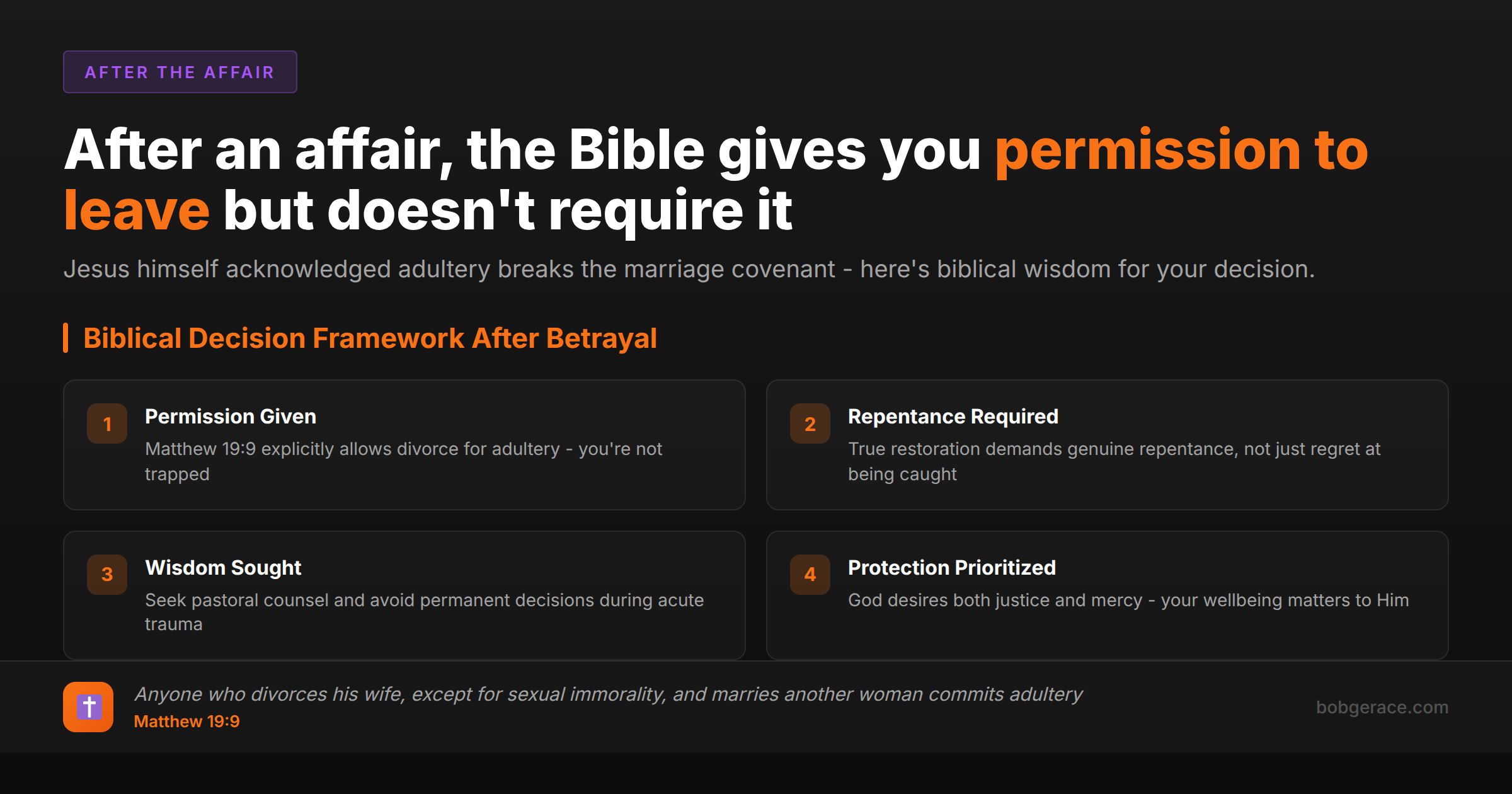
The Bible does not require you to stay in a marriage after an affair. While Scripture emphasizes forgiveness and reconciliation, Jesus specifically mentions adultery as grounds for divorce in Matthew 19:9. However, this is permission, not a command. The Bible presents staying and working toward restoration as the ideal when genuine repentance exists, but it also recognizes that adultery fundamentally breaks the covenant bond of marriage. Your decision should involve careful prayer, wise counsel, and honest assessment of whether true repentance and change are present. God desires both justice and mercy in your situation, and He will guide you through this devastating betrayal toward the path that honors Him while protecting your well-being.
The Full Picture
The Bible gives you options, not ultimatums. When Jesus addressed divorce in Matthew 19, the Pharisees were trying to trap Him with a question about the grounds for divorce. His response was clear: adultery breaks the marriage covenant so fundamentally that divorce becomes permissible. This isn't God's ideal, but it's His acknowledgment of the devastating reality of betrayal.
Forgiveness doesn't equal staying. Here's where many Christians get confused. You can forgive your spouse completely and still choose divorce. Forgiveness releases you from bitterness and allows God to heal your heart. But forgiveness doesn't automatically restore trust, rebuild intimacy, or require you to remain vulnerable to continued betrayal.
God cares about your safety and well-being. Some church communities pressure betrayed spouses to stay regardless of circumstances, but this isn't biblical. God doesn't want you trapped in a relationship with someone who shows no genuine repentance, continues deceptive behavior, or puts your physical or emotional health at risk.
The key factor is genuine repentance. Scripture consistently emphasizes that restoration requires true repentance - not just saying sorry, but demonstrating changed behavior over time. If your spouse shows genuine remorse, cuts off all contact with the affair partner, seeks counseling, and commits to rebuilding trust through transparency, reconciliation becomes possible.
Consider the bigger picture. This decision affects not just you, but your children, your future, and your relationship with God. Take time to pray, seek wise counsel from mature Christians who understand biblical principles, and don't let anyone rush you into a decision either way.
What's Really Happening
Infidelity creates what we call 'betrayal trauma' - a form of PTSD that affects your nervous system, decision-making, and emotional regulation. This is why you might feel paralyzed about what to do next. Your brain is literally trying to process a threat to your survival and security.
The decision to stay or leave shouldn't be made in the immediate aftermath of discovery. Your trauma //blog.bobgerace.com/marriage-counseling-divorce-risk-christian-response/:response can swing between wanting to fight for the marriage and wanting to flee entirely. Both reactions are normal, but neither should drive permanent decisions during the acute phase.
From a clinical perspective, successful reconciliation requires specific conditions: the unfaithful spouse must demonstrate consistent remorse, complete transparency, willingness to do the hard work of rebuilding trust, and often individual therapy to address what led to the betrayal. Without these elements, reconciliation attempts typically fail.
I often tell clients that staying in a marriage 'for the right reasons' - mutual commitment to healing, genuine repentance, and restored trust - can lead to stronger relationships. But staying for the wrong reasons - fear, guilt, or external pressure - usually leads to prolonged suffering without genuine restoration. Your trauma responses will continue until safety and trust are genuinely reestablished, not just promised.
What Scripture Says
Scripture provides clear guidance on this painful question. Matthew 19:9 records Jesus saying, "I tell you that anyone who divorces his wife, except for sexual immorality, and marries another woman commits adultery." This 'exception clause' specifically acknowledges that adultery can end a marriage covenant.
1 Corinthians 7:15 adds another dimension: "But if the unbeliever leaves, let it be so. The brother or the sister is not bound in such circumstances." While this addresses abandonment, many scholars apply this principle to situations where a spouse's actions demonstrate they've abandoned the marriage covenant through persistent unfaithfulness.
Hosea 3:1-3 shows God's heart for restoration: "Go, show your love to your wife again, though she is loved by another man and is an adulteress." God desires reconciliation, but notice that Hosea required a period of commitment and changed behavior before full restoration occurred.
Ephesians 4:32 calls us to "be kind and compassionate to one another, forgiving each other, just as in Christ God forgave you." Forgiveness is commanded, but this doesn't automatically mean remaining married to someone who continues harmful behavior.
Psalm 25:9 reminds us that "He guides the humble in what is right and teaches them his way." God will guide your specific situation as you seek Him with humility and openness to His will, whether that leads to restoration or a new beginning.
What To Do Right Now
-
1
Take time to process before making permanent decisions - avoid major choices during acute trauma
-
2
Seek counsel from a pastor or Christian counselor who understands both biblical principles and betrayal trauma
-
3
Assess whether your spouse shows genuine repentance or just regret at being caught
-
4
Establish clear boundaries and consequences while you determine your path forward
-
5
Pray consistently for wisdom, not just for a specific outcome you want
-
6
Consider professional counseling to help process your trauma and clarify your thinking
Related Questions
- Should I forgive adultery?
- What does Scripture say about divorce?
- Does adultery justify divorce?
- What did Jesus say about divorce?
- What's the difference between forgiveness and reconciliation?
- Does forgiveness mean no consequences?
- What does faithfulness require when she won't reciprocate?
- How do I make this decision?
- What does wise counsel look like?
Also find Bob on
Subscribe for weekly videos on Christian marriage.
This Decision Needs a Human in Your Corner
You're weighing the hardest call of your life. A coach who knows your specific story — the repentance you're seeing or not seeing, the safety factors, the kids, the timeline — can help you think clearly when you can't.
Talk to Bob →