What is 'porneia' and what does it include?
6 min read
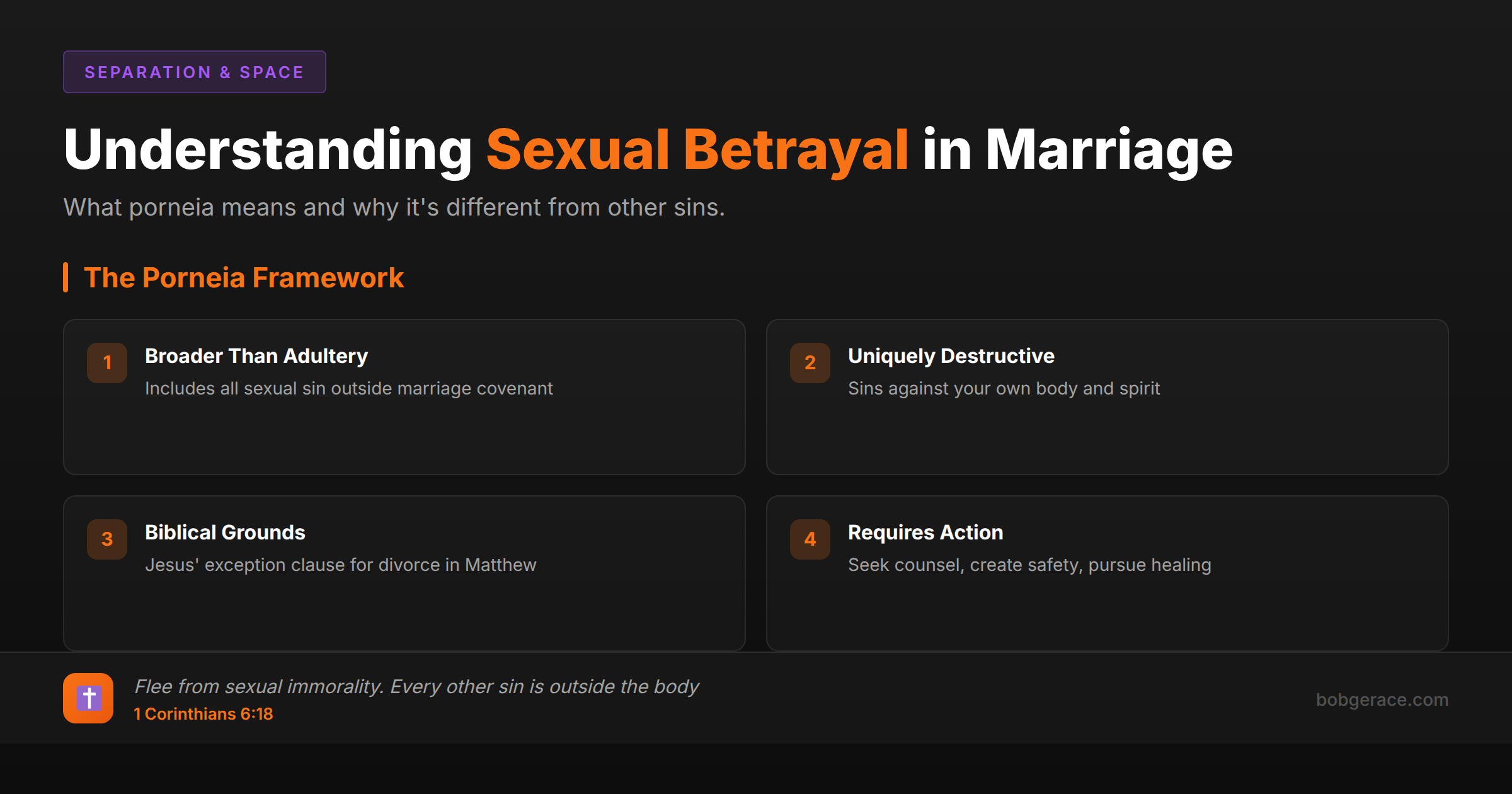
Porneia is the Greek word translated as 'sexual immorality' or 'fornication' in Jesus' exception clause for divorce in Matthew 5:32 and 19:9. This term encompasses a broad range of sexual sins including adultery, prostitution, incest, homosexuality, and other forms of sexual activity outside the marriage covenant. The scope of porneia goes beyond simple adultery (moicheia in Greek). It includes any sexual behavior that violates God's design for sexuality within marriage. While scholars debate the exact boundaries, most agree that porneia represents serious sexual sin that fundamentally violates the marriage covenant, making it grounds for divorce according to Jesus' teaching.
The Full Picture
Understanding porneia requires looking at both its linguistic roots and biblical usage. In ancient Greek culture, porneia originally referred to prostitution (from 'porne' meaning prostitute), but by the time of the New Testament, it had expanded to describe various forms of sexual immorality.
The broader biblical context shows porneia used throughout Scripture to describe sexual sins that defile the marriage covenant. In the Old Testament Hebrew equivalent 'zanah' (often translated as 'harlotry' or 'whoredom'), we see God using sexual unfaithfulness as a metaphor for spiritual unfaithfulness to Him.
Why this matters for marriages today: When Jesus used porneia in the exception clause, He wasn't creating a loophole for easy divorce. Instead, He was acknowledging that certain sexual sins so fundamentally violate the 'one flesh' unity of marriage that they constitute a breaking of the covenant itself.
The challenge for modern couples is that porneia isn't just about physical acts. In our digital age, questions arise about pornography, emotional affairs, and online sexual behavior. While these may not all rise to the level of biblical porneia, they certainly damage the marriage covenant and require serious attention and restoration efforts.
What's Really Happening
From a clinical perspective, the behaviors encompassed by porneia create profound psychological and relational trauma. Sexual betrayal activates the same neurological pathways as physical injury, explaining why betrayed spouses often describe feeling 'wounded' or 'broken.'
The impact goes beyond the immediate hurt. Trust, the foundation of intimate relationships, becomes severely compromised. Betrayed partners often experience symptoms similar to PTSD - intrusive thoughts, hypervigilance, emotional numbing, and difficulty sleeping. The unfaithful partner may struggle with shame, addiction patterns, or underlying emotional needs that drove the behavior.
What's particularly damaging is that sexual sin violates multiple dimensions of the marital relationship simultaneously - physical intimacy, emotional trust, spiritual connection, and relational safety. This multi-dimensional violation explains why recovery is so complex and why some marriages don't survive.
However, I've seen marriages not only survive porneia but emerge stronger through proper treatment, genuine repentance, and commitment to rebuilding. The key is understanding that healing requires addressing both the immediate crisis and the underlying issues that contributed to the betrayal.
What Scripture Says
Scripture consistently treats sexual sin as uniquely serious because it violates the sacred nature of marriage and our bodies as temples of the Holy Spirit.
1 Corinthians 6:18 - *'Flee from sexual immorality. Every other sin a person commits is outside the body, but the sexually immoral person sins against his own body.'* This verse shows why porneia is different from other sins - it uniquely affects our physical being in ways that violate our design.
Matthew 19:3-9 - When Pharisees asked about divorce, Jesus responded: *'Have you not read that he who created them from the beginning made them male and female... What therefore God has joined together, let not man separate.'* But He added the exception: *'except for sexual immorality [porneia].'*
Ephesians 5:3 - *'But sexual immorality and all impurity or covetousness must not even be named among you, as is proper among saints.'* Paul emphasizes that porneia should be completely absent from Christian life.
1 Thessalonians 4:3-4 - *'For this is the will of God, your sanctification: that you abstain from sexual immorality; that each one of you know how to control his own body in holiness and honor.'* God's will includes sexual purity as part of our sanctification.
What To Do Right Now
-
1
Seek immediate pastoral counsel if porneia is suspected or discovered in your marriage
-
2
Separate temporarily if needed to ensure safety and create space for initial healing
-
3
Get professional help from a Christian counselor experienced in sexual betrayal trauma
-
4
Join a support group for betrayed spouses or those struggling with sexual sin
-
5
Implement full disclosure and accountability measures for the unfaithful spouse
-
6
Focus on individual healing before attempting marriage restoration efforts
Related Questions
- What does Scripture say about divorce?
- Does adultery justify divorce?
- What's the exception clause?
- What is the Deuteronomy 24 background?
- What is Jesus' teaching in Matthew 5 vs. Matthew 19?
- Does the exception clause allow divorce or require it?
- What does biblical forgiveness require of me?
- What's the difference between forgiveness and reconciliation?
- Does the Bible require me to stay after an affair?
Also find Bob on
Subscribe for weekly videos on Christian marriage.
Porneia Just Hit Your Marriage
A coach who knows your story can help you think clearly through what's biblical, what's wise, and what the next 30 days need to look like.
Talk to Bob →