What is 'no-fault' divorce and is it biblical?
6 min read
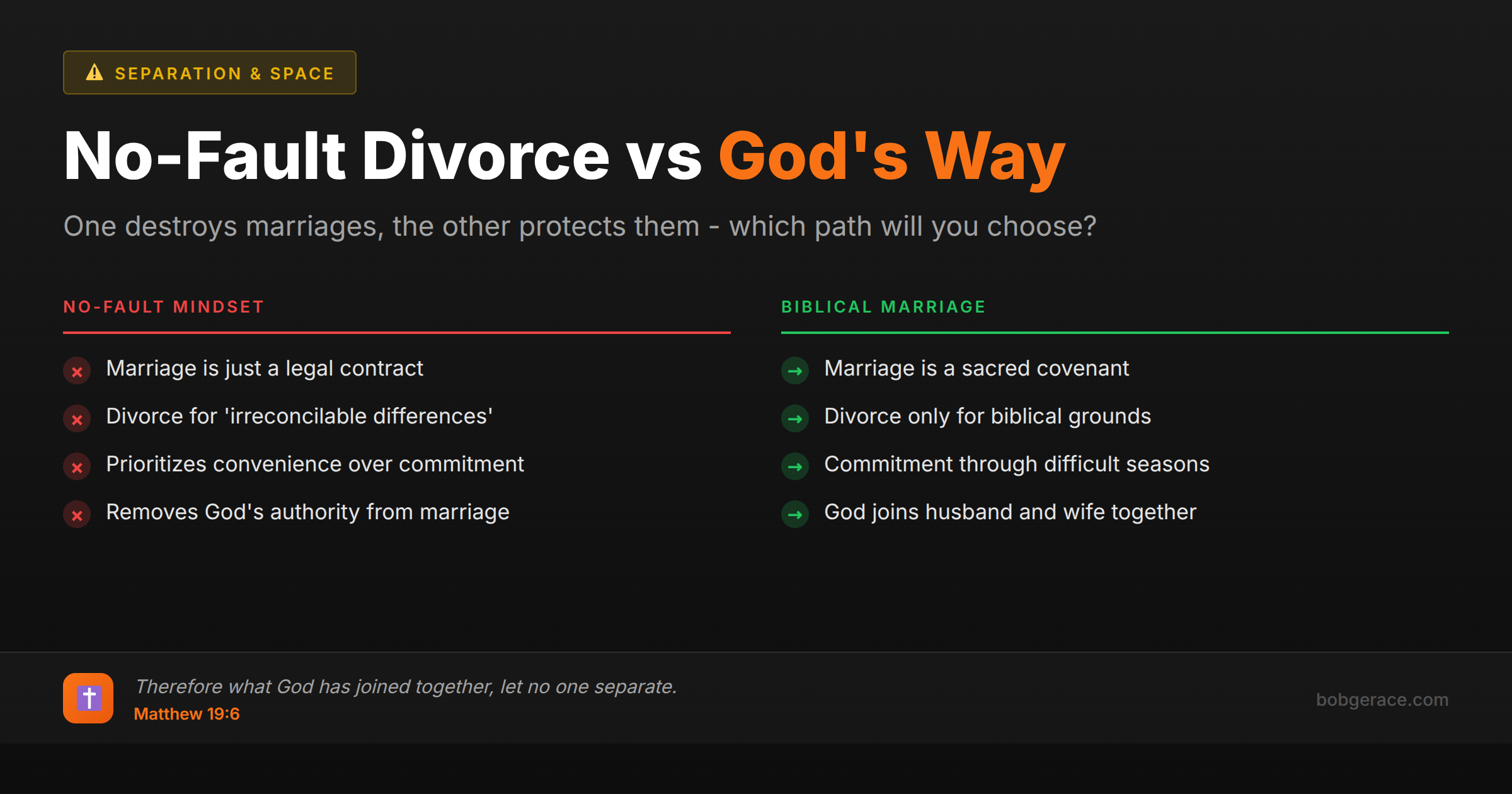
No-fault divorce is a legal concept allowing couples to divorce without proving wrongdoing by either spouse. Instead of citing biblical grounds like adultery or abandonment, couples can divorce based on 'irreconcilable differences' or similar vague terms. While legally permissible in all 50 states, no-fault divorce fundamentally contradicts biblical marriage principles. Scripture presents marriage as a covenant before God, not merely a civil contract. Jesus clearly stated that divorce should only occur for specific biblical reasons - primarily sexual immorality (Matthew 19:9). No-fault divorce essentially removes God's authority from marriage, treating it as a dissolvable partnership rather than a sacred covenant. This approach prioritizes convenience over commitment and undermines the permanence God intended for marriage.
The Full Picture
No-fault divorce emerged in the 1970s as states sought to reduce courtroom battles and simplify divorce proceedings. Before this legal shift, couples had to prove fault - adultery, abuse, abandonment, or other specific grounds. Today's system allows divorce based solely on one party claiming the marriage is 'irretrievably broken' or citing 'irreconcilable differences.'
The Legal Reality While no-fault laws were designed to reduce conflict, they've fundamentally changed marriage's legal status. Marriage became less permanent, more like a business partnership that either party can dissolve at will. This shift removed incentives for working through difficulties and created an easier path to dissolution.
The Cultural Impact No-fault divorce normalized marriage dissolution and contributed to skyrocketing divorce rates. What once required serious justification now needs only one person's decision. This cultural shift affects how people view marriage commitment - as conditional rather than covenant-based.
The Biblical Tension As Christians, we live under civil law while following biblical principles. No-fault divorce creates tension because it contradicts God's design for marriage permanence. While legal availability doesn't equal moral permission, many Christians use legal ease as justification for unbiblical divorce.
The Heart Issue No-fault divorce reflects humanity's desire for easy exits rather than difficult growth. It prioritizes personal happiness over covenant faithfulness, immediate relief over long-term commitment. This approach fundamentally opposes the biblical call to persevere through trials and honor our vows before God.
What's Really Happening
From a therapeutic standpoint, no-fault divorce often represents an avoidance strategy rather than conflict resolution. Couples frequently seek divorce when they've never learned proper communication skills or conflict resolution techniques. The ease of no-fault divorce can prevent couples from doing the hard work necessary for genuine healing.
I've observed that couples considering no-fault divorce typically fall into predictable patterns: emotional distance, poor communication, unresolved resentment, and crisis avoidance. Rather than addressing these core issues, no-fault divorce offers an appealing escape route that seems to solve problems without requiring personal growth or change.
The Psychological Cost While no-fault divorce reduces legal stress, it doesn't eliminate emotional trauma. Many individuals experience profound guilt, especially Christians who know they're acting outside biblical parameters. This internal conflict often manifests as depression, anxiety, and spiritual crisis.
The Relational Pattern No-fault divorce frequently perpetuates unhealthy relational patterns. Without addressing underlying issues, individuals often repeat the same problems in future relationships. The skills needed for marriage success - commitment, communication, conflict resolution, forgiveness - remain undeveloped.
The Growth Alternative Marriages facing 'irreconcilable differences' usually need skill-building, not dissolution. Professional counseling can address communication breakdowns, rebuild intimacy, and restore connection. The challenges that seem insurmountable often become growth opportunities when approached with proper tools and biblical principles.
What Scripture Says
Scripture presents a clear framework for marriage and divorce that stands in stark contrast to no-fault divorce culture. God's design emphasizes covenant permanence and specific, limited grounds for dissolution.
God's Design for Marriage *'Therefore what God has joined together, let no one separate.'* (Matthew 19:6) Jesus emphasizes marriage's permanent nature, established by God Himself. This divine joining creates a bond that transcends human convenience or comfort.
Limited Grounds for Divorce *'But I tell you that anyone who divorces his wife, except for sexual immorality, makes her the victim of adultery.'* (Matthew 19:9) Christ specifies sexual immorality as grounds for divorce, not general unhappiness or incompatibility.
Covenant vs. Contract *'I hate divorce,' says the Lord God of Israel.* (Malachi 2:16) God's hatred of divorce reflects His covenant nature. Marriage mirrors His relationship with His people - permanent, faithful, and enduring despite difficulties.
The Call to Perseverance *'Love is patient, love is kind... it is not self-seeking... it keeps no record of wrongs.'* (1 Corinthians 13:4-5) Biblical love requires perseverance through trials, directly opposing the easy-exit mentality of no-fault divorce.
Reconciliation Priority *'If your brother or sister sins, go and point out their fault, just between the two of you.'* (Matthew 18:15) Scripture emphasizes restoration over separation, working through problems rather than abandoning the relationship.
No-fault divorce bypasses these biblical principles, prioritizing personal preference over divine design and covenant faithfulness.
What To Do Right Now
-
1
Examine your heart motives - are you seeking biblical grounds or convenient escape?
-
2
Pursue intensive Christian marriage counseling before considering any divorce action
-
3
Study Scripture's marriage passages with your spouse to understand God's design
-
4
Seek pastoral guidance from a biblically-grounded counselor or pastor
-
5
Commit to a specific timeframe of working on your marriage before making decisions
-
6
If divorce is truly necessary, ensure it aligns with biblical grounds, not just legal ease
Related Questions
- What does Scripture say about divorce?
- Is divorce a sin?
- What did Jesus say about divorce?
- Does adultery justify divorce?
- What is 'porneia' and what does it include?
- Does the exception clause allow divorce or require it?
- What does biblical forgiveness require of me?
- How do I discern God's will for my marriage?
- Does God want me to stay in this marriage?
- What does faithfulness require when she won't reciprocate?
Also find Bob on
Subscribe for weekly videos on Christian marriage.
Don't Navigate This Alone
You're not asking about divorce in theory — you're asking because your marriage is hurting. A coach who knows your story can help you see what's actually happening and what to do next.
Talk to Bob →