What about emotional abuse as grounds?
6 min read
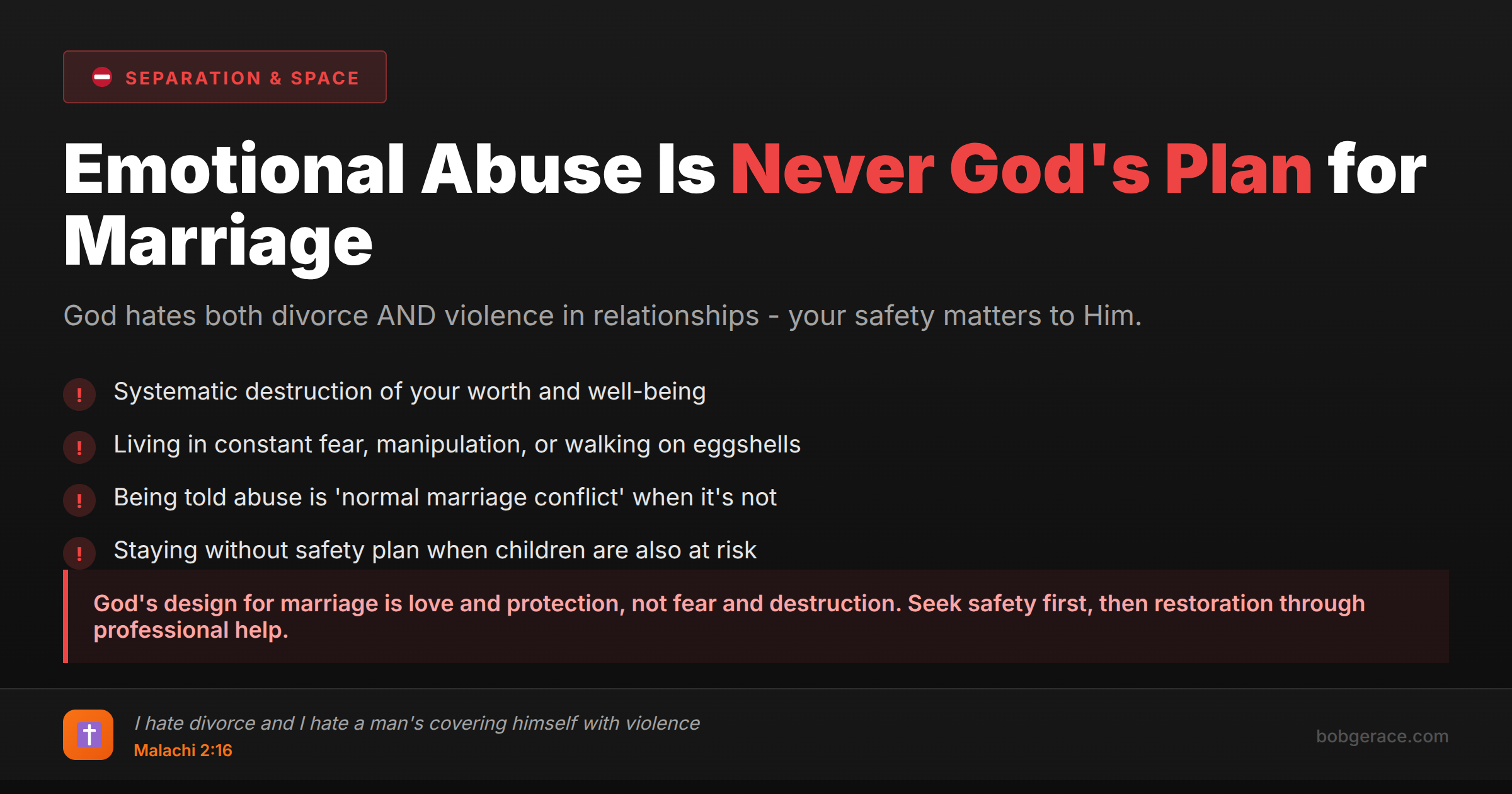
Emotional abuse is a serious issue that causes deep trauma and violates God's design for marriage. While Jesus specifically mentioned sexual immorality (porneia) as grounds for divorce in Matthew 19:9, many biblical scholars recognize that severe, persistent emotional abuse can fall under the broader understanding of abandonment mentioned in 1 Corinthians 7:15. The key is distinguishing between normal marital conflict and genuine abuse that systematically destroys a person's worth and well-being. God never intended marriage to be a place of fear, manipulation, or destruction. When emotional abuse is present, the immediate priority must be safety and protection, especially if children are involved. This often requires temporary separation while pursuing restoration through professional intervention, accountability, and genuine repentance.
The Full Picture
Emotional abuse in marriage is one of the most misunderstood and controversial topics in Christian circles. Unlike physical abuse, which leaves visible marks, emotional abuse operates in shadows - through manipulation, control, gaslighting, constant criticism, threats, isolation, and systematic destruction of self-worth.
The reality is this: emotional abuse can be just as damaging as physical abuse. Victims often suffer from PTSD, depression, anxiety, and a complete erosion of their sense of self. They live in constant fear, walking on eggshells, never knowing what might trigger the next attack on their character or worth.
Many well-meaning Christians have unfortunately told abuse victims to "just submit more" or "pray harder," completely misunderstanding both the nature of abuse and God's heart for the oppressed. This response often drives victims deeper into isolation and shame.
The biblical model of marriage involves mutual love, respect, and self-sacrifice - not one person dominating, controlling, or systematically tearing down the other. When someone uses marriage as a vehicle for abuse, they are violating the very essence of what God intended marriage to represent.
Here's what we must understand: God is not more concerned with keeping marriages together at any cost than He is with protecting the vulnerable and oppressed. Throughout Scripture, we see God's heart for justice and His anger toward those who abuse their power over others.
What's Really Happening
From a clinical perspective, emotional abuse creates profound psychological trauma that can take years to heal. Victims develop what we call "trauma bonding" - a psychological phenomenon where the abused person becomes emotionally dependent on their abuser through intermittent reinforcement of kindness and cruelty.
Emotional abuse typically follows predictable patterns: the tension-building phase, the acute abuse episode, the reconciliation or "honeymoon" phase, and then the calm before the cycle repeats. This cycle creates confusion and hope that keeps victims trapped, believing the abuse will stop if they just try harder.
The neurological impact is significant. Chronic stress from emotional abuse literally changes brain chemistry, affecting memory, decision-making, and emotional regulation. Victims often question their own reality due to gaslighting - a manipulation tactic where the abuser consistently denies, minimizes, or distorts the victim's experience.
Professional intervention is typically necessary because abusers rarely change without intensive accountability and therapeutic intervention. The victim also needs specialized trauma therapy to heal from the psychological damage and rebuild their sense of self.
It's crucial to understand that staying in an abusive environment for the sake of "preserving the marriage" often enables the abuser to continue their destructive patterns while causing ongoing harm to both the victim and any children who witness the abuse.
What Scripture Says
While the Bible clearly states God's intention for marriage to be permanent, it also reveals His heart for justice and protection of the vulnerable.
Malachi 2:16 - "'I hate divorce,' says the Lord God of Israel, 'and I hate a man's covering himself with violence as well as with his garment,' says the Lord Almighty." Notice that God hates both divorce AND violence/cruelty in marriage.
Ephesians 5:25-28 - "Husbands, love your wives, just as Christ loved the church and gave himself up for her... husbands ought to love their wives as their own bodies." Christ's love for the church is sacrificial and protective, never abusive or controlling.
1 Corinthians 7:15 - "But if the unbeliever leaves, let it be so. The brother or the sister is not bound in such circumstances; God has called us to live in peace." Many scholars interpret persistent abuse as a form of abandonment that breaks the marriage covenant.
Psalm 11:5 - "The Lord examines the righteous, but the wicked, those who love violence, he hates." God's hatred of violence extends beyond physical harm to include emotional cruelty and destruction.
Isaiah 1:17 - "Learn to do right; seek justice. Defend the oppressed. Take up the cause of the fatherless; plead the case of the widow." God consistently calls His people to protect the vulnerable.
Matthew 18:15-17 provides a framework for addressing sin in relationships, including the need for outside intervention when someone refuses to acknowledge wrongdoing.
What To Do Right Now
-
1
Ensure immediate safety - develop a safety plan and reach out to trusted friends, family, or domestic violence resources
-
2
Document patterns of abuse - keep a journal with dates, specific incidents, and impacts on your emotional/physical well-being
-
3
Seek professional counseling from a therapist experienced in trauma and domestic abuse (not couples counseling while abuse is active)
-
4
Connect with your pastor or trusted spiritual mentor who understands the dynamics of abuse and God's heart for justice
-
5
Consider temporary separation to create space for safety while pursuing professional intervention for the abusive spouse
-
6
Focus on your own healing and rebuilding your sense of identity in Christ, understanding that God grieves over your pain and wants your restoration
Related Questions
- What does Scripture say about divorce?
- Does adultery justify divorce?
- What about abandonment?
- What is 'porneia' and what does it include?
- What about addiction as grounds?
- What about perpetual unfaithfulness?
- I can't control my anger
- I don't hit her but I still scare her
- What does coercive control look like?
- What boundaries should I set?
Also find Bob on
Subscribe for weekly videos on Christian marriage.
Your Marriage Isn't a Textbook Case
Abuse dynamics are specific—what's happening in your home, what she does, what you've tried. A coach who knows your story can help you see what's actually happening and what to do next.
Talk to Bob →