Why am I having intrusive thoughts/images?
6 min read
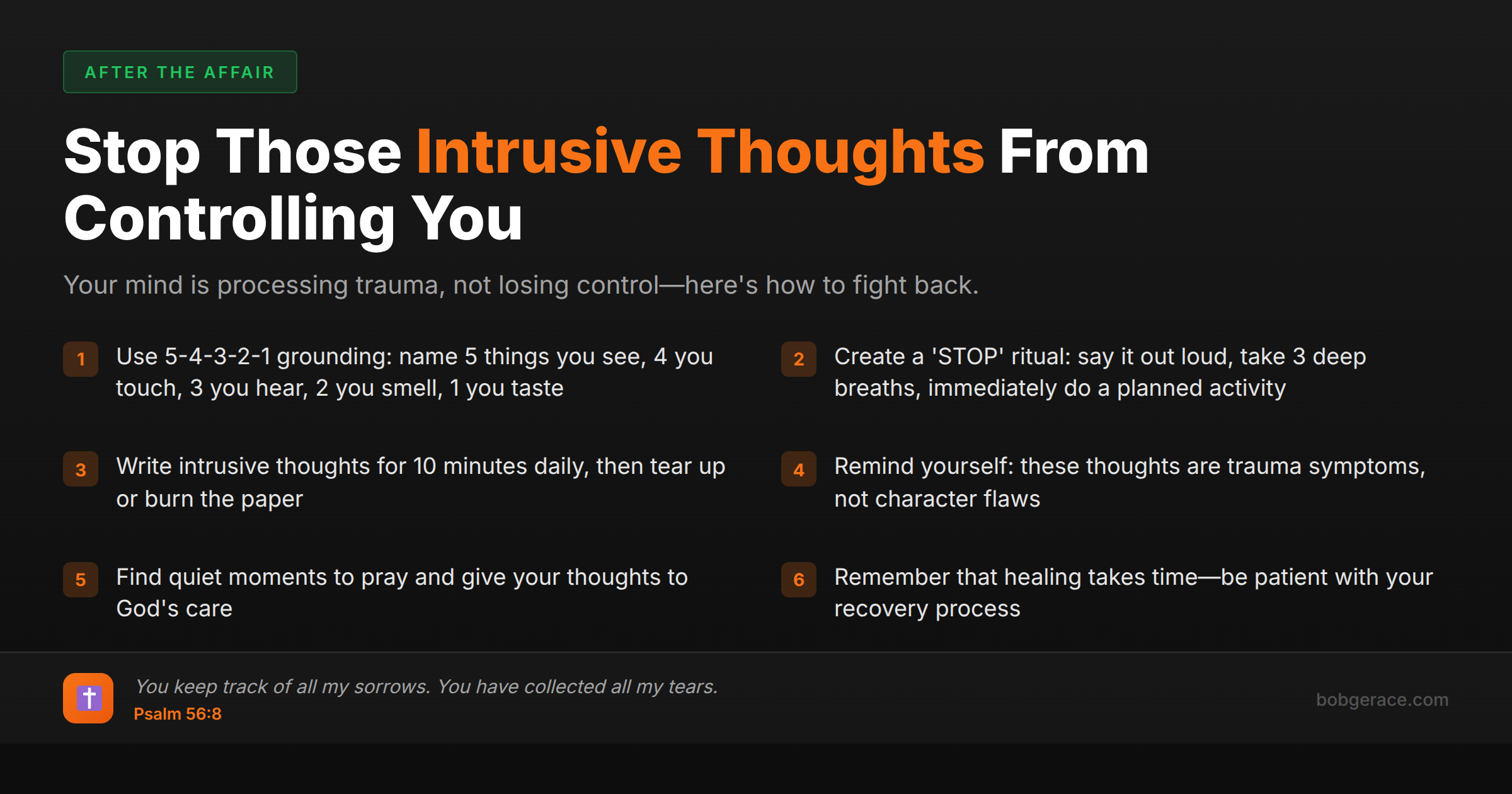
Intrusive thoughts and images after betrayal are your brain's way of trying to process trauma. When you discover infidelity or another significant betrayal, your nervous system goes into overdrive, replaying scenes to make sense of what happened. This isn't weakness or obsession—it's a normal trauma response. Your mind is essentially stuck in a loop, trying to reconcile the person you thought you knew with the reality of their betrayal. These unwanted thoughts often intensify during quiet moments or when triggered by reminders. Understanding this is the first step toward healing, as it helps you recognize that these intrusive thoughts are symptoms of trauma, not reflections of your mental strength or character.
The Full Picture
When betrayal shatters your world, your brain doesn't just file it away like a normal memory. Instead, it treats the discovery as an ongoing threat, keeping you in a heightened state of alertness. This is why you might find yourself obsessively replaying conversations, analyzing every detail, or having vivid mental images pop up at the worst possible moments.
Your brain is doing what it thinks it needs to survive. It's trying to spot patterns, identify warning signs you might have missed, and prepare you for future threats. Unfortunately, this protective mechanism often becomes a prison of painful thoughts and images.
The intensity of these intrusive thoughts can vary dramatically. Some days you might feel like you're making progress, only to be blindsided by a sudden flood of unwanted memories or mental pictures. This isn't a sign that you're going backward—it's part of the normal healing process.
Common triggers include: - Quiet moments when your mind isn't occupied - Places or situations that remind you of the betrayal - Dates or times associated with painful discoveries - Seeing the other person or reminders of them - Stress or fatigue that lowers your mental defenses
These thoughts often come with physical symptoms too: racing heart, nausea, difficulty sleeping, or feeling disconnected from reality. Your entire system is responding to perceived danger, even when you're physically safe. This is trauma, and it deserves to be treated with the same seriousness as any other injury.
What's Really Happening
From a clinical perspective, intrusive thoughts following betrayal are a hallmark of trauma response, specifically what we see in betrayal trauma. Your brain's amygdala—the alarm system—has been activated and is now hypervigilant, constantly scanning for threats and replaying the traumatic information to try to make sense of it.
This process involves several key mechanisms. First, your brain is attempting to integrate contradictory information: the person you trusted versus their betraying actions. This cognitive dissonance creates a loop where your mind keeps trying to resolve the contradiction, leading to obsessive thinking patterns.
Second, your nervous system is dysregulated. The trauma has thrown your autonomic nervous system into chaos, switching between fight-or-flight activation and //blog.bobgerace.com/dorsal-vagal-shutdown-christian-marriage-disconnection/:shutdown responses. During hyperarousal states, intrusive thoughts intensify. During hypoarousal, you might feel numb but still experience unwanted mental images.
The good news is that this is treatable. EMDR therapy, cognitive processing therapy, and somatic approaches can help your brain properly process and file away these traumatic memories. Grounding techniques, mindfulness practices, and working with a trauma-informed therapist can provide significant relief.
It's crucial to understand that these intrusive thoughts don't define your healing journey. They're temporary symptoms that will decrease in frequency and intensity as you process the trauma with proper support and therapeutic intervention.
What Scripture Says
God's Word acknowledges the reality of mental anguish and provides both comfort and direction for our troubled thoughts. The psalmists frequently wrote about intrusive, painful thoughts and found their peace in God's presence and promises.
"You keep track of all my sorrows. You have collected all my tears in your bottle. You have recorded each one in your book." - Psalm 56:8. God sees every painful thought, every sleepless night, every moment of anguish. He's not distant from your suffering—He's intimately aware and deeply compassionate about what you're experiencing.
"Do not be anxious about anything, but in every situation, by prayer and petition, with thanksgiving, present your requests to God. And the peace of God, which transcends all understanding, will guard your hearts and your minds in Christ Jesus." - Philippians 4:6-7. This doesn't mean intrusive thoughts will instantly disappear, but that God's peace can guard your heart even in the midst of mental chaos.
"Finally, brothers and sisters, whatever is true, whatever is noble, whatever is right, whatever is pure, whatever is lovely, whatever is admirable—if anything is excellent or praiseworthy—think about such things." - Philippians 4:8. This isn't about denying reality or forcing positive thinking, but about intentionally directing your mind toward truth and hope when possible.
"He heals the brokenhearted and binds up their wounds." - Psalm 147:3. God is in the business of healing trauma, including the mental wounds that produce intrusive thoughts. "Cast all your anxiety on him because he cares for you." - 1 Peter 5:7. You don't have to carry this burden alone.
"The Lord is close to the brokenhearted and saves those who are crushed in spirit." - Psalm 34:18. In your darkest moments of mental torment, God draws near. He doesn't condemn you for your struggling thoughts—He offers comfort and healing.
What To Do Right Now
-
1
Practice the 5-4-3-2-1 grounding technique when intrusive thoughts hit: name 5 things you can see, 4 things you can touch, 3 things you can hear, 2 things you can smell, and 1 thing you can taste
-
2
Create a 'thought stopping' ritual: when intrusive images arise, say 'STOP' out loud, take three deep breaths, and immediately engage in a predetermined activity like calling a friend or going for a walk
-
3
Write down intrusive thoughts for 10 minutes daily, then tear up or burn the paper—this helps externalize and release them rather than keeping them cycling internally
-
4
Establish trauma-informed professional support: find a therapist experienced in betrayal trauma who can provide EMDR or other specialized treatment for intrusive thoughts
-
5
Develop a nighttime routine that includes prayer, gentle music, or guided meditation to calm your mind before sleep when intrusive thoughts often intensify
-
6
Join a betrayal trauma support group where you can share your experience with others who understand, reducing the shame and isolation that often accompany intrusive thoughts
Related Questions
You Don't Have to Suffer Through This Alone
Intrusive thoughts can feel overwhelming, but with the right support and strategies, healing is possible. Let's work together to restore your peace of mind and strengthen your marriage.
Get Support Now →