What's happening to my nervous system right now?
6 min read
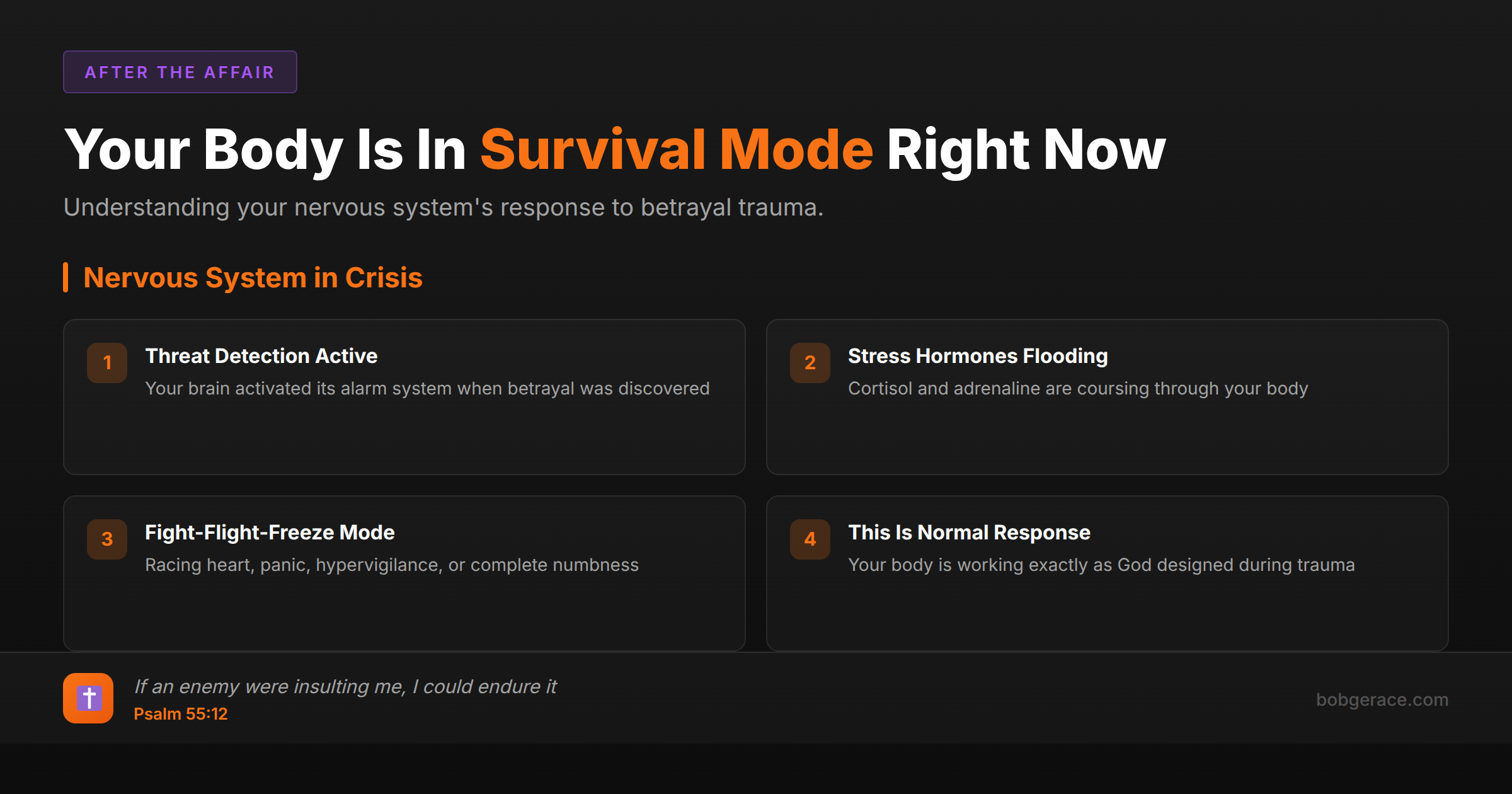
Your nervous system is in complete survival mode right now. When you discovered his betrayal, your brain immediately activated its threat detection system, flooding your body with stress hormones like cortisol and adrenaline. This isn't weakness - it's your body's designed response to protect you from danger. You're likely experiencing symptoms like racing heart, difficulty sleeping, hypervigilance, panic attacks, or conversely, feeling numb and disconnected. Your nervous system is oscillating between fight-or-flight activation and protective shutdown. This dysregulation can make you feel like you're losing your mind, but these are normal responses to abnormal circumstances. Your body is working exactly as God designed it to during times of threat and trauma.
The Full Picture
Right now, your nervous system is doing exactly what it was designed to do when faced with a life-threatening situation. And make no mistake - betrayal is a threat to your survival, your security, and your very identity.
Your sympathetic nervous system has kicked into overdrive. This is the part responsible for fight-or-flight responses. You might feel:
- Heart racing or palpitations - Shallow, rapid breathing - Muscle tension and headaches - Difficulty concentrating or making decisions - Hypervigilance (constantly scanning for more threats) - Insomnia or restless sleep - Loss of appetite or stress eating - Digestive issues
Alternatively, your parasympathetic nervous system might have activated a shutdown response. This happens when the threat feels too overwhelming to fight or flee from:
- Feeling numb or emotionally flat - Extreme fatigue despite not sleeping well - Difficulty connecting with others - Memory problems or brain fog - Feeling disconnected from your body - Depression-like symptoms
Many women swing between these two states - feeling wired and panicked one moment, then completely shut down the next. This dysregulation is your nervous system's attempt to protect you, but it leaves you feeling out of control.
Understand this: you are not broken. Your body is responding appropriately to betrayal trauma. The challenge now is learning how to help your nervous system find safety again so it can begin to regulate and heal.
What's Really Happening
From a clinical perspective, what you're experiencing is called nervous system dysregulation, and it's the hallmark of betrayal trauma. Your autonomic nervous system, which operates below conscious awareness, has detected a massive threat to your attachment bond and safety.
When we experience betrayal in our primary attachment relationship, it activates the same neural pathways as physical danger. Your amygdala (the brain's alarm system) is firing constantly, while your prefrontal cortex (responsible for logic and reasoning) goes offline. This is why you might feel like you can't think clearly or make sense of what's happening.
The stress hormone cortisol is flooding your system, which explains the physical symptoms you're experiencing. Chronic cortisol elevation affects everything from your immune system to your digestive health. Your vagus nerve, which helps regulate your nervous system, becomes compromised, making it difficult to self-soothe.
This dysregulation can persist for months or even years without proper intervention. However, the nervous system has remarkable capacity for healing through what we call neuroplasticity. With the right tools and support, you can literally rewire your brain's response patterns.
The key is understanding that healing happens in the body first, then the mind. We need to work with your nervous system's natural capacity for regulation through breathing techniques, grounding exercises, and //blog.bobgerace.com/heroic-protection-christian-marriage-shield-not-sword/:safe therapeutic relationships. This isn't something you can simply 'think' your way through - it requires a somatic approach to healing.
What Scripture Says
God understands the depth of trauma that betrayal causes. Throughout Scripture, we see that He takes betrayal seriously and acknowledges its devastating impact on the human heart and body.
Psalm 55:12-14 captures the unique pain of betrayal: *"If an enemy were insulting me, I could endure it; if a foe were rising against me, I could hide. But it is you, a man like myself, my companion, my close friend, with whom I once enjoyed sweet fellowship at the house of God."* Even David's physical descriptions of his distress mirror what you're experiencing: *"My heart is in anguish within me; the terrors of death have fallen on me. Fear and trembling have beset me; horror has overwhelmed me."* (Psalm 55:4-5)
Jeremiah 17:9 reminds us that *"The heart is deceitful above all things and beyond cure. Who can understand it?"* This isn't just about moral failure - it acknowledges that betrayal creates wounds that feel impossible to heal through human effort alone.
Yet God promises healing. Psalm 147:3 tells us *"He heals the brokenhearted and binds up their wounds."* The Hebrew word for "brokenhearted" (shabar) literally means shattered into pieces - exactly how betrayal leaves us feeling.
Isaiah 26:3 offers hope for your racing mind: *"You will keep in perfect peace those whose minds are steadfast, because they trust in you."* This peace isn't the absence of struggle, but God's presence with you in the storm.
Matthew 11:28-29 extends Jesus' invitation: *"Come to me, all you who are weary and burdened, and I will give you rest. Take my yoke upon you and learn from me, for I am gentle and lowly in heart, and you will find rest for your souls."* This rest includes the deep nervous system regulation your body desperately needs.
What To Do Right Now
-
1
Practice box breathing: Breathe in for 4 counts, hold for 4, out for 4, hold for 4. Repeat 10 times to activate your parasympathetic nervous system.
-
2
Ground yourself physically: Feel your feet on the floor, hold a cold object, or splash cold water on your face to bring your awareness back to your body.
-
3
Limit caffeine and alcohol: Both can increase nervous system dysregulation and make symptoms worse during this acute phase.
-
4
Prioritize sleep hygiene: Keep a consistent bedtime, avoid screens 1 hour before bed, and create a calm environment even if sleep is difficult.
-
5
Move your body gently: Take short walks, do light stretching, or try trauma-informed yoga to help discharge stress energy.
-
6
Seek professional support: Consider working with a trauma-informed therapist who understands betrayal trauma and nervous system healing.
Related Questions
- What is 'betrayal trauma' and do I have it?
- Why do I feel like I'm going to die?
- Is this PTSD?
- How do I function when my body won't calm down?
- Why am I numb one moment and raging the next?
- What does betrayal do to the brain?
- What's happening in my nervous system right now?
- What is 'amygdala hijack' and how do I interrupt it?
- How do I regulate when my body is in fight-or-flight?
- What does 'window of tolerance' mean and why am I outside it?
Also find Bob on
Subscribe for weekly videos on Christian marriage.
Your Body Needs a Plan Today
Bob works with men whose wives just found out. He'll help you understand what's happening in your specific situation and what actually stabilizes a nervous system in crisis.
Talk to Bob →