What is 'betrayal trauma' and do I have it?
6 min read
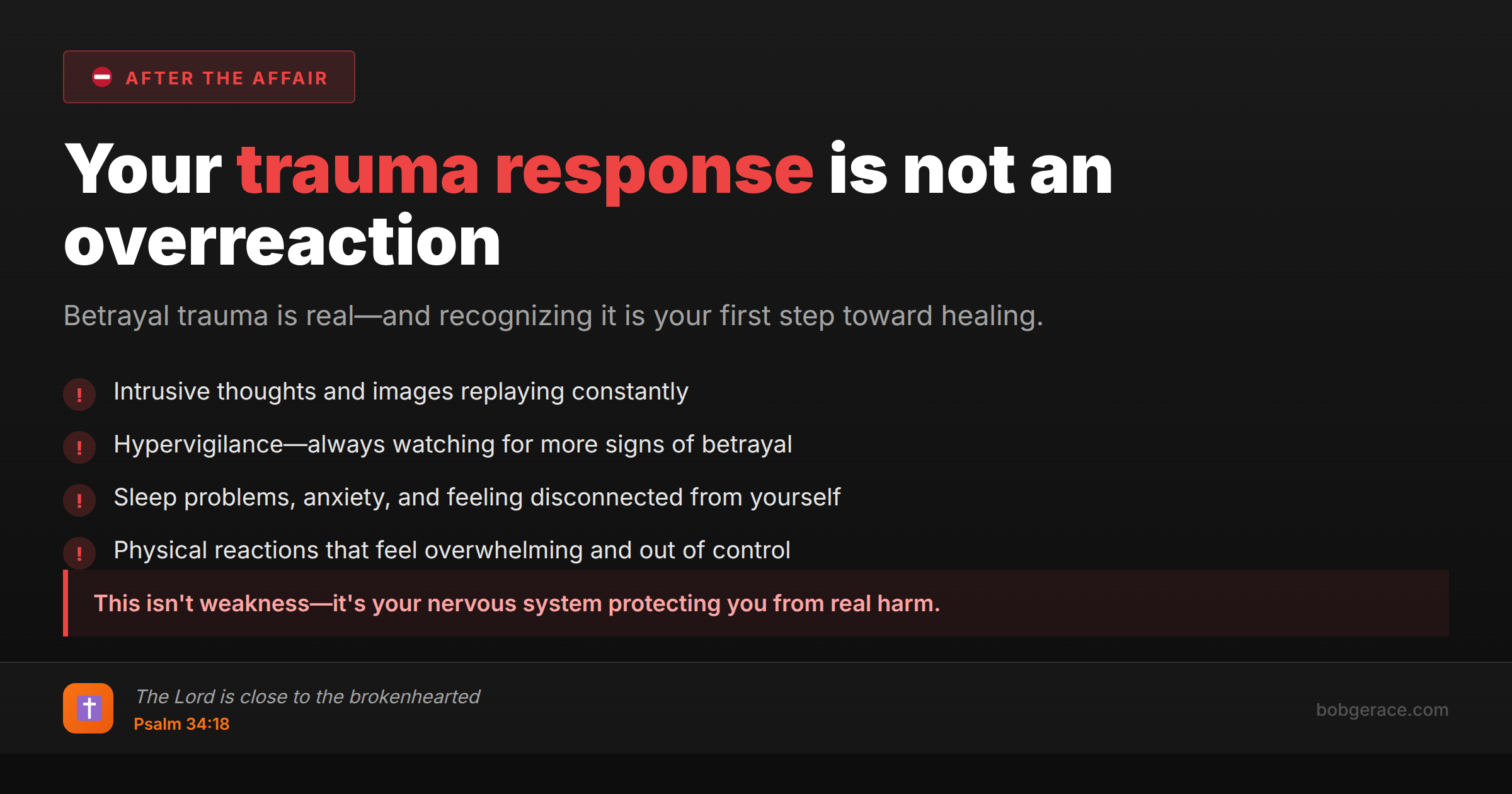
Betrayal trauma occurs when someone you depend on for safety and trust—like your spouse—violates that trust through infidelity or deception. It's not just feeling hurt or disappointed; it's a genuine trauma response that can affect your body, mind, and spirit. You might experience symptoms like intrusive thoughts, hypervigilance, sleep problems, anxiety, depression, or feeling disconnected from yourself. If your partner has been unfaithful and you're experiencing intense emotional and physical reactions that feel overwhelming or out of your control, you likely are dealing with betrayal trauma. This isn't weakness or overreacting—it's your nervous system responding to a real threat to your safety and security. The person who was supposed to protect you became the source of harm, creating a unique type of trauma that requires specific understanding and care.
The Full Picture
Betrayal trauma is fundamentally different from other types of trauma because it involves someone you trusted completely. When your spouse has an affair or engages in other forms of infidelity, it doesn't just break your heart—it can break your entire sense of reality.
Common symptoms include: - Intrusive thoughts or images about the betrayal - Hypervigilance (constantly scanning for signs of danger or deception) - Sleep disturbances and nightmares - Anxiety and panic attacks - Depression and feelings of worthlessness - Physical symptoms like headaches, stomach problems, or fatigue - Dissociation or feeling disconnected from yourself - Difficulty concentrating or making decisions - Emotional numbness alternating with intense emotional outbursts
What makes betrayal trauma particularly devastating is that it occurs within an attachment relationship. Your spouse wasn't just anyone—they were your primary source of emotional safety. When they betray you, it creates what researchers call "relational trauma," where the very person who should help you heal becomes the source of your wound.
This trauma can also trigger what's called "attachment injury," where your ability to trust and connect becomes compromised. You might find yourself questioning everything about your relationship, your judgment, and even your own perceptions of reality. This isn't paranoia or weakness—it's a normal response to having your fundamental assumptions about safety and trust shattered.
What's Really Happening
From a clinical perspective, betrayal trauma activates the same neurological pathways as other forms of PTSD. When someone we depend on for safety becomes the source of harm, our nervous system goes into survival mode. The brain's alarm system becomes hyperactive, constantly scanning for threats.
What's particularly challenging about betrayal trauma is that it often involves ongoing exposure to the source of trauma—your spouse. Unlike other traumas where you can remove yourself from the dangerous situation, with betrayal trauma, you're often still living with and trying to reconcile with the person who hurt you.
The symptoms you're experiencing aren't signs of mental illness or weakness—they're adaptive responses to a genuine threat to your psychological and relational safety. Your brain is trying to //blog.bobgerace.com/heroic-protection-christian-marriage-shield-not-sword/:protect you from future harm, which is why you might find yourself hypervigilant, having difficulty trusting, or experiencing intense emotional reactions to seemingly small triggers.
Recovery from betrayal trauma requires specialized approaches that address both the individual trauma symptoms and the relational dynamics. This includes trauma-informed therapy, understanding your nervous system responses, and learning healthy coping strategies. It's also crucial to have support from others who understand betrayal trauma, as well-meaning friends and family members often don't grasp the severity of what you're experiencing.
What Scripture Says
Scripture doesn't minimize the reality of deep emotional wounds or the impact of betrayal. God understands trauma and provides both comfort and a path toward healing.
Psalm 34:18 - "The Lord is close to the brokenhearted and saves those who are crushed in spirit." God doesn't dismiss your pain or tell you to "get over it." He draws near to you in your brokenness.
Psalm 147:3 - "He heals the brokenhearted and binds up their wounds." Healing is God's heart for you, but notice it says He "binds up" wounds—this suggests a process that takes time and care.
Isaiah 61:1 - "He has sent me to bind up the brokenhearted, to proclaim freedom for the captives and release from darkness for the prisoners." You may feel trapped by your trauma responses, but God promises freedom and release.
Matthew 11:28-30 - "Come to me, all you who are weary and burdened, and I will give you rest. Take my yoke upon you and learn from me, for I am gentle and lowly in heart, and you will find rest for your souls." Jesus offers rest for your weary, traumatized soul.
2 Corinthians 1:3-4 - "Praise be to the God and Father of our Lord Jesus Christ, the Father of compassion and the God of all comfort, who comforts us in all our troubles." God is specifically called the God of all comfort—including comfort for betrayal trauma.
God's plan isn't for you to suffer in silence or pretend you're fine when you're not. Healing is part of His redemptive work in your life.
What To Do Right Now
-
1
Validate your experience - Stop questioning whether your reactions are "normal" or "too much." If you're experiencing trauma symptoms after betrayal, that's a legitimate response that deserves care and attention.
-
2
Prioritize your safety - This includes physical, emotional, and psychological safety. You may need boundaries with your spouse while you begin healing, and that's not punishment—it's self-care.
-
3
Find trauma-informed support - Seek out a therapist who specializes in betrayal trauma, not just general marriage counseling. Your individual healing needs attention before marital reconciliation can truly begin.
-
4
Connect with others who understand - Find a support group for partners of unfaithful spouses or online communities where you can share your experience without judgment or pressure to "forgive and move on."
-
5
Take care of your body - Trauma affects your physical health. Prioritize sleep, nutrition, gentle exercise, and medical care. Your body is working hard to heal.
-
6
Give yourself time - Healing from betrayal trauma isn't quick. Resist pressure from others (or yourself) to "get over it" on anyone else's timeline. God's healing process takes time.
Related Questions
- Why do I feel like I'm going to die?
- What's happening to my nervous system right now?
- Why am I having intrusive thoughts/images?
- Is this PTSD?
- What is 'hypervigilance' and why am I doing it?
- What does betrayal do to the brain?
- What's happening in my nervous system right now?
- What is 'amygdala hijack' and how do I interrupt it?
- How do I not lose my mind right now?
Also find Bob on
Subscribe for weekly videos on Christian marriage.
Your Marriage Isn't a Textbook Case
Betrayal trauma hits different in every relationship. A coach who knows your specific story can help you figure out what healing actually looks like for you—not just what works in general.
Talk to Bob →