What happens when small wounds never heal?
6 min read
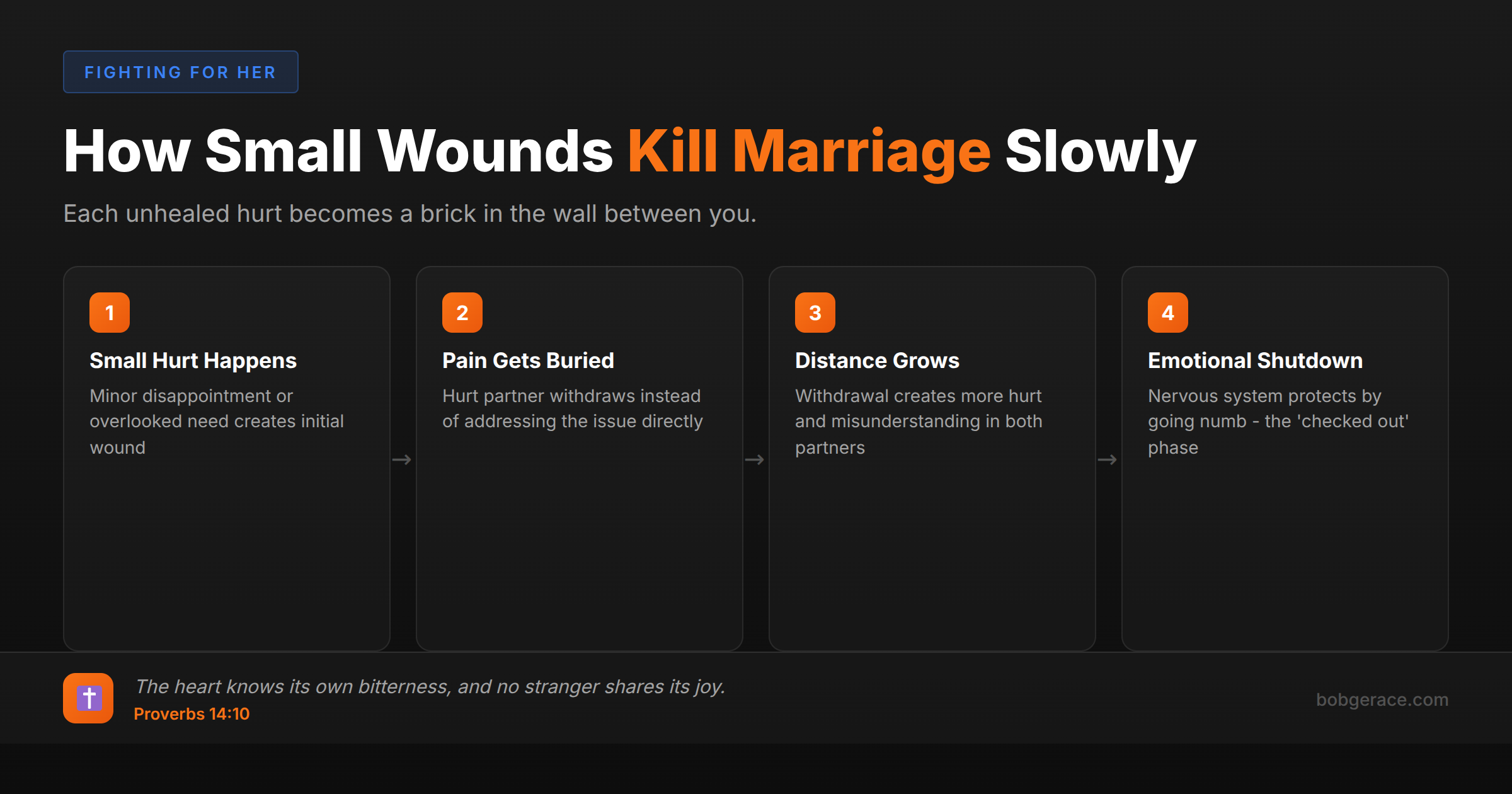
When small wounds in marriage go unhealed, they don't just disappear - they accumulate and compound. Each unaddressed hurt becomes a brick in a wall of resentment that slowly builds between spouses. What starts as minor disappointments, overlooked needs, or casual dismissiveness eventually creates emotional numbness and disconnection. The process follows a predictable pattern: hurt leads to withdrawal, withdrawal creates more hurt, and the cycle deepens until one or both partners emotionally shut down for self-protection. Your wife's 'checked out' behavior isn't cruelty - it's her nervous system's attempt to stop the pain by stopping the feeling altogether.
The Full Picture
Think of emotional wounds like physical cuts that never get properly cleaned and bandaged. A small cut, left untreated, can become infected. Multiple small cuts, ignored over time, can overwhelm the body's healing capacity.
The Accumulation Effect
In marriage, small wounds accumulate in several ways: - Dismissive comments that chip away at worth - Promises broken without acknowledgment - Needs expressed but consistently unmet - Emotional bids for connection that go unanswered - Conflicts swept under the rug rather than resolved
Each incident might seem minor in isolation, but together they create a critical mass of pain.
The Protective Shutdown
When the pain becomes too much, the brain's survival mechanisms kick in. Your wife's emotional system begins prioritizing protection over connection. She stops investing emotionally because investment leads to disappointment. She stops sharing vulnerably because vulnerability leads to hurt.
This isn't a conscious choice - it's an automatic protective response. Her nervous system has learned that emotional engagement with you equals pain, so it shuts down that pathway.
The Numbness Factor
The cruel irony is that when someone shuts down to avoid pain, they also shut down to joy, intimacy, and love. They don't get to selectively numb - it's all or nothing. This is why she might seem indifferent to both your struggles and your efforts to improve.
What's Really Happening
From a clinical perspective, what you're witnessing is a trauma response to chronic relational injury. When small wounds never heal, several neurobiological changes occur that fundamentally alter how someone engages in the relationship.
Neurobiological Adaptation
Repeated emotional injuries create what we call 'kindling' - the nervous system becomes hypervigilant and reactive to potential threats. Eventually, to manage this constant state of alertness, the system shifts into dorsal vagal shutdown - a state of numbness and disconnection.
Attachment Disruption
The accumulation of unhealed wounds disrupts the attachment bond. She's moved from secure attachment (trusting, open) to anxious attachment (seeking but fearful) and finally to avoidant attachment (withdrawn, self-protective). This progression is predictable and reversible, but it requires consistent safety over time.
Emotional Flooding Prevention
Her 'checked out' behavior serves as emotional regulation. By staying disconnected, she prevents the overwhelming flood of accumulated grief, anger, and disappointment from surfacing. It's actually an adaptive response to chronic emotional overwhelm.
Recovery Requires Safety
Healing doesn't begin with trying to 'win her back' or prove your love. It begins with creating consistent emotional safety where her nervous system can gradually relax its protective stance. This process typically takes months, not weeks, because trust //blog.bobgerace.com/4-crisis-theaters-christian-husband-must-master/:must be rebuilt at a cellular level.
What Scripture Says
Scripture provides profound wisdom about the nature of wounds and healing in relationships. God understands both the devastating power of accumulated hurts and the healing process required for restoration.
The Reality of Deep Wounds
*"The heart knows its own bitterness, and no stranger shares its joy."* - Proverbs 14:10
This verse acknowledges that accumulated pain creates private anguish that others cannot fully comprehend. Your wife's withdrawal reflects deep, personal wounds that have shaped her inner world.
The Compounding Nature of Hurt
*"A brother offended is harder to be won than a strong city, and their contentions are like the bars of a castle."* - Proverbs 18:19
This passage reveals how unresolved offenses create fortified barriers. Each unhealed wound adds another bar to the castle of self-protection.
God's Heart for Healing
*"He heals the brokenhearted and binds up their wounds."* - Psalm 147:3
*"Come to me, all you who are weary and burdened, and I will give you rest."* - Matthew 11:28
God specializes in healing accumulated wounds. He doesn't minimize pain or rush the process - He enters into it with tenderness and patience.
The Path Forward
*"Therefore, if anyone is in Christ, he is a new creation. The old has passed away; behold, the new has come."* - 2 Corinthians 5:17
*"Bear with each other and forgive one another if any of you has a grievance against someone. Forgive as the Lord forgave you."* - Colossians 3:13
Restoration is possible, but it requires divine intervention and supernatural grace to break cycles of accumulated hurt.
What To Do Right Now
-
1
Stop trying to 'fix' her numbness and start creating consistent safety through your actions, not your words
-
2
Acknowledge the accumulated pain without defensiveness - validate that many small hurts have created legitimate wounds
-
3
Focus on healing your own patterns that contributed to the wound accumulation rather than trying to win her back
-
4
Give her emotional space while demonstrating changed behavior - healing happens in safety, not under pressure
-
5
Seek professional help to understand the deeper dynamics and develop a proper restoration plan
-
6
Pray for divine intervention in the healing process while taking responsibility for your part in the wounding
Related Questions
- What is 'accumulated resentment'?
- How does unaddressed hurt compound?
- What is 'resentment inventory' and does she have one?
- What is 'marital debt' and how do I pay it down?
- Why does she remember everything I forgot?
- What are 'attachment injuries' and how many did I cause?
- She brings up things from years ago
- Her resentment runs deeper than I knew
- What is the 'distance and isolation cascade'?
- How does unaddressed attachment pain accumulate?
Also find Bob on
Subscribe for weekly videos on Christian marriage.
Your Marriage Isn't Generic
A coach who knows your specific history can see what you can't — which wounds matter most, what order to address them, and how your wife's nervous system actually works. You don't have to keep guessing.
Talk to Bob →