What is 'accumulated resentment'?
6 min read
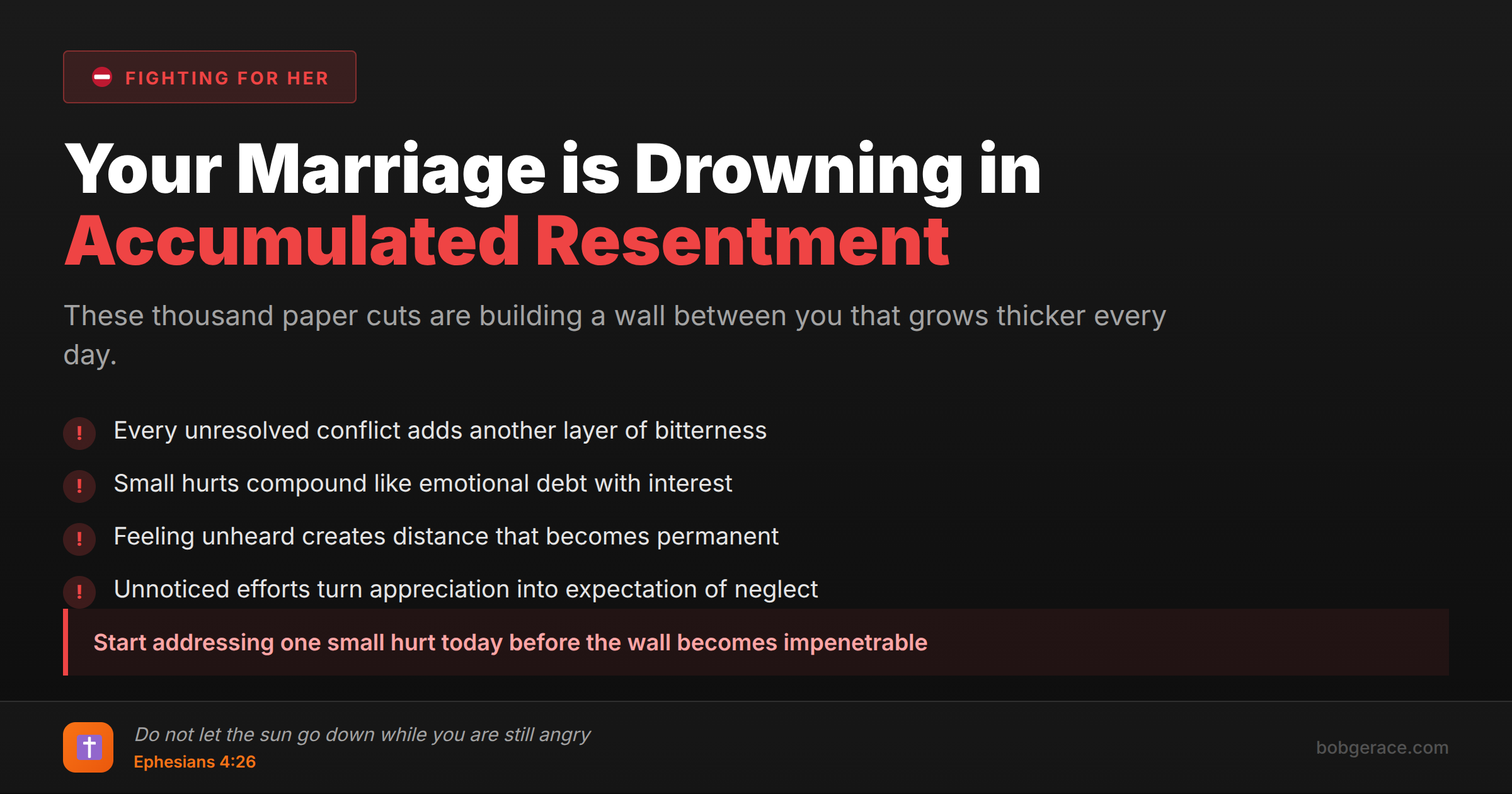
Accumulated resentment is the slow buildup of hurt, anger, and bitterness that occurs when relationship injuries go unaddressed over time. It's like a emotional debt that compounds with interest - each unresolved conflict, unmet need, or perceived slight adds another layer to an increasingly heavy burden. This isn't about one big betrayal or crisis. Instead, it's the thousand paper cuts of daily marriage life: feeling unheard during arguments, having your efforts go unnoticed, experiencing the same disappointing patterns repeatedly. When these smaller hurts aren't processed and resolved, they don't just disappear - they stack up, creating a wall between spouses that grows thicker and more impenetrable over time.
The Full Picture
Think of accumulated resentment like sediment in a river. Each unresolved conflict, each time you bit your tongue instead of addressing an issue, each moment you felt dismissed or misunderstood - all of it settles at the bottom of your relationship like layers of silt.
At first, the water still runs clear. You can still see through to the bottom, still navigate the currents of your marriage with relative ease. But over months and years, those layers build up. The water becomes murky. What once felt natural and flowing now feels stagnant and difficult to navigate.
The Anatomy of Accumulation
Accumulated resentment typically follows a predictable pattern:
- Initial Injury: Something happens that hurts or disappoints you - Internal Processing: You tell yourself it's not worth bringing up or assume it will resolve itself - Repetition: Similar situations occur repeatedly without resolution - Emotional Debt: Each incident adds to your internal "ledger" of grievances - Withdrawal: You begin protecting yourself by emotionally distancing - Explosion or Shutdown: Eventually, you either blow up over something small or check out entirely
The dangerous thing about this process is how normal it feels at first. Most couples don't wake up one day and decide to start building resentment. It happens gradually, through a thousand small choices to avoid conflict, to keep the peace, or to hope things will just get better on their own.
Why It's So Destructive
Accumulated resentment is particularly damaging because it:
- Creates an unfair scoring system where past hurts influence present interactions - Makes every new conflict feel bigger than it actually is - Erodes the benefit of the doubt and positive assumptions about your spouse - Builds walls instead of bridges in communication - Eventually leads to emotional withdrawal and relationship death
What's Really Happening
From a clinical perspective, accumulated resentment is essentially unprocessed emotional trauma that compounds over time. When we experience hurt in a relationship but don't address it effectively, our nervous system doesn't return to baseline - it remains in a state of protective vigilance.
The Neurological Component
What's happening in the brain is fascinating and troubling. Each unresolved conflict creates neural pathways that prime us to expect more hurt from our partner. Our amygdala - the brain's alarm system - becomes increasingly sensitive to perceived threats from our spouse. This means we start interpreting neutral behaviors as negative, and minor disappointments as major betrayals.
This is why couples often say things like "You always..." or "You never..." during arguments. Their brain has literally been wired to see patterns of hurt, even when the current situation might not warrant such an intense response.
The Attachment Perspective
From an attachment theory standpoint, accumulated resentment is often the result of unmet attachment needs. When we feel consistently unseen, unheard, or unvalued by our partner, our attachment system goes into overdrive. We either become anxiously vigilant (constantly monitoring for signs of rejection) or avoidantly protective (shutting down to prevent further hurt).
The tragedy is that by the time most couples seek help, both partners are operating from wounded attachment systems. They're not responding to who their spouse is today, but to the accumulated story of who they believe their spouse to be based on past hurts.
The Path to Healing
The good news is that accumulated resentment can be addressed and resolved. It requires intentional work to process past hurts, develop new communication patterns, and literally rewire the brain for connection rather than protection.
What Scripture Says
Scripture speaks directly to the issue of accumulated resentment, offering both warnings about its dangers and pathways to healing. God's Word recognizes that hurt is inevitable in relationships, but holding onto that hurt is a choice - one with serious consequences.
The Danger of Unresolved Anger
*"In your anger do not sin: Do not let the sun go down while you are still angry, and do not give the devil a foothold."* - Ephesians 4:26-27
This isn't saying anger itself is wrong - it's warning us about what happens when we let anger fester unaddressed. When we go to bed night after night with unresolved hurt, we're literally giving the enemy of our marriage a foothold. Each day we delay addressing issues, that foothold grows stronger.
The Poison of Bitterness
*"See to it that no one falls short of the grace of God and that no bitter root grows up to cause trouble and defile many."* - Hebrews 12:15
Accumulated resentment is exactly what Scripture calls a "bitter root." It starts small, buried beneath the surface, but eventually grows into something that contaminates the entire relationship. Notice the verse says it "defiles many" - resentment never stays contained to just the marriage; it affects children, extended family, and community.
The Call to Quick Resolution
*"Therefore, if you are offering your gift at the altar and there remember that your brother or sister has something against you, leave your gift there in front of the altar. First go and be reconciled to them; then come and offer your gift."* - Matthew 5:23-24
Jesus prioritizes relational reconciliation above religious activity. If unresolved conflict is so important that it should interrupt worship, how much more should we prioritize addressing hurt in our marriages before it accumulates?
The Power of Forgiveness
*"Bear with each other and forgive one another if any of you has a grievance against someone. Forgive as the Lord forgave you."* - Colossians 3:13
*"Above all, love each other deeply, because love covers over a multitude of sins."* - 1 Peter 4:8
God's design for marriage includes both the reality that we will hurt each other and the tools to prevent that hurt from accumulating into resentment.
What To Do Right Now
-
1
Take inventory of your resentment - Write down the top 5-7 recurring issues that create hurt or frustration in your marriage
-
2
Own your part in the accumulation - Identify where you've chosen silence over honest communication or avoidance over resolution
-
3
Start with one issue - Pick the least charged item from your list and initiate a calm, honest conversation about it
-
4
Use 'I' statements - Focus on your experience ('I felt hurt when...') rather than accusations ('You always...')
-
5
Establish a 24-hour rule - Commit to addressing relationship hurts within 24 hours rather than letting them accumulate
-
6
Seek professional help - If resentment feels overwhelming or conversations consistently escalate, get guidance from a qualified marriage counselor
Related Questions
- How does unaddressed hurt compound?
- What is 'resentment inventory' and does she have one?
- What happens when small wounds never heal?
- What is 'marital debt' and how do I pay it down?
- Why does she remember everything I forgot?
- What are 'attachment injuries' and how many did I cause?
- She brings up things from years ago
- Her resentment runs deeper than I knew
- What role did our relationship problems play?
- What is 'negative sentiment override' and does she have it?
Also find Bob on
Subscribe for weekly videos on Christian marriage.
Resentment This Deep Needs a Coach
If your marriage is carrying years of unresolved hurt, a tool won't cut it. You need someone who hears your specific story and helps you untangle what's actually driving the distance.
Talk to Bob →