What is the difference between God's will and God's permission?
6 min read
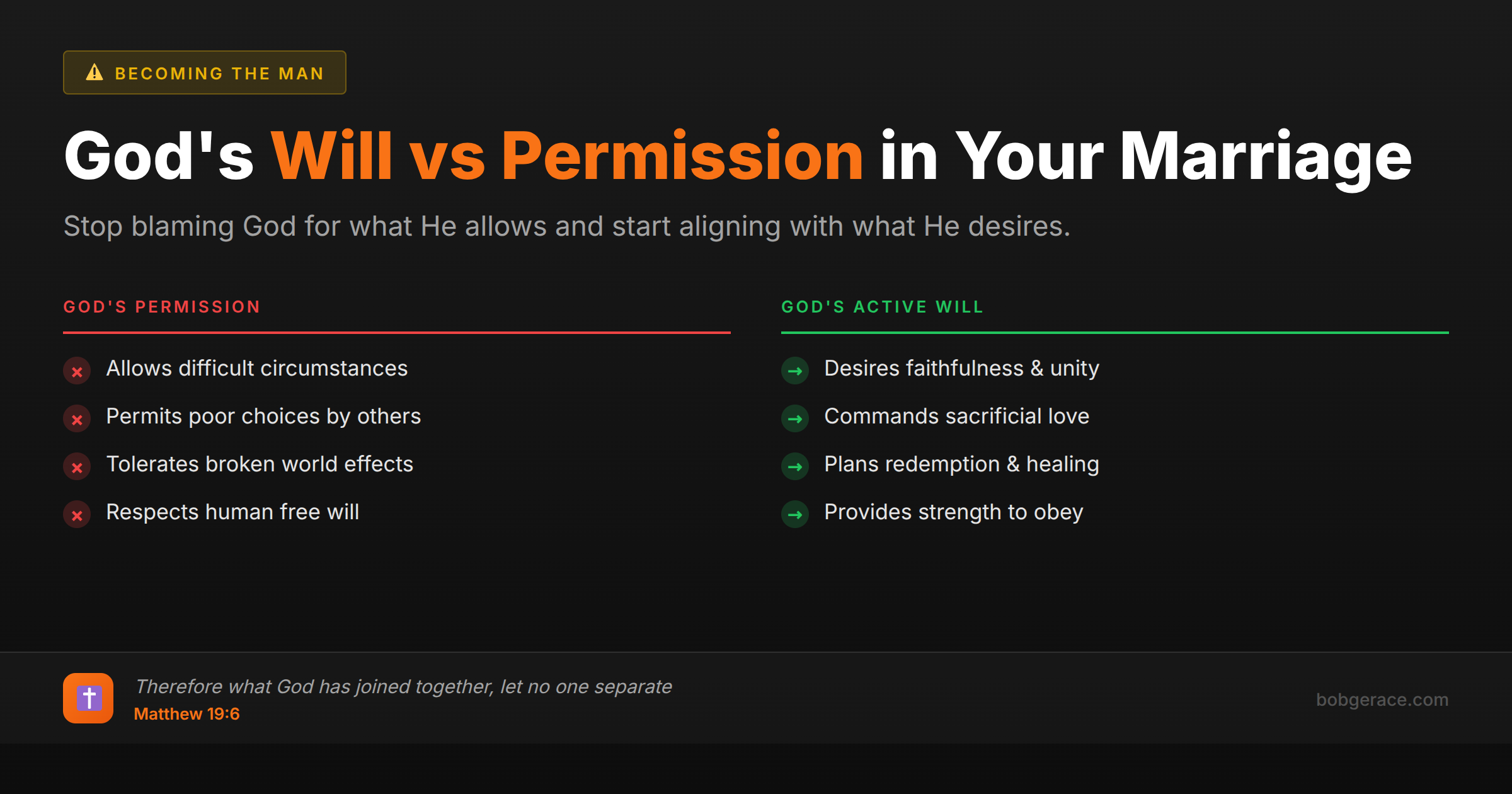
God's will refers to what He actively desires, plans, and brings about - His perfect intentions for our lives that align with His character and purposes. God's permission, however, refers to what He allows to happen even though it's not His preferred outcome, often due to human free will or the fallen nature of our world. In marriage, this distinction is crucial. God's will includes faithfulness, love, forgiveness, and unity between spouses. But He permits difficult circumstances, poor choices, and even divorce - not because He wants these things, but because He respects human agency and works within a broken world. Understanding this difference helps couples navigate hardship without blaming God for every struggle while still trusting His ultimate sovereignty.
The Full Picture
This distinction between God's will and permission isn't just theological hairsplitting - it's essential for understanding how God works in your marriage and why bad things happen to good couples.
God's Active Will represents His perfect desires and plans. This includes His design for marriage as a covenant relationship reflecting Christ and the church. God actively wills love, faithfulness, forgiveness, spiritual growth, and unity between spouses. When we align with these purposes, we're swimming with the current of His intentions.
God's Permissive Will acknowledges that He allows things He doesn't prefer. He permits adultery, abuse, addiction, and abandonment - not because these align with His character, but because He honors human free will and works redemptively even through our failures.
Think of it like a loving parent. A good father actively wills his child's success, health, and happiness. But he may permit his teenager to make poor choices, learning through consequences rather than controlling every decision. The father doesn't cause the poor choices, but he allows them within boundaries while working to bring good from difficult situations.
This framework prevents two dangerous extremes: fatalism ("God wanted this to happen") and deism ("God isn't involved"). Instead, it recognizes God as both sovereign and good, working His purposes through and despite human choices. In marriage, this means you can fight for God's will while trusting His ability to work through whatever He permits.
What's Really Happening
In my practice, couples often struggle with theological confusion that compounds their relational pain. When spouses don't distinguish between God's will and permission, they develop distorted views of both God and their circumstances that hinder healing.
Couples who believe "God willed this affair" or "God wanted our marriage to fail" often become bitter toward God and passive about change. They see themselves as victims of divine manipulation rather than agents who can align with God's redemptive purposes. This theology of despair paralyzes couples who need hope and agency to rebuild.
Conversely, couples who understand God's permissive will often show greater resilience. They recognize that while God didn't cause their spouse's addiction or betrayal, He can work redemptively through these painful realities. This framework empowers them to grieve appropriately, set healthy boundaries, and actively pursue God's preferred outcomes.
The clinical benefit is profound: couples stop fighting theology and start fighting for their marriage. They learn to distinguish between accepting God's sovereignty and accepting destructive behavior. They can simultaneously trust God's ultimate control while taking responsibility for their choices and responses. This theological clarity often becomes the foundation for genuine transformation because it aligns couples with both divine grace and personal accountability.
What Scripture Says
Scripture clearly distinguishes between what God actively wills and what He permits, even when both serve His ultimate purposes.
God's Active Will in Marriage: *"Therefore what God has joined together, let no one separate"* (Matthew 19:6). God actively wills marriage unity and permanence.
*"Husbands, love your wives as Christ loved the church"* (Ephesians 5:25). These commands reveal God's active desires for marital relationships.
God's Permissive Will: *"Moses permitted you to divorce your wives because your hearts were hard. But it was not this way from the beginning"* (Matthew 19:8). Jesus explicitly states that divorce is permitted, not preferred.
*"He gave them over to shameful lusts"* (Romans 1:26). God sometimes permits people to experience the consequences of rejecting His will.
God's Sovereignty Over Both: *"In their hearts humans plan their course, but the Lord establishes their steps"* (Proverbs 16:9). God works through human choices, both good and bad.
*"And we know that in all things God works for the good of those who love him"* (Romans 8:28). This doesn't mean all things are good, but that God works redemptively through everything He permits.
The biblical pattern is clear: God has preferences that reflect His character, but He works sovereignly through the reality of human choice in a fallen world.
What To Do Right Now
-
1
Identify what God actively wills for your marriage by studying His design and commands for relationships
-
2
Stop blaming God for what He permits but doesn't prefer - redirect that energy toward positive change
-
3
Align your choices and prayers with God's revealed will rather than trying to accept destructive patterns
-
4
Set appropriate boundaries around harmful behavior while trusting God's sovereignty over outcomes
-
5
Seek God's redemptive purposes in your current circumstances without minimizing real problems
-
6
Take responsibility for your response to what God permits while trusting His ultimate control
Related Questions
- Why does God allow marital suffering?
- Does God cause marital crisis or allow it?
- What is the purpose of pain in God's economy?
- How do I trust a God who let this happen?
- Is suffering always discipline?
- What does 'all things work together for good' mean?
- Is God punishing me?
- Does God want me to stay in this marriage?
- How do I know God's will in this?
- Is my suffering redemptive?
Also find Bob on
Subscribe for weekly videos on Christian marriage.
Bring This to Your Actual Marriage
Theology matters, but your wife doesn't need you to understand God's will in theory—she needs you to respond to what's happening in your kitchen. A coach helps you translate what you're learning into what you do next in your specific situation.
Talk to Bob →