What is the purpose of pain in God's economy?
6 min read
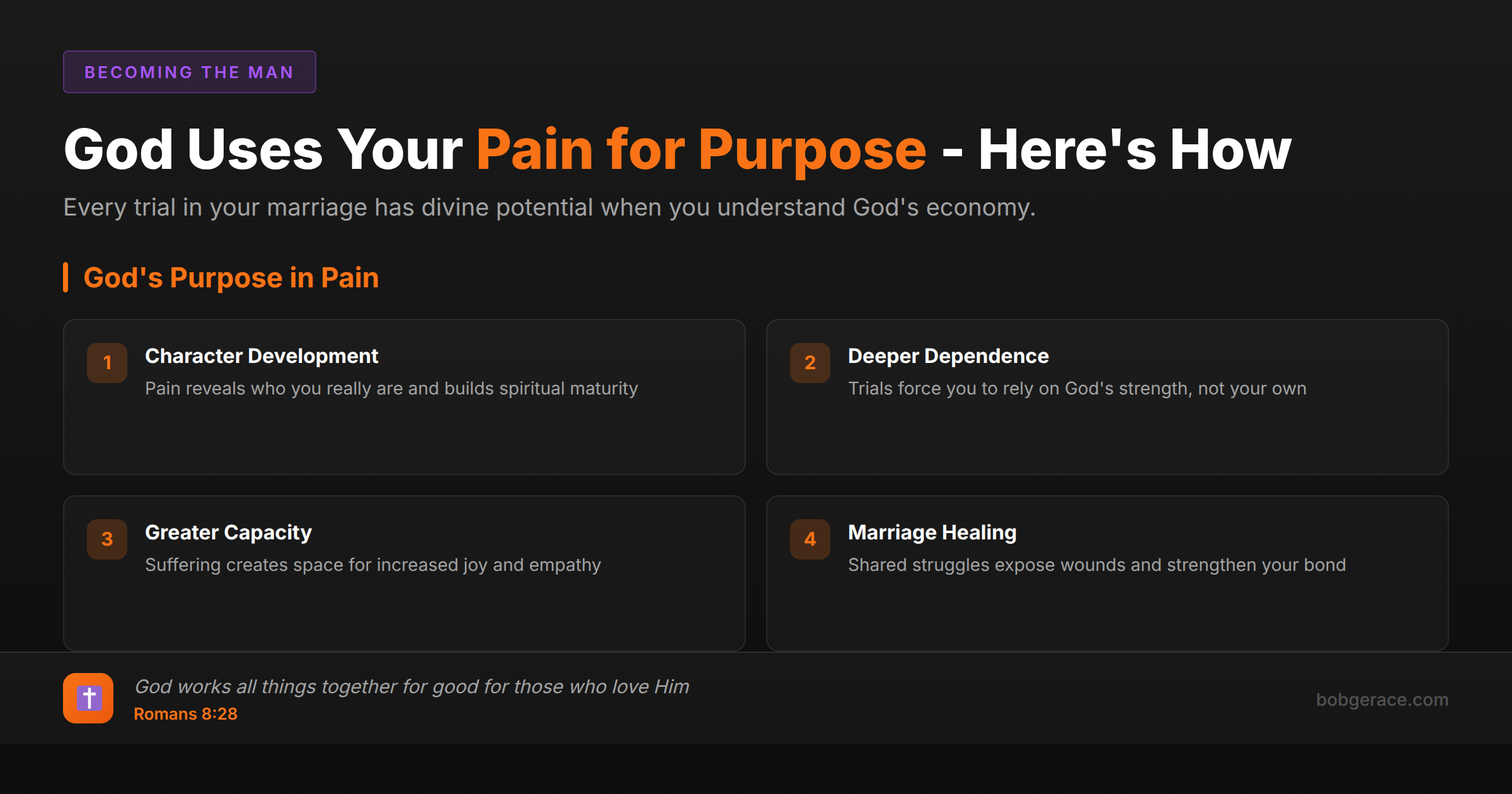
Pain in God's economy serves multiple divine purposes: it develops character, deepens dependence on God, and creates capacity for greater joy and empathy. Rather than being punishment or abandonment, pain often functions as God's tool for spiritual formation and growth. In marriage, pain can expose areas needing healing, strengthen bonds through shared struggle, and teach couples to rely on God's strength rather than their own. Scripture reveals that God wastes nothing - every trial has potential for redemption and purpose when surrendered to Him. While we may not understand the 'why' in the moment, faith trusts that God is working all things together for good for those who love Him.
The Full Picture
Here's what most people miss about pain: God doesn't waste a single tear. Every moment of suffering in your marriage, every sleepless night, every argument that leaves you feeling hopeless - none of it falls outside His sovereign purpose.
Pain in God's economy operates on principles most of us don't naturally understand. We live in a fallen world where sin has infected everything, including our marriages. But God, in His infinite wisdom, takes even the worst circumstances and weaves them into His redemptive plan.
Pain serves as God's megaphone - it gets our attention when nothing else will. In comfortable seasons, we often coast spiritually. But pain forces us to our knees, strips away our self-reliance, and creates space for God to work in ways we never imagined possible.
In marriage specifically, pain often reveals hidden areas that need healing. That argument about money might actually expose deeper issues of trust or security. The sexual struggles in your relationship might point to wounds from the past that God wants to heal. Pain doesn't just happen TO your marriage - when handled biblically, it happens FOR your marriage.
God's economy operates on different principles than the world's. Where the world sees waste, God sees opportunity. Where we see endings, He sees new beginnings. The key is learning to cooperate with His process rather than fighting against it.
This doesn't mean we're passive in our pain. God expects us to seek help, make changes, and actively participate in the healing process. But it does mean we approach our struggles with faith that God has purposes we can't yet see.
What's Really Happening
From a clinical perspective, what we observe in the therapy room aligns remarkably with biblical principles about pain's purpose. Neurologically, our brains are literally rewired through challenging experiences - a process called post-traumatic growth that mirrors spiritual transformation.
Couples who navigate pain together often develop stronger emotional bonds and deeper intimacy than those who've never faced significant challenges. This isn't masochism - it's the reality that shared struggle creates shared strength. When partners support each other through difficult seasons, they build neural pathways associated with trust, resilience, and mutual dependence.
Pain also serves as a diagnostic tool in relationships. Just as physical pain alerts us to injury or illness, relational pain often signals areas needing attention. The couple fighting constantly about household chores isn't really fighting about dishes - they're fighting about respect, appreciation, or feeling valued. Pain brings these deeper issues to the surface where they can be addressed.
Interestingly, research shows that individuals who integrate spiritual frameworks into their healing process demonstrate better outcomes than those who don't. This suggests that viewing pain through a theological lens - understanding it as purposeful rather than random - actually enhances psychological recovery.
The key clinical insight is this: pain processed in community (whether therapeutic or spiritual) leads to growth, while pain processed in isolation leads to pathology. God's design for healing always involves relationship - with Him and with others.
What Scripture Says
Scripture consistently presents pain as purposeful within God's sovereign plan. Romans 8:28 reminds us that "God works all things together for good for those who love Him and are called according to His purpose." This doesn't mean all things are good, but that God can use even painful circumstances for our ultimate benefit.
James 1:2-4 instructs us to "consider it pure joy when you face trials of many kinds, because you know that the testing of your faith produces perseverance. Let perseverance finish its work so that you may be mature and complete, not lacking anything." Pain develops spiritual maturity in ways comfort never could.
2 Corinthians 1:3-4 reveals another purpose: "Praise be to the God of all comfort, who comforts us in all our troubles, so that we can comfort those in any trouble with the comfort we ourselves receive from God." Our pain equips us to minister to others facing similar struggles.
Hebrews 12:11 acknowledges the difficulty while pointing to the outcome: "No discipline seems pleasant at the time, but painful. Later on, however, it produces a harvest of righteousness and peace for those who have been trained by it." God's discipline, though painful, produces spiritual fruit.
Isaiah 43:2 offers hope in the midst of trials: "When you pass through the waters, I will be with you; and when you pass through the rivers, they will not sweep over you." Notice it says "when," not "if" - trials are expected, but God's presence is guaranteed.
Finally, 1 Peter 4:12-13 puts suffering in eternal perspective: "Do not be surprised at the fiery ordeal that has come on you to test you, as though something strange were happening to you. But rejoice inasmuch as you participate in the sufferings of Christ, so that you may be overjoyed when his glory is revealed."
What To Do Right Now
-
1
Stop asking 'Why me?' and start asking 'What now?' - shift from victim mentality to growth mindset
-
2
Identify specific areas where pain is revealing needed changes in your marriage or character
-
3
Pray together as a couple about what God might be teaching you through this season
-
4
Seek godly counsel or professional help - don't try to process pain in isolation
-
5
Document how you see God working even in small ways during difficult times
-
6
Look for opportunities to comfort others with the comfort you're receiving from God
Related Questions
- Why does God allow marital suffering?
- What is the difference between God's will and God's permission?
- What does 'all things work together for good' mean?
- Is suffering always discipline?
- Does God cause marital crisis or allow it?
- Is my suffering redemptive?
- What is 'post-traumatic growth'?
- How do I trust a God who let this happen?
- Is this suffering formative or just painful?
Also find Bob on
Subscribe for weekly videos on Christian marriage.
You Don't Have to Figure This Out Alone
A coach who knows your marriage can help you see what God's doing in your specific pain—and how to respond without making it worse.
Talk to Bob →