What does 'all things work together for good' mean?
6 min read
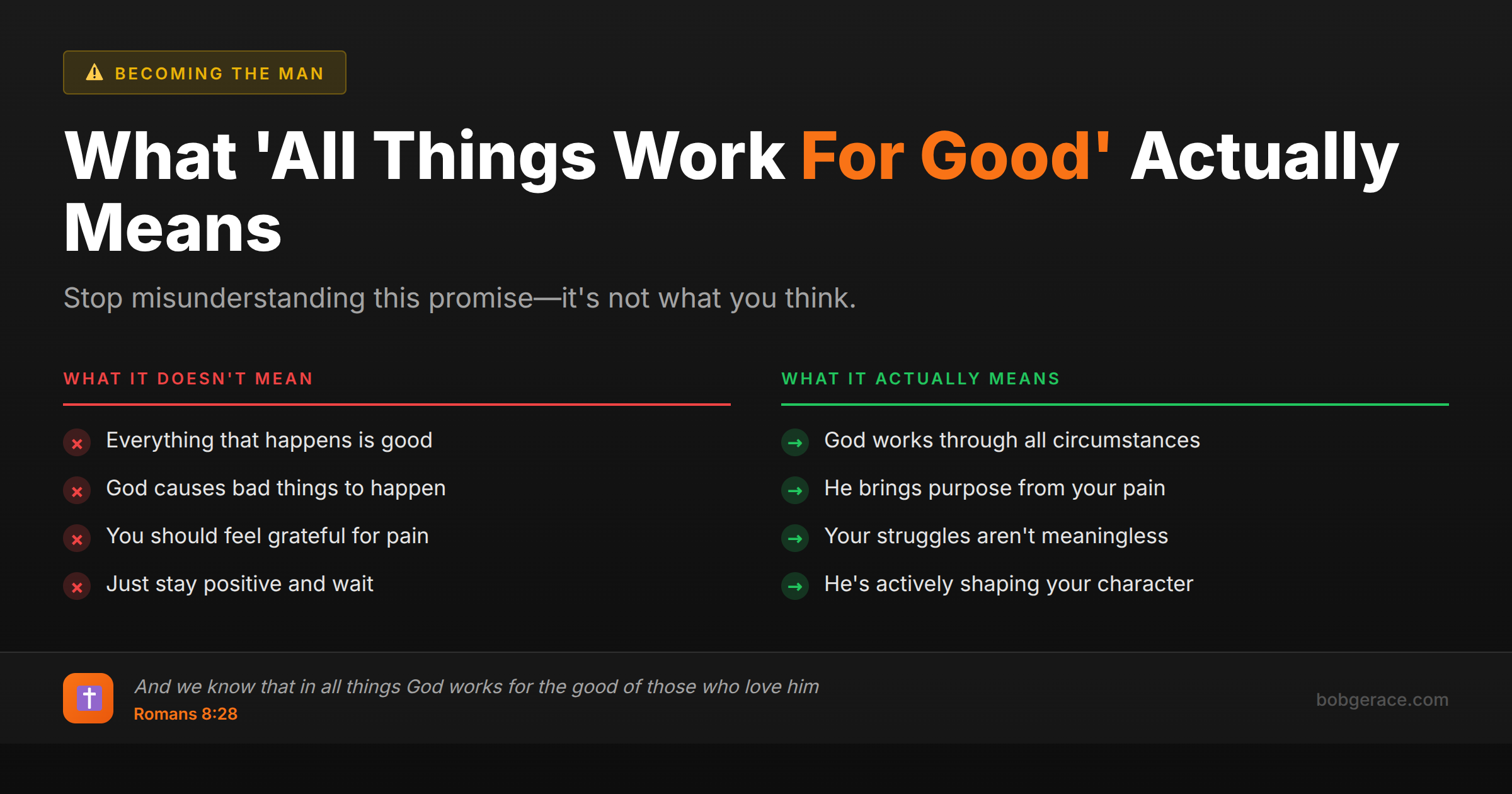
Romans 8:28 doesn't mean everything that happens is good or that God causes bad things. It means God is actively working in and through all circumstances—good and bad—to accomplish His good purposes for those who love Him. This isn't passive optimism; it's a promise about God's sovereignty and His ability to bring redemption even from our worst moments. In marriage, this means your struggles, failures, and painful seasons aren't meaningless. God can use your infidelity recovery, your communication breakdowns, even your divorce papers to shape you into who He's calling you to be. The 'good' isn't always what we'd choose, but it's always aligned with God's character and His plan for our ultimate flourishing.
The Full Picture
Let me be straight with you: Romans 8:28 is one of the most misunderstood verses in the Bible, especially when marriages are falling apart. People throw it around like a spiritual band-aid, as if saying "everything happens for a reason" somehow makes the pain go away. That's not what Paul is teaching here.
The verse says, "And we know that in all things God works for the good of those who love him, who have been called according to his purpose." Notice what it doesn't say. It doesn't say all things ARE good. It doesn't say God CAUSES all things. It says God WORKS in all things for good.
There's a massive difference. When your spouse betrays you, that betrayal isn't good. When addiction destroys your family, that destruction isn't good. When your marriage feels like it's beyond repair, that brokenness isn't good. But God can work in and through these devastating circumstances to accomplish something redemptive.
Here's what this looks like practically: Your marriage crisis might force you to finally deal with childhood wounds you've been avoiding for decades. Your spouse's affair might reveal codependency patterns that needed to be broken anyway. Your separation might create the space needed for both of you to get serious about change.
The 'good' God is working toward isn't always your comfort or even saving your marriage. Sometimes the good is your sanctification—becoming more like Christ. Sometimes it's protecting your children from a toxic environment. Sometimes it's positioning you to help other couples facing similar struggles.
This promise has boundaries. It's specifically for "those who love him, who have been called according to his purpose." This isn't universal karma or cosmic justice. It's a covenant promise to believers who are walking in relationship with God, even when that walk feels like stumbling through darkness.
What's Really Happening
From a therapeutic standpoint, Romans 8:28 addresses one of the core human needs: meaning-making. When couples experience trauma—whether infidelity, addiction, loss, or profound conflict—their brains are literally trying to make sense of chaos. The meaning we assign to our suffering directly impacts our ability to recover and grow.
What's clinically fascinating about this verse is that it reframes suffering without minimizing it. It doesn't engage in what we call 'toxic positivity'—pretending everything is fine when it's not. Instead, it acknowledges the reality of 'all things,' including the painful ones, while introducing the concept of redemptive purpose.
I see this therapeutic principle at work constantly. Couples who can find meaning in their struggles—not that the struggles were good, but that growth is possible through them—show significantly better outcomes. They develop what psychologists call 'post-traumatic growth,' where individuals emerge from crisis with greater resilience, deeper relationships, and expanded personal strength.
The key is agency versus victimhood. When people believe God is actively working in their circumstances, they shift from feeling powerless to feeling partnered with divine purpose. This doesn't minimize their pain, but it does activate their participation in healing rather than passive resignation to suffering.
However, this verse can become psychologically harmful when used to bypass grief or justify abuse. Some people use it to stay in dangerous situations, believing God will magically fix everything. That's not faith; that's denial. True faith often requires taking protective action while trusting God with the outcomes.
What Scripture Says
Scripture consistently presents God as sovereign over circumstances while never making Him the author of evil. This paradox is central to understanding Romans 8:28.
Romans 8:29-30 gives us the 'good' God is working toward: "For those God foreknew he also predestined to be conformed to the image of his Son... And those he predestined, he also called; those he called, he also justified; those he justified, he also glorified." The ultimate good is our transformation into Christ's likeness.
Genesis 50:20 shows this principle in action through Joseph's story: "You intended to harm me, but God intended it for good to accomplish what is now being done, the saving of many lives." Joseph's brothers' betrayal was evil, but God worked through it redemptively.
James 1:2-4 connects this to marriage struggles: "Consider it pure joy, my brothers and sisters, whenever you face trials of many kinds, because you know that the testing of your faith produces perseverance. Let perseverance finish its work so that you may be mature and complete, not lacking anything."
2 Corinthians 1:3-4 reveals how our pain becomes purposeful: "Praise be to the God and Father of our Lord Jesus Christ, the Father of compassion and the God of all comfort, who comforts us in all our troubles, so that we can comfort those in any trouble with the comfort we ourselves receive from God."
1 Peter 5:10 promises restoration: "And the God of all grace, who called you to his eternal glory in Christ, after you have suffered a little while, will himself restore you and make you strong, firm and steadfast."
Jeremiah 29:11 provides the eternal perspective: "'For I know the plans I have for you,' declares the Lord, 'plans to prosper you and not to harm you, to give you hope and a future.'" God's ultimate intention is always redemptive, even when the path involves suffering.
What To Do Right Now
-
1
Stop trying to figure out why God 'allowed' your marriage crisis and start asking how He wants to work through it for your growth and His glory
-
2
Identify specific ways your struggle has already produced positive changes—increased empathy, stronger boundaries, deeper dependence on God, or clearer priorities
-
3
Ask God to show you what character qualities He's developing in you through this season, then actively cooperate with that growth process
-
4
Look for opportunities to comfort others with the comfort you've received from God during your own marriage struggles
-
5
Set healthy boundaries while trusting God with outcomes—don't use this verse to justify staying in abusive or dangerous situations
-
6
Write down three specific ways you've seen God work redemptively in past difficulties to build faith for current challenges
Related Questions
- Why does God allow marital suffering?
- What is the difference between God's will and God's permission?
- Is suffering always discipline?
- What is the purpose of pain in God's economy?
- Does God cause marital crisis or allow it?
- How do I trust a God who let this happen?
- Is my suffering redemptive?
- What is 'post-traumatic growth'?
- What can I learn from this crisis?
- How do I grow regardless of outcome?
Also find Bob on
Subscribe for weekly videos on Christian marriage.
Can't See It in Your Marriage Yet?
A coach who knows your specific story can help you spot where God's actually working—even when it doesn't feel redemptive yet.
Talk to Bob →