Why does God allow marital suffering?
6 min read
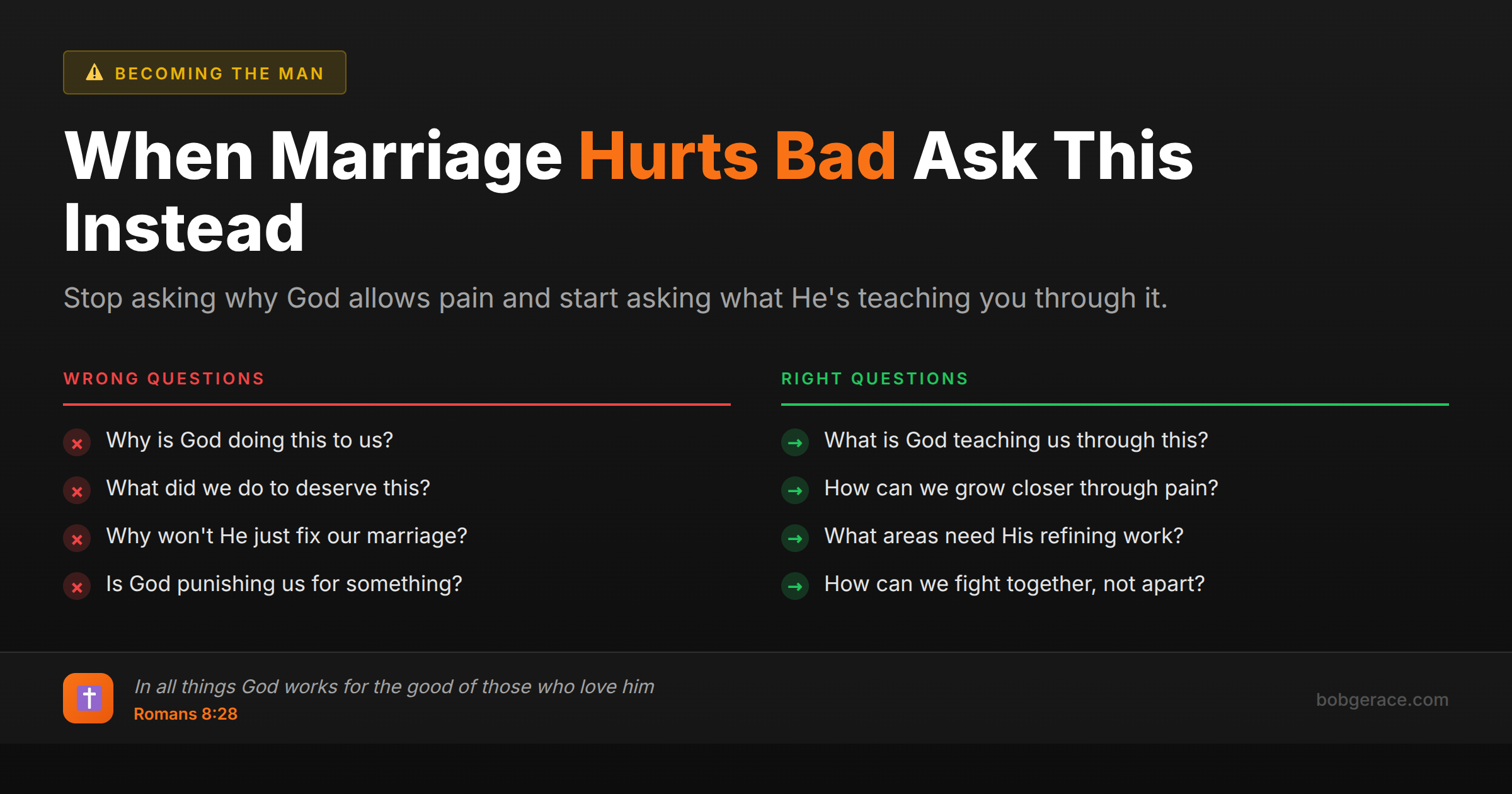
God allows marital suffering not because He's absent or uncaring, but because He's working through it for purposes we often can't see. In a fallen world, pain is inevitable—but it's not meaningless. Scripture shows us that God uses suffering to refine us, deepen our faith, and draw us closer to Him and each other. Your marital struggles aren't a sign that God has abandoned you. They're opportunities for growth, healing, and experiencing God's grace in new ways. The question isn't whether suffering will come, but how you'll respond when it does. Will you let it drive you apart or draw you together? Will you blame God or trust His process?
The Full Picture
Here's what I need you to understand: God doesn't cause your marital suffering, but He absolutely uses it. There's a massive difference between the two, and getting this wrong will mess with your head and your healing.
We live in a broken world where sin has contaminated everything—including marriage. When Adam and Eve fell, it didn't just affect them individually; it fractured the very foundation of human relationships. Genesis 3 shows us that immediately after sin entered the picture, we got blame-shifting, hiding from each other, and relational dysfunction.
Your marriage problems aren't punishment from God—they're symptoms of living in a fallen world. Bad choices, unhealed wounds, generational patterns, and simple human selfishness all contribute to marital pain. But here's where it gets beautiful: God specializes in bringing beauty from ashes.
Think about it this way—a master sculptor doesn't hate the marble when he chips away at it. Every strike of the chisel is purposeful, revealing something beautiful underneath. Your suffering isn't random. It's revealing character, exposing areas that need healing, and creating opportunities for breakthrough you couldn't get any other way.
The couples I work with who have the strongest marriages aren't the ones who never suffered—they're the ones who learned to suffer well together. They discovered that pain shared becomes pain divided, and hope shared becomes hope multiplied. They stopped asking "Why us?" and started asking "What now?"
God's allowing your suffering because He's more committed to your character than your comfort, more interested in your holiness than your happiness. And ultimately, both your character and holiness will lead to a joy and intimacy in marriage that comfort-seeking never could.
What's Really Happening
From a clinical perspective, the question of suffering in marriage touches on some of our deepest psychological needs for meaning and control. When couples experience significant marital distress, they're often grappling with what psychologists call "meaning-making"—the fundamental human need to understand why bad things happen.
Research shows that couples who can find meaning in their suffering demonstrate greater resilience and relationship satisfaction over time. This isn't about positive thinking or denial—it's about cognitive reframing that allows partners to see their struggles as part of a larger narrative of growth and purpose.
What I observe in my practice is that couples who integrate their faith into their healing process often show remarkable improvements in several key areas. First, they develop what we call "stress-related growth"—actual positive psychological changes that result from working through adversity together. Second, they demonstrate increased empathy and emotional intelligence, partly because suffering breaks down the walls of self-protection that keep couples emotionally distant.
The therapeutic concept of "post-traumatic growth" aligns beautifully with biblical principles about suffering. Couples learn to regulate their nervous systems together, developing co-regulation skills that create deeper intimacy. They also develop a shared narrative about their relationship that includes both struggle and triumph, which strengthens their bond and creates resilience for future challenges.
Most importantly, couples who view their suffering through a theological lens often experience what clinicians recognize as increased relationship meaning and purpose, which are among the strongest predictors of long-term marital satisfaction.
What Scripture Says
Scripture is crystal clear about God's heart toward suffering and His purposes in allowing it. Let's look at what God actually says:
Romans 8:28 - "And we know that in all things God works for the good of those who love him, who have been called according to his purpose." Notice it doesn't say all things ARE good—it says God WORKS all things for good. Your marital struggles aren't good, but God is working through them for your ultimate benefit.
James 1:2-4 - "Consider it pure joy, my brothers and sisters, whenever you face trials of many kinds, because you know that the testing of your faith produces perseverance. Let perseverance finish its work so that you may be mature and complete, not lacking anything." Your marriage trials are developing spiritual muscle you couldn't build any other way.
2 Corinthians 1:3-4 - "Praise be to the God and Father of our Lord Jesus Christ, the Father of compassion and the God of all comfort, who comforts us in all our troubles, so that we can comfort those in any trouble with the comfort we ourselves receive from God." God is preparing you to help others through what you're learning in your own pain.
1 Peter 5:10 - "And the God of all grace, who called you to his eternal glory in Christ, after you have suffered a little while, will himself restore you and make you strong, firm and steadfast." The suffering has an expiration date, but the strength you gain is permanent.
Hebrews 12:10-11 - "God disciplines us for our good, in order that we may share in his holiness. No discipline seems pleasant at the time, but painful. Later on, however, it produces a harvest of righteousness and peace for those who have been trained by it." God's discipline isn't punishment—it's preparation for blessing.
What To Do Right Now
-
1
Stop demanding explanations from God and start asking Him what He wants to teach you through this season
-
2
Pray together as a couple, even if it's awkward—ask God to reveal His purposes in your struggles
-
3
Look for patterns in your conflict that reveal areas where both of you need to grow
-
4
Choose to see your spouse as your teammate against the problem, not as the problem itself
-
5
Find a mature Christian couple who has walked through similar struggles and ask for their wisdom
-
6
Commit to staying in the process instead of looking for quick exits—God's work takes time
Related Questions
- Does God want me to stay in this marriage?
- Is God punishing me?
- Is my suffering redemptive?
- How do I know God's will in this?
- How do I trust a God who let this happen?
- What is the purpose of pain in God's economy?
- What does 'all things work together for good' mean?
- Is this PTSD?
- How long do I wait before giving up?
Also find Bob on
Subscribe for weekly videos on Christian marriage.
You Don't Have to Figure This Out Alone
A coach who knows your marriage—not just the theology—can help you see what God's doing in your specific situation and what to do next.
Talk to Bob →