Is my suffering redemptive?
6 min read
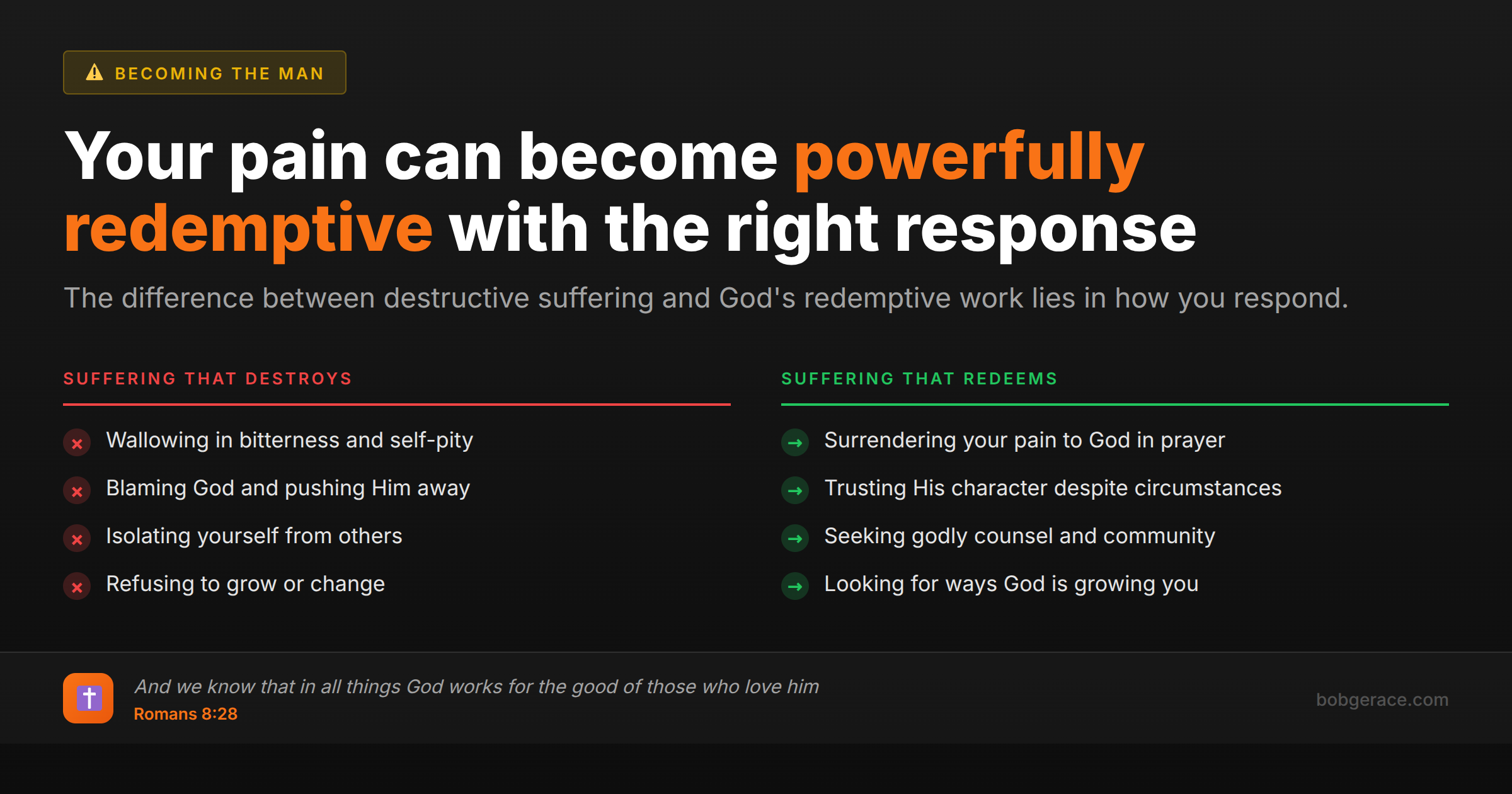
Your suffering can absolutely be redemptive, but it's not automatically so. Redemptive suffering occurs when God uses your pain to bring about spiritual growth, deeper intimacy with Him, and ultimately good for yourself and others. This doesn't mean God causes suffering, but that He sovereignly works through it for His purposes. The key difference between regular suffering and redemptive suffering lies in your response and God's transformative work. When you surrender your pain to God, trust His character despite circumstances, and allow Him to shape you through the trial, suffering becomes a tool for redemption. Your marriage struggles can become a testimony of God's faithfulness, your personal growth can help others, and your deepened relationship with Christ can bring glory to God.
The Full Picture
Redemptive suffering isn't a Christian platitude—it's a biblical reality that requires understanding both what it is and what it isn't.
First, let's be clear: God doesn't cause suffering to teach you lessons or punish you for your failures. That's not the heart of a loving Father. However, Scripture consistently shows us that God sovereignly works through suffering to accomplish His redemptive purposes. This is the mystery of a God who can take the worst circumstances and bring forth the greatest good.
Your suffering becomes redemptive when several elements align: You surrender control to God rather than fighting Him, you maintain faith in His character despite your circumstances, and you allow the Holy Spirit to transform your heart through the trial. This isn't passive resignation—it's active trust that participates with God's work in your life.
In marriage, redemptive suffering often looks like this: A betrayal that leads to deeper intimacy after healing, financial struggles that teach you both to depend on God, or communication breakdowns that ultimately create better patterns of connection. The suffering itself isn't good, but God's work through it produces genuine redemption.
The transformation happens gradually. You don't wake up one morning and suddenly your pain has purpose. Instead, God slowly reveals how He's using your trials to shape your character, deepen your faith, and prepare you to help others facing similar struggles. Your redeemed story becomes a beacon of hope for other couples walking through their own dark valleys.
This process requires both time and intentionality. Redemptive suffering doesn't happen automatically—it requires your participation with God's grace, often through counseling, spiritual disciplines, and community support.
What's Really Happening
From a psychological perspective, the concept of redemptive suffering aligns with what we call "post-traumatic growth"—the positive psychological change that can emerge from struggling with adversity. Research consistently shows that people can develop greater resilience, deeper relationships, enhanced appreciation for life, and stronger spiritual connections after navigating significant challenges.
However, this growth isn't inevitable. It requires what psychologists call "active coping strategies"—engaging with the problem, seeking meaning, maintaining hope, and utilizing social support systems. These mirror the spiritual practices of prayer, faith, community, and surrender that facilitate redemptive suffering.
Neurologically, suffering activates stress response systems that, when properly supported, can actually strengthen neural pathways associated with empathy, resilience, and emotional regulation. This biological reality supports the biblical principle that trials can produce perseverance and character.
In marriage counseling, I observe that couples who navigate suffering redemptively often develop what we call "earned security"—a deeper, more intentional bond that's been tested and proven. They learn to comfort each other more effectively, communicate with greater vulnerability, and appreciate their relationship with enhanced gratitude. The key clinical factors that facilitate this transformation include: maintaining connection during crisis, processing emotions rather than avoiding them, seeking professional support when needed, and actively working to find meaning in their experience.
What Scripture Says
Scripture provides a robust framework for understanding redemptive suffering, beginning with the ultimate example of Christ's suffering on our behalf.
Romans 8:28 declares, "And we know that in all things God works for the good of those who love him, who have been called according to his purpose." This doesn't promise that all things are good, but that God works through all things—including suffering—for ultimate good.
James 1:2-4 instructs us to "Consider it pure joy, my brothers and sisters, whenever you face trials of many kinds, because you know that the testing of your faith produces perseverance. Let perseverance finish its work so that you may be mature and complete, not lacking anything." This passage reveals God's redemptive purpose in trials—spiritual maturity and completeness.
2 Corinthians 1:3-4 shows how our suffering enables us to comfort others: "Praise be to the God and Father of our Lord Jesus Christ, the Father of compassion and the God of all comfort, who comforts us in all our troubles, so that we can comfort those in any trouble with the comfort we ourselves receive from God."
Romans 5:3-5 provides the progression of redemptive suffering: "Not only so, but we also glory in our sufferings, because we know that suffering produces perseverance; perseverance, character; and character, hope. And hope does not put us to shame, because God's love has been poured out into our hearts through the Holy Spirit."
1 Peter 4:12-13 reminds us that suffering shouldn't surprise us but can bring us closer to Christ: "Dear friends, do not be surprised at the fiery ordeal that has come on you to test you, as though something strange were happening to you. But rejoice inasmuch as you participate in the sufferings of Christ, so that you may be overjoyed when his glory is revealed."
What To Do Right Now
-
1
Surrender your suffering to God in prayer, honestly expressing your pain while affirming your trust in His character and sovereignty over your circumstances.
-
2
Identify specific ways God might be using this trial to grow your faith, character, or capacity to help others—journal about these insights regularly.
-
3
Seek godly counsel from a pastor, Christian counselor, or mature believers who can provide biblical perspective and emotional support during this season.
-
4
Look for opportunities to comfort others with the comfort you've received from God—your experience can become a ministry to struggling couples.
-
5
Practice gratitude daily by listing three things you're thankful for, even in the midst of suffering—this helps maintain proper perspective on God's goodness.
-
6
Commit to spiritual disciplines like prayer, Bible study, and worship that keep you connected to God's truth when emotions threaten to overwhelm you.
Related Questions
Need Help Finding Purpose in Your Pain?
Walking through suffering alone makes everything harder. Let me help you discover how God wants to use this season for redemptive purposes in your life and marriage.
Get Support →