Why does criticism feel like annihilation?
6 min read
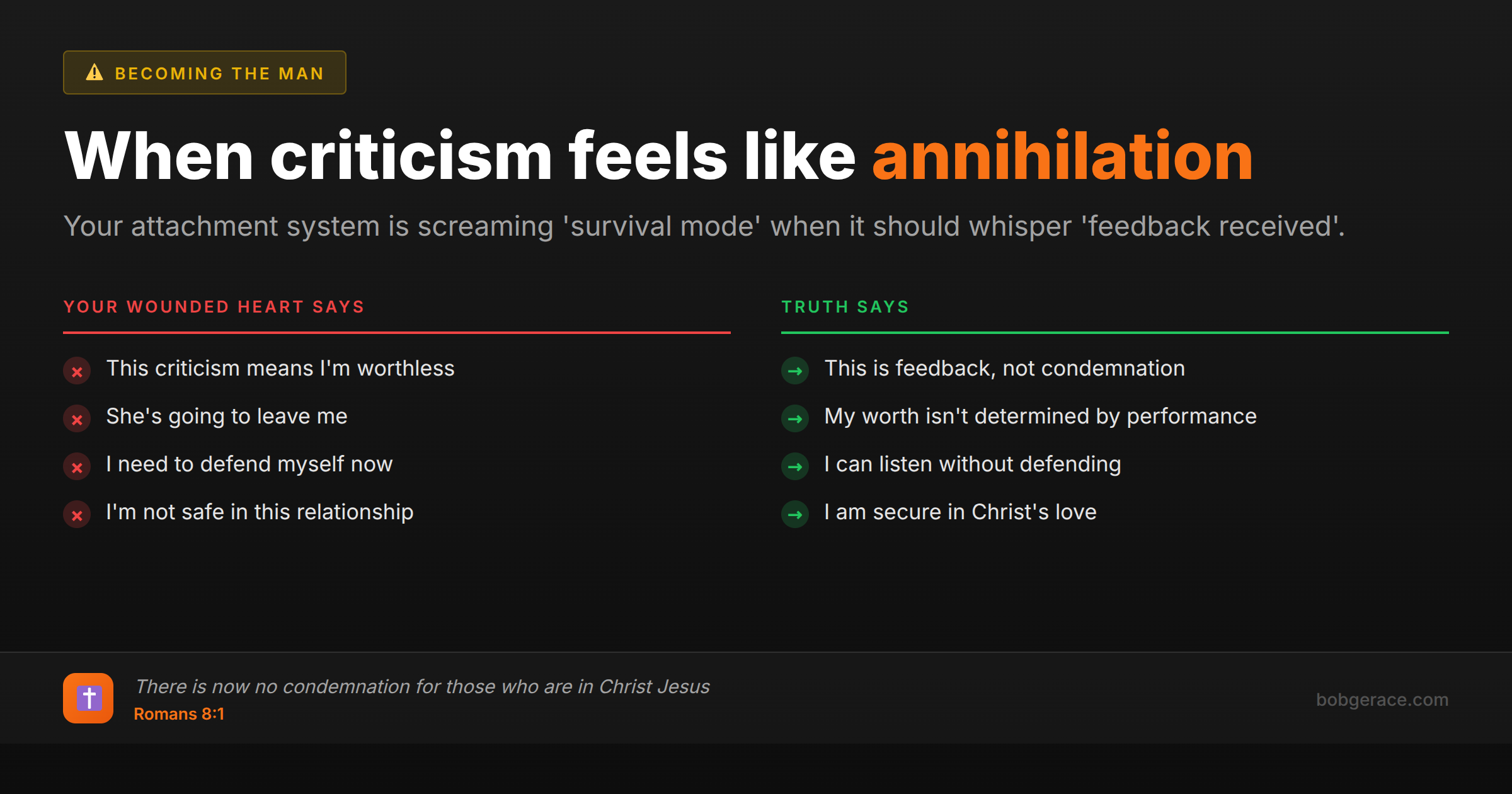
Criticism feels like annihilation because it activates our deepest attachment fears and triggers the shame we carry about our core identity. When someone criticizes us, especially our spouse, it doesn't just feel like feedback about our behavior—it feels like an attack on our very worth as a person. This intense reaction stems from early attachment experiences where love felt conditional on performance, creating a wounded part of us that believes criticism equals rejection. The brain's threat detection system can't distinguish between physical danger and emotional threats, so criticism literally feels life-threatening. Your nervous system responds as if you're fighting for survival because, in your attachment system, you are. The fear isn't really about the specific criticism—it's about being abandoned, rejected, or cast out from the relationship that matters most to you.
The Full Picture
When criticism hits you like a freight train, you're not overreacting—you're having a normal response to an abnormal childhood. Most of us grew up in homes where love felt conditional, where criticism came wrapped in shame, and where our mistakes felt like threats to our very belonging in the family.
Your brain formed neural pathways during those early years that connected criticism with danger. Not just any danger, but existential danger—the kind that threatened your access to love, safety, and belonging. These pathways are still active today, which is why your spouse's frustrated comment about the dishes can feel like they're questioning your worth as a human being.
The attachment system doesn't distinguish between big and small threats. When you're already carrying shame about not being enough, criticism becomes confirmation of your worst fears about yourself. It's not the criticism itself that hurts so much—it's what your wounded heart believes the criticism means about you.
This creates a vicious cycle in marriage. The more criticism feels like annihilation, the more defensively you respond. The more defensive you get, the more frustrated your spouse becomes. The more frustrated they get, the more critical they become. And around and around you go.
Understanding this cycle is the first step to breaking it. Your intense reaction to criticism isn't a character flaw—it's information about wounds that need healing. When you can recognize that your spouse's criticism is triggering your attachment fears rather than actually threatening your survival, you can begin to respond differently.
What's Really Happening
From a clinical perspective, the experience of criticism feeling like annihilation is rooted in what we call attachment trauma and shame-based identity formation. During critical developmental years, children who experience conditional love, harsh criticism, or emotional abandonment develop what's known as a 'shame core'—a deep belief that they are fundamentally flawed or unworthy.
When criticism occurs in adulthood, it activates the amygdala's threat detection system, flooding the nervous system with stress hormones. The brain interprets criticism as a threat to attachment security, which is a survival need. This triggers what we call an attachment injury response—fight, flight, freeze, or fawn.
The neurological reality is that your brain literally cannot distinguish between emotional and physical threats. The same neural pathways that would activate if you were being physically attacked are firing when you receive criticism. This explains why criticism can create physical sensations of panic, nausea, or feeling like you can't breathe.
Recovery involves re-wiring these neural pathways through new relational experiences and self-compassion practices. When couples understand this dynamic, they can work together to create safety that allows the nervous system to regulate and the attachment system to heal.
What Scripture Says
Scripture reveals that our identity crisis around criticism stems from believing lies about who we are instead of trusting God's truth about our worth. Romans 8:1 declares, *"There is now no condemnation for those who are in Christ Jesus."* When criticism feels like condemnation, we're operating from shame rather than from our secure identity in Christ.
Psalm 139:13-14 reminds us: *"For you created my inmost being; you knit me together in my mother's womb. I praise you because I am fearfully and wonderfully made."* God's view of you isn't dependent on your performance or your spouse's opinion. Your worth was established before you ever did anything right or wrong.
1 John 4:18 teaches us that *"perfect love drives out fear."* The fear that criticism creates comes from believing that love is conditional on performance. But God's love isn't based on your ability to receive criticism gracefully or be perfect in your marriage.
Ephesians 4:15 calls us to *"speak the truth in love,"* which means both giving and receiving feedback should happen in the context of love and safety. When criticism doesn't feel safe, it's often because the relationship lacks the foundation of unconditional acceptance that God demonstrates for us.
The goal isn't to become immune to criticism, but to ground your identity so deeply in God's love that criticism becomes information rather than annihilation. When you know who you are in Christ, your spouse's frustration doesn't have the power to destroy you.
What To Do Right Now
-
1
Recognize the trigger: When criticism hits, pause and acknowledge 'My attachment system is activated' instead of defending or attacking
-
2
Ground yourself physically: Take three deep breaths, feel your feet on the floor, and remind yourself 'I am safe right now'
-
3
Separate past from present: Ask yourself 'Is this criticism actually threatening my survival, or is it triggering old wounds?'
-
4
Communicate your experience: Tell your spouse 'I'm having a big reaction to this. Can we take a break and try again?'
-
5
Get curious instead of defensive: Ask 'What is my spouse actually trying to tell me?' rather than 'How can I prove them wrong?'
-
6
Seek healing for the deeper wound: Work with a counselor to address the attachment trauma that makes criticism feel so threatening
Related Questions
- What does 'core shame' have to do with my reactions?
- How do I separate behavior criticism from identity attack?
- Is my defensiveness shame protection?
- What is 'shame-based defensiveness'?
- How do I build tolerance for being wrong?
- What would it take to be curious instead of defensive?
- What is 'betrayal trauma' and do I have it?
- Why do I feel like I'm going to die?
- What does betrayal do to the brain?
- How do I not lose my mind right now?
Also find Bob on
Subscribe for weekly videos on Christian marriage.
You Don't Have to White-Knuckle This Alone
A coach who knows your marriage can help you see what's actually happening when criticism lands—and build the capacity to stay present instead of flooding. You don't have to keep guessing.
Talk to Bob →