Is my defensiveness shame protection?
6 min read
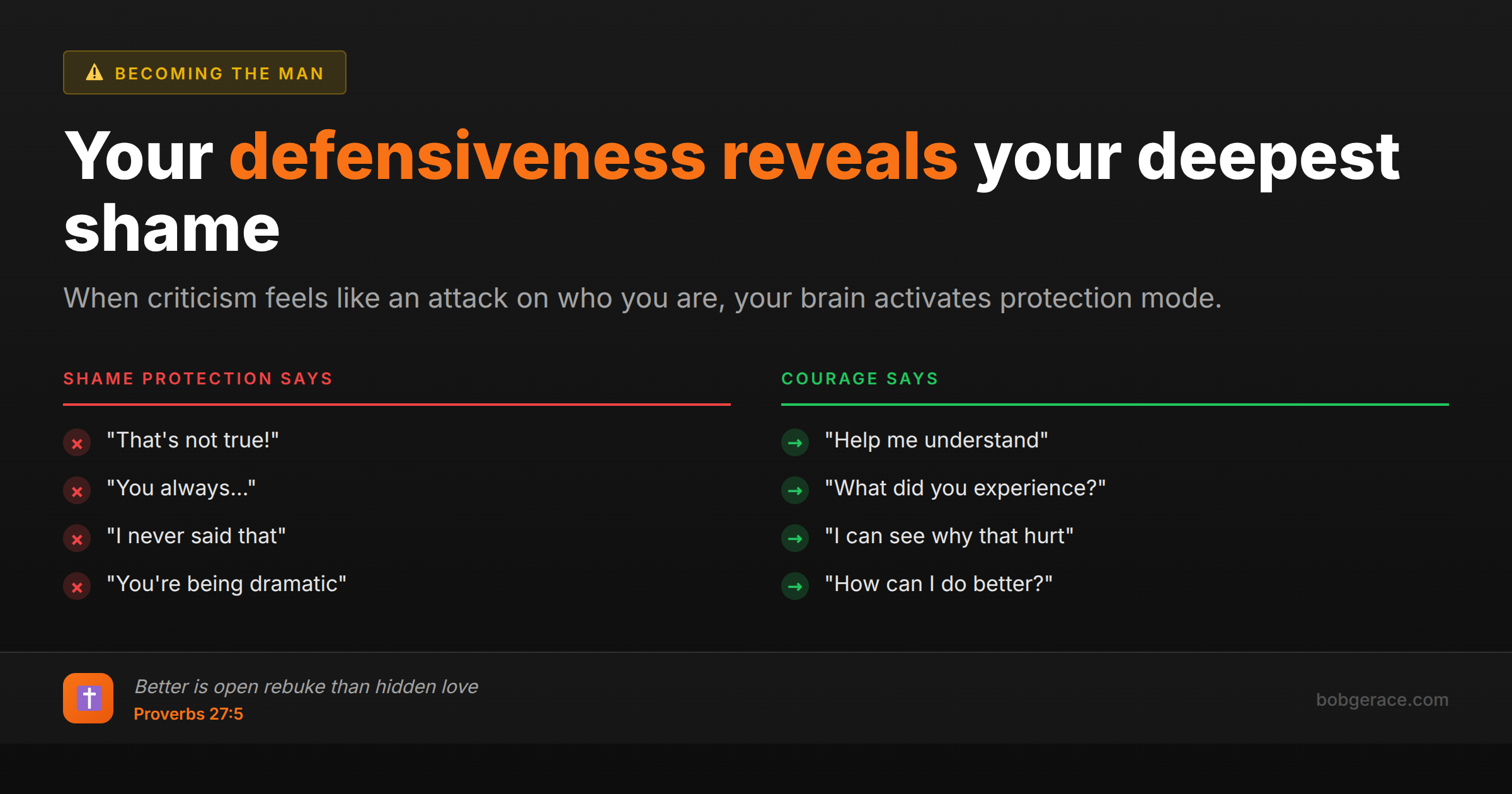
Yes, your defensiveness is almost certainly shame protection. When we feel criticized or attacked - even when our spouse isn't actually attacking us - our brain automatically activates defense mechanisms to protect our core sense of worth. Defensiveness is like an emotional shield that goes up when we perceive threat to our identity or value. This happens because shame tells us "I am bad" rather than "I did something wrong." When criticism feels like an attack on who we are rather than what we did, our nervous system kicks into protection mode. The problem is this protective response actually pushes our spouse away and creates the very rejection we're trying to avoid. Understanding this pattern is the first step toward breaking free from it.
The Full Picture
Defensiveness in marriage isn't just stubbornness or pride - it's your nervous system trying to protect you from what it perceives as existential threat. When shame is deeply embedded in your story, any criticism from your spouse can feel like confirmation of your worst fears about yourself.
The Shame-Defense Cycle works like this: Your spouse expresses frustration or disappointment. Instead of hearing "I'm upset about this specific thing," shame translates it as "You're fundamentally flawed." Your brain immediately activates protective responses - defensiveness, counter-attack, deflection, or withdrawal.
This creates what therapists call a "negative cycle." Your defensiveness makes your spouse feel unheard and invalidated, so they escalate. Your escalation confirms your fear that they're attacking you, so you defend harder. Round and round it goes, with both of you feeling misunderstood and hurt.
Common defensive patterns include: - Explaining away or minimizing your actions - Turning the tables and focusing on your spouse's flaws - Getting historical and bringing up past grievances - Playing victim and making yourself the injured party - Shutting down and giving the silent treatment
The tragedy is that defensiveness, while designed to protect you, actually creates more of what you're afraid of. It pushes away the very person whose acceptance and love you crave most. Breaking this cycle requires recognizing that your spouse's feedback isn't an attack on your worth - it's information about their experience with you.
What's Really Happening
From a clinical perspective, defensiveness is a trauma response rooted in early attachment experiences. If you learned as a child that criticism meant rejection or abandonment, your adult brain still carries those neural pathways. When your spouse expresses disappointment, your limbic system doesn't distinguish between past and present - it just knows "criticism equals danger."
This is why defensiveness feels so automatic and overwhelming. It's not a conscious choice - it's your nervous system hijacking rational thought to protect you from perceived threat. The amygdala fires, stress hormones flood your system, and suddenly you're in fight-or-flight mode over something as simple as "You left dishes in the sink again."
Shame-based defensiveness also creates what we call "emotional fusion" - you can't separate your spouse's feelings from your own worth. Their disappointment becomes evidence of your inadequacy rather than information about their experience. This is why defensive responses often feel disproportionate to the actual criticism.
Healing requires developing what we call "differentiation" - the ability to stay connected to your spouse while maintaining a clear sense of your own worth. This means learning to tolerate the discomfort of their disappointment without making it mean something catastrophic about you. With practice, you can learn to hear feedback as information rather than attack, and respond from a place of curiosity rather than self-protection.
What Scripture Says
Scripture speaks directly to our tendency toward defensiveness and self-protection. Proverbs 27:5-6 reminds us that "Better is open rebuke than hidden love. Wounds from a friend can be trusted, but an enemy multiplies kisses." Your spouse's honest feedback, even when it stings, is actually a gift of love - they care enough to help you grow.
James 1:19 gives us the antidote to defensiveness: "Everyone should be quick to listen, slow to speak and slow to become angry." This verse acknowledges that our first impulse is often to defend and counter-attack, but God calls us to something different - patient listening and thoughtful response.
The root of shame-based defensiveness is forgetting our identity in Christ. Romans 8:1 declares "There is now no condemnation for those who are in Christ Jesus." When we truly grasp that our worth isn't based on performance but on God's love, criticism loses its power to devastate us.
Proverbs 15:31-32 shows us the path forward: "Whoever heeds life-giving correction will be at home among the wise. Those who disregard discipline despise themselves, but the one who heeds correction gains understanding." God actually uses our spouse's feedback as a tool for our growth and sanctification.
Finally, 1 John 4:18 addresses the fear that drives defensiveness: "Perfect love drives out fear." As we rest more deeply in God's perfect love for us, we become less afraid of human criticism and more able to receive it with grace.
What To Do Right Now
-
1
Pause and breathe - When you feel defensiveness rising, take three deep breaths and ask "What am I afraid this means about me?"
-
2
Get curious instead of defensive - Replace "That's not true!" with "Help me understand what you experienced."
-
3
Acknowledge your spouse's reality - You don't have to agree, but you can validate: "I can see why that would be frustrating for you."
-
4
Take responsibility for your part - Even if you disagree with 90% of what they're saying, find the 10% you can own.
-
5
Ask for what you need - If you need gentler delivery, ask for it: "I want to hear you, but I need you to speak more softly."
-
6
Practice self-compassion - Remind yourself that making mistakes doesn't make you a bad person - it makes you human and loved by God.
Related Questions
Ready to Break the Defensive Cycle?
You don't have to stay trapped in patterns of defensiveness and shame. Let's work together to help you receive feedback with confidence and respond with grace.
Get Help Now →