What is 'shame-based defensiveness'?
6 min read
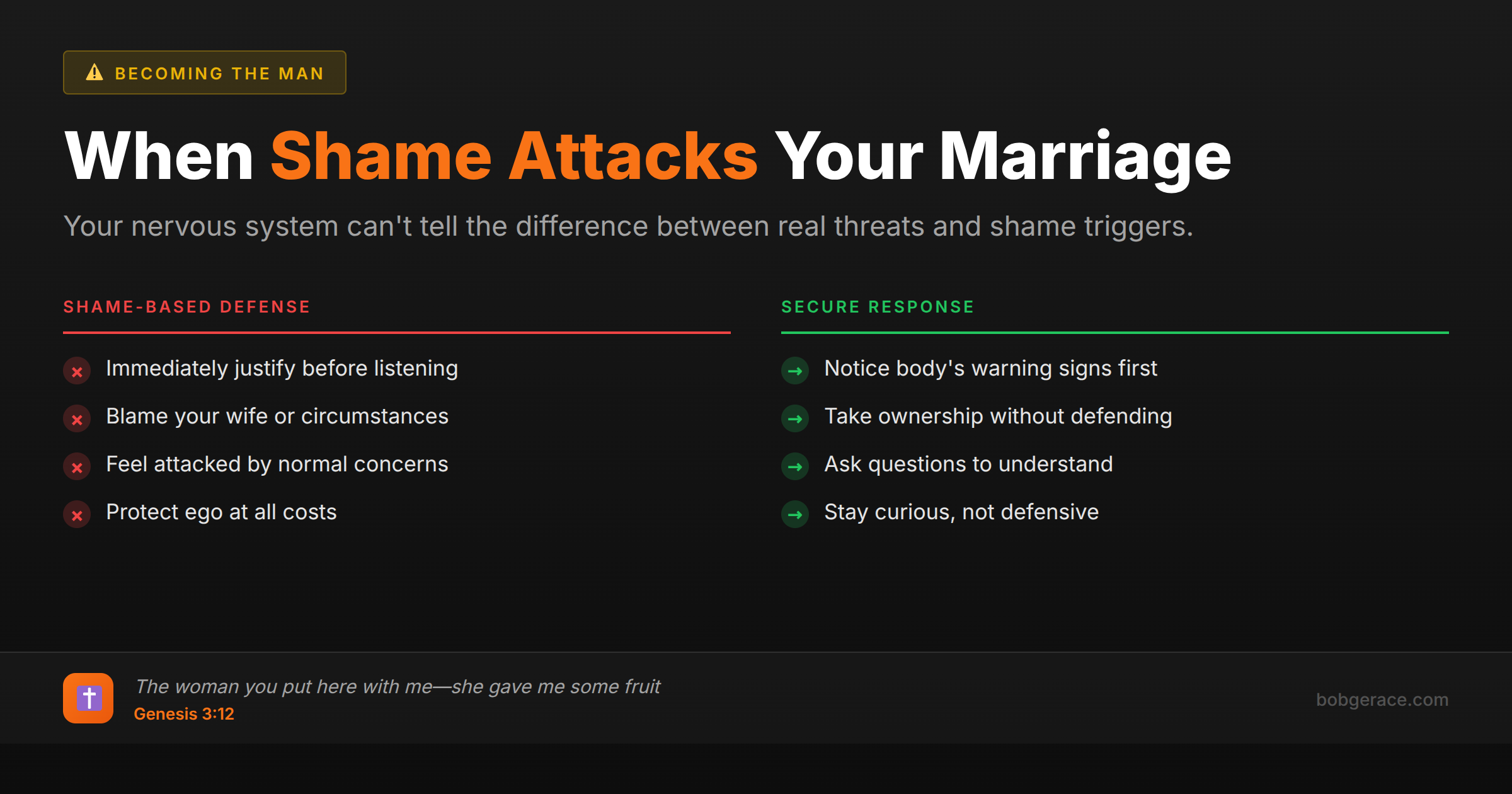
Shame-based defensiveness is when someone reacts defensively not because they're actually being attacked, but because shame makes them feel constantly under threat. It's like having a smoke detector that goes off every time you toast bread - the alarm system is hypersensitive due to deep wounds. This shows up in marriage when your spouse brings up a concern and instead of listening, you immediately defend, deflect, or counterattack. The shame whispers 'You're bad, you're not enough, you're going to be rejected,' so your nervous system kicks into protection mode before your brain can process what's actually happening. This creates a cycle where legitimate conversations become battles, and intimacy becomes impossible because vulnerability feels too dangerous.
The Full Picture
Shame-based defensiveness is one of the most destructive patterns I see in struggling marriages, and here's why it's so insidious: it feels completely justified in the moment.
When your spouse says something like "I felt hurt when you forgot our dinner plans," shame-based defensiveness hears "You're a terrible person who doesn't care about anyone." So you fire back with "I've been working 60-hour weeks for this family!" or "You never appreciate anything I do!"
But here's what's really happening underneath. Shame is different from guilt. Guilt says 'I did something bad.' Shame says 'I am bad.' When shame gets triggered, your nervous system doesn't distinguish between actual danger and perceived rejection. It just knows it needs to protect you from the annihilation it feels coming.
This creates what I call the shame-defense spiral. Your defensiveness pushes your spouse away, which confirms the shame's lie that you're unlovable, which makes you more defensive next time. Meanwhile, your spouse feels shut out and unheard, so they either withdraw (confirming your abandonment fears) or escalate (confirming your attack fears).
The tragedy is that shame-based defensiveness destroys the very thing it's trying to protect - your connection. Your marriage becomes a courtroom instead of a sanctuary. Every conversation becomes about winning and losing instead of understanding and growing together.
Recognizing this pattern is the first step toward freedom. When you can name what's happening, you can start to respond differently.
What's Really Happening
From a clinical perspective, shame-based defensiveness stems from what we call 'rejection sensitivity' - a hypervigilant scanning for signs of criticism or abandonment. This often develops from early attachment wounds where love felt conditional on performance.
Neurologically, shame activates the same brain regions as physical pain. When someone with deep shame receives even gentle feedback, their amygdala interprets it as a survival threat. The prefrontal cortex - responsible for rational thinking - goes offline, and the limbic system takes over with fight-or-flight responses.
This is why logical arguments don't work in these moments. You're not dealing with a thinking problem; you're dealing with a nervous system that believes it's under attack. The person becomes physiologically incapable of receiving input because their entire system is focused on self-preservation.
What makes this particularly challenging in marriage is that intimate relationships naturally trigger our deepest attachment wounds. The closer someone gets, the more our old defensive systems activate. This creates a cruel irony: the relationship meant to heal us can actually amplify our pain if we don't understand what's happening.
Healing requires what we call 'earned security' - learning to recognize shame triggers, develop self-soothing techniques, and gradually increase tolerance for vulnerability. This isn't just behavioral change; it's rewiring the nervous system's threat detection system through consistent, safe relational experiences.
What Scripture Says
Scripture has profound wisdom about shame and defensiveness, starting with the very first marriage. After Adam and Eve sinned, their immediate response was shame-based defensiveness. When God asked Adam about eating the fruit, Adam didn't take responsibility - he blamed Eve and implicitly blamed God: "The woman you put here with me—she gave me some fruit from the tree" (Genesis 3:12).
This is the biblical pattern: shame drives us to hide, blame, and defend rather than be honest and vulnerable. But God's response shows us a different way. Even in their shame, He pursued them with love and provided covering for their nakedness.
"There is now no condemnation for those who are in Christ Jesus" (Romans 8:1). This isn't just theological truth - it's the antidote to shame-based living. When you truly grasp that your identity is secure in Christ, criticism doesn't feel like annihilation anymore.
Jesus modeled perfect non-defensiveness. When falsely accused, "he did not retaliate; when he suffered, he made no threats. Instead, he entrusted himself to him who judges justly" (1 Peter 2:23). He could do this because His identity was anchored in the Father's love.
Scripture calls us to "speak the truth in love" (Ephesians 4:15) and to be "quick to listen, slow to speak and slow to become angry" (James 1:19). This is only possible when we're operating from security rather than shame.
The goal isn't perfect performance but honest relationship. "If we walk in the light, as he is in the light, we have fellowship with one another" (1 John 1:7). Defensiveness keeps us in darkness; vulnerability brings us into the light where healing happens.
What To Do Right Now
-
1
Notice your body's warning signs - tension in chest, clenched jaw, racing heart, or the urge to justify before fully listening
-
2
Take a breath and pause - Say 'I'm feeling defensive right now, can you give me a moment?' Don't power through; honor what's happening
-
3
Ask clarifying questions - 'Help me understand what you need' instead of explaining why they're wrong or you're right
-
4
Own your part without defending - 'You're right, I did forget, and I can see how that hurt you' then stop talking
-
5
Practice the shame vs. guilt distinction - Remind yourself 'I made a mistake' (guilt) instead of 'I am a mistake' (shame)
-
6
Pray for your spouse in the moment - This shifts you from self-protection to love and often changes your heart instantly
Related Questions
- Why do I get defensive every time?
- I can't take criticism without exploding
- Why does feedback feel like attack?
- Is my defensiveness shame protection?
- Why does criticism feel like annihilation?
- What does 'core shame' have to do with my reactions?
- What is 'betrayal trauma' and do I have it?
- Why do I feel like I'm going to die?
- How do I separate behavior criticism from identity attack?
Also find Bob on
Subscribe for weekly videos on Christian marriage.
You Don't Have to Keep Guessing Alone
A coach who knows your marriage can help you see what's actually happening in your specific dynamic—and what to do about it.
Talk to Bob →