What does 'core shame' have to do with my reactions?
6 min read
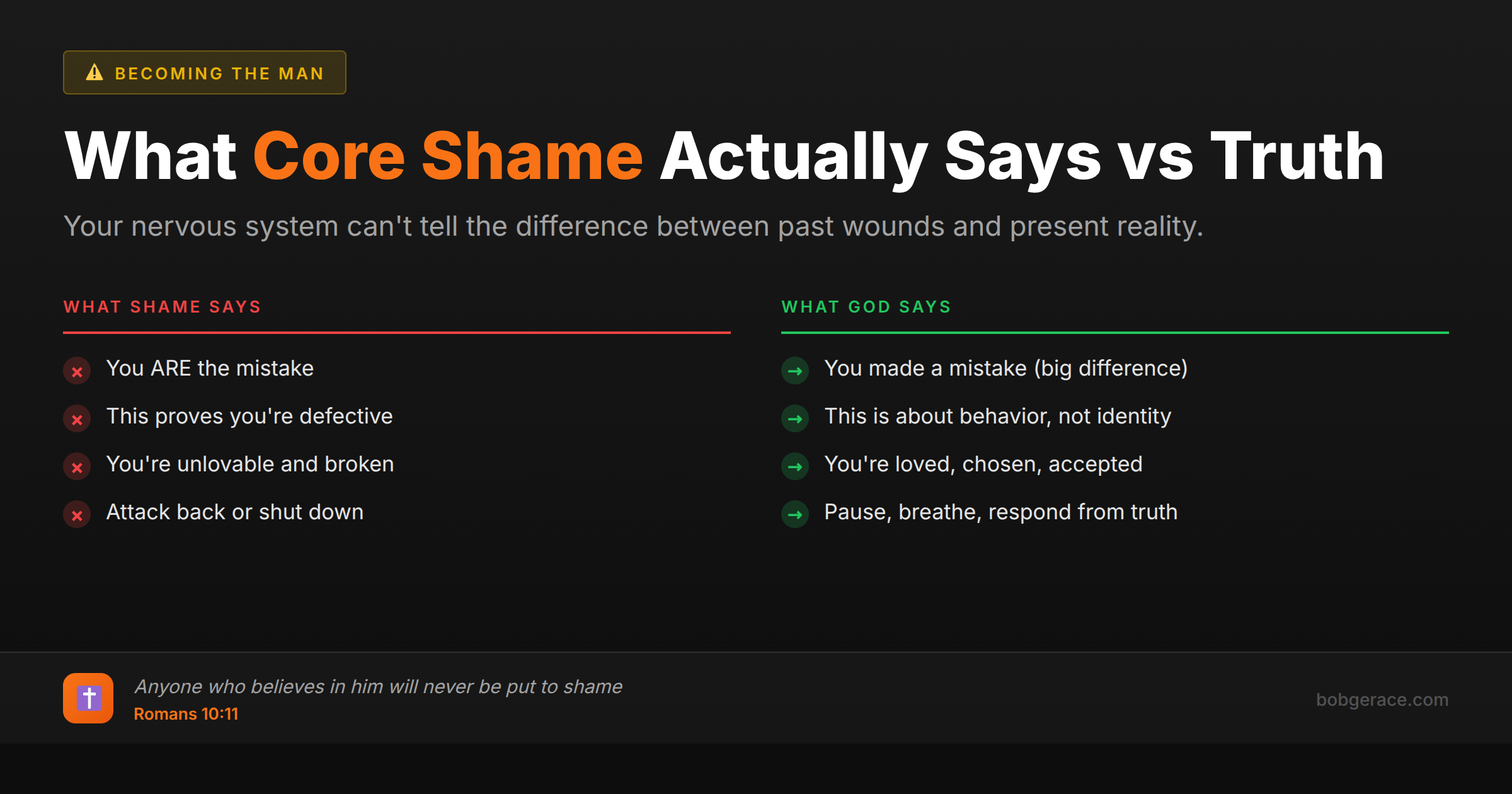
Core shame is the deep belief that something is fundamentally wrong with you—not just what you do, but who you are. This toxic lie drives most of your defensive reactions in marriage because your nervous system interprets criticism, conflict, or even minor disappointments as confirmation of your worthlessness. When core shame gets triggered, you don't just feel bad about a mistake—you feel like you ARE the mistake. This explains why small issues escalate quickly. Your spouse mentions something minor, but your shame-wired brain hears "You're defective, unlovable, beyond repair." So you react from that place—either attacking back to deflect the pain, or shutting down to protect yourself. Understanding this connection is crucial because you can't change reactions you don't understand.
The Full Picture
Core shame operates like a hidden virus in your emotional system, corrupting how you interpret and respond to everything in your marriage. Unlike healthy guilt that says "I made a mistake," core shame whispers the lie "I am a mistake."
Where Core Shame Comes From: Most core shame develops early in life through repeated messages—spoken or unspoken—that you're not enough. Maybe you had critical parents, experienced trauma, grew up in chaos, or faced rejection. These experiences didn't just hurt you; they rewired your brain to expect rejection and prepare for emotional attack.
How It Shows Up in Marriage: When your spouse brings up an issue, your shame-wired nervous system doesn't hear "Hey, can we talk about this?" It hears "Here's more proof you're defective." This triggers your protective responses: anger (attack the threat), withdrawal (hide from danger), or people-pleasing (prevent abandonment).
You might find yourself: - Overreacting to minor feedback - Reading criticism into neutral comments - Feeling attacked when your spouse is just tired - Defending actions you know were wrong - Expecting rejection even during good times
The Shame-Reaction Cycle: Core shame creates a vicious cycle. You react defensively → your spouse gets frustrated → they respond negatively → your shame gets confirmed → you react even more defensively. This cycle can destroy intimacy because shame makes authentic vulnerability feel life-threatening.
The good news? Once you recognize shame's influence, you can begin to interrupt these patterns and respond from truth instead of trauma.
What's Really Happening
From a clinical perspective, core shame represents a fundamental disruption in your attachment system. When we experience chronic shame in formative relationships, our nervous system develops hypervigilance to rejection cues. This creates what we call a "shame-based attachment style."
The Neurological Reality: Brain imaging shows that shame activates the same regions as physical pain. When core shame gets triggered, your amygdala floods your system with stress hormones before your prefrontal cortex can evaluate the actual threat level. You're literally experiencing a trauma response to everyday marital interactions.
Attachment Implications: Shame corrupts our fundamental need for connection. Instead of moving toward your spouse for comfort during conflict, shame tells you they're the threat. This creates the tragic irony where your protective responses actually push away the person you most need.
The Therapeutic Path: Healing shame requires what I call "corrective relational experiences"—repeated encounters with unconditional acceptance that gradually rewire your expectations. Your marriage can become a healing laboratory where you learn to receive love without earning it and extend grace without deserving it.
Practical Recognition: Watch for shame's physical signatures: sudden heat, stomach dropping, feeling small or exposed, urge to hide or attack. These bodily cues often precede conscious awareness, giving you early warning to pause before reacting from shame rather than responding from truth.
What Scripture Says
Scripture directly addresses shame's destructive power and God's complete answer to it. The Bible distinguishes between healthy conviction that leads to repentance and toxic shame that leads to death.
God's View of Shame: *Romans 10:11* promises, "Anyone who believes in him will never be put to shame." This isn't just about future hope—it's about your present identity. In Christ, shame has no legitimate claim on you.
*Isaiah 54:4* declares, "Do not be afraid; you will not be put to shame. Do not fear disgrace; you will not be humiliated. You will forget the shame of your youth." God specifically addresses the shame from our past that still affects our present reactions.
The Shame-Healing Process: *1 John 3:19-20* reveals how God's love conquers our self-condemnation: "This is how we know that we belong to the truth and how we set our hearts at rest in his presence: If our hearts condemn us, we know that God is greater than our hearts, and he knows everything."
*Romans 8:1* provides the ultimate shame-killer: "Therefore, there is now no condemnation for those who are in Christ Jesus." When shame screams "You're fundamentally flawed," God's truth declares "You're fundamentally loved."
Practical Application: When shame-based reactions arise in your marriage, remember *2 Corinthians 5:17*: "If anyone is in Christ, the new creation has come: The old has gone, the new is here!" Your identity isn't defined by your worst moments or deepest fears—it's established by God's unchanging love.
*Psalm 34:5* promises, "Those who look to him are radiant; their faces are never covered with shame." This radiance comes from knowing whose you are, not from performing perfectly.
What To Do Right Now
-
1
Name it when you feel it: Start recognizing shame's physical signatures—heat, stomach drop, feeling small. Say "I'm feeling shame right now" to interrupt the automatic reaction.
-
2
Pause before responding: When shame gets triggered, take three deep breaths and remind yourself "This feeling is about old wounds, not current reality."
-
3
Speak your true identity: Counter shame's lies with biblical truth. Say out loud "I am loved, chosen, and accepted in Christ" before addressing the actual issue.
-
4
Communicate your process: Tell your spouse "I'm feeling triggered by old shame. Give me a moment to respond from truth instead of fear."
-
5
Address the real issue: Once shame subsides, engage the actual topic your spouse raised without defensive reactions.
-
6
Seek deeper healing: Consider professional counseling or pastoral care to address the root sources of core shame in a safe environment.
Related Questions
Ready to Break Free from Shame-Based Reactions?
You don't have to stay trapped in cycles of defensive reactions. Let's work together to heal the core shame driving your responses.
Get Help Now →