What is 'rejection sensitivity' neurologically?
6 min read
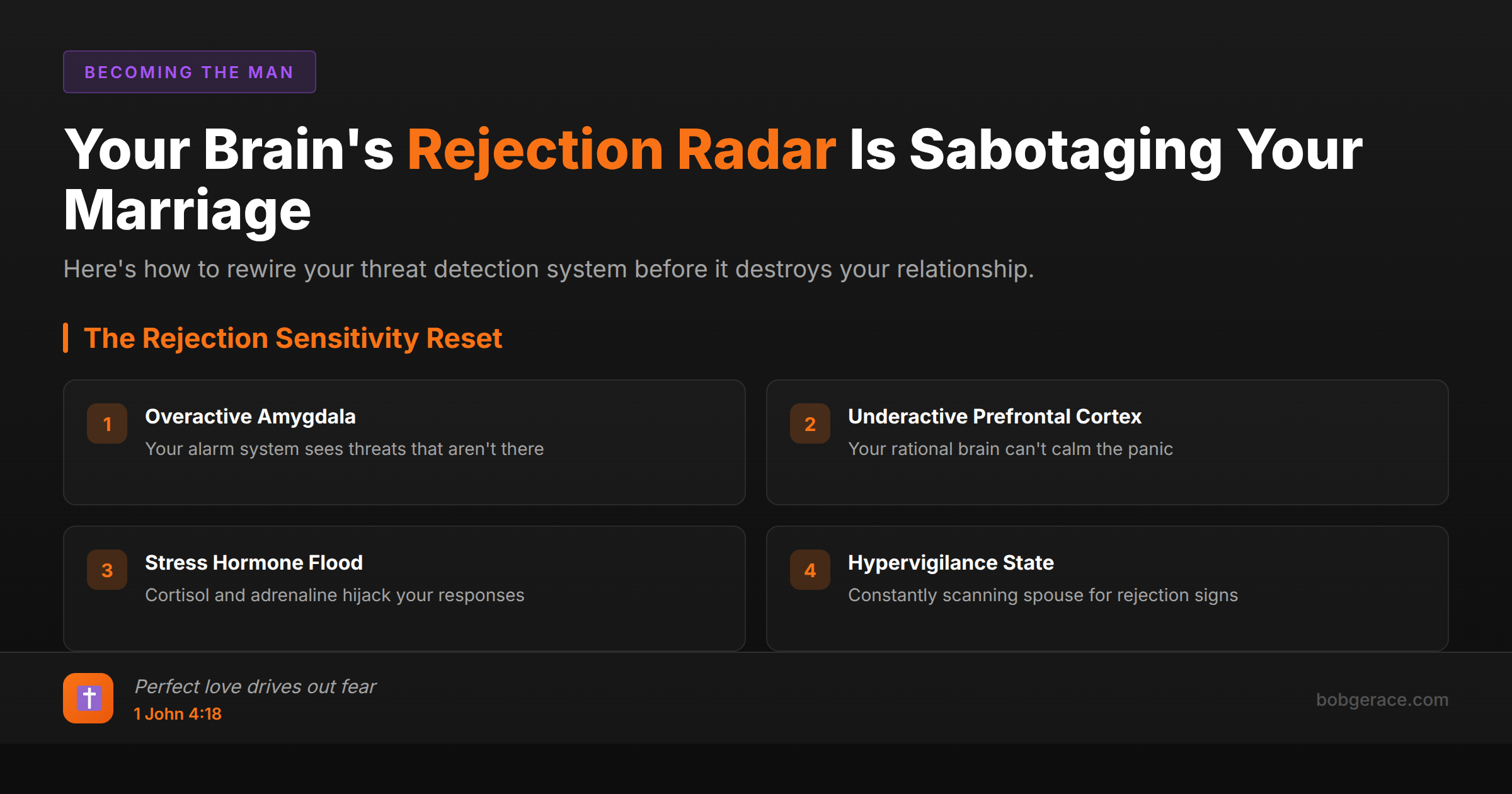
Rejection sensitivity is your brain's hyperactive threat detection system going into overdrive. Neurologically, it involves an overactive amygdala (your alarm system) that perceives rejection threats everywhere, paired with an underactive prefrontal cortex (your rational thinking center) that can't calm things down effectively. When you're rejection sensitive, your brain interprets neutral or even positive social cues as potential rejection, flooding your system with stress hormones like cortisol and adrenaline. This creates a hair-trigger response where you react defensively to perceived slights that may not even exist. Your nervous system gets stuck in a state of hypervigilance, constantly scanning for signs that your spouse might be pulling away, criticizing you, or preparing to abandon you.
The Full Picture
Think of rejection sensitivity as having a smoke detector that goes off every time you toast bread. Your brain's threat detection system is so finely tuned that it can't tell the difference between actual danger and false alarms.
The Neural Highway of Rejection
When you perceive potential rejection, information travels from your sensory organs straight to your amygdala - bypassing your rational thinking entirely. This "amygdala hijack" floods your system with fight-or-flight chemicals before your prefrontal cortex can even assess whether there's real danger.
The amygdala processes information in milliseconds, while your rational brain takes several seconds to catch up. By the time logic arrives at the party, you've already said something defensive, withdrawn emotionally, or launched into attack mode.
Why Your Brain Does This
Rejection sensitivity often develops from early experiences where rejection or abandonment posed real threats to your survival or emotional safety. Your brain learned to be hypervigilant as a protective mechanism. The problem is, what kept you safe as a child now sabotages your adult relationships.
The Chemical Cocktail
When rejection sensitivity triggers, your brain releases a cascade of stress hormones: cortisol (increasing anxiety), adrenaline (preparing for action), and decreased serotonin and dopamine (affecting mood and pleasure). This chemical cocktail makes it nearly impossible to think clearly or respond lovingly to your spouse.
The really challenging part? Once this neurological pattern becomes established, your brain actually rewires itself to make these reactions more automatic and intense over time.
What's Really Happening
From a neurological standpoint, rejection sensitivity represents a dysregulated nervous system that's stuck in a chronic state of threat detection. The brain's default mode network - the neural pathways that fire when we're at rest - becomes hijacked by hypervigilant scanning for rejection cues.
What we see clinically is an overactive anterior cingulate cortex, which processes emotional pain the same way it processes physical pain. This is why rejection literally hurts. Brain imaging studies show that people with rejection sensitivity have heightened activity in pain-processing regions when viewing facial expressions, even neutral ones.
The prefrontal cortex, responsible for executive function and emotional regulation, becomes chronically suppressed. This creates a neurological perfect storm: maximum emotional reactivity with minimum rational oversight.
The Trauma Connection
Rejection sensitivity often stems from developmental trauma or attachment injuries. The brain's neuroplasticity means that repeated experiences of rejection or emotional neglect literally reshape neural pathways, creating what we call "implicit memories" - bodily sensations and emotional reactions that fire automatically without conscious awareness.
The Marriage Impact
In marriage, this translates to your nervous system treating your spouse's tired sigh, delayed text response, or neutral tone as existential threats. Your brain initiates the same neurological response it would to a tiger in the room. This isn't dramatic - it's literal neurological reality.
The good news? Neuroplasticity works both ways. With intentional practice and often professional support, you can retrain these neural pathways and develop a more regulated nervous system.
What Scripture Says
Scripture speaks directly to our tendency toward fear-based reactions and offers a different neurological pathway - one based on God's perfect love rather than earthly threats.
God's Design for Security
*"There is no fear in love. But perfect love drives out fear, because fear has to do with punishment. The one who fears is not made perfect in love."* - 1 John 4:18
God designed us to live from a place of security, not hypervigilance. When rejection sensitivity dominates, we're operating from fear rather than the love security God intends.
Renewing Our Minds
*"Do not conform to the pattern of this world, but be transformed by the renewing of your mind."* - Romans 12:2
This isn't just spiritual advice - it's neurological instruction. God is calling us to literally rewire our brains, replacing fear-based thought patterns with truth-based ones.
Taking Thoughts Captive
*"We demolish arguments and every pretension that sets itself up against the knowledge of God, and we take captive every thought to make it obedient to Christ."* - 2 Corinthians 10:5
Rejection sensitivity creates "pretensions" - false narratives about threat and danger. We're called to actively intercept these automatic thoughts before they trigger our nervous system.
Peace That Transcends Understanding
*"And the peace of God, which transcends all understanding, will guard your hearts and your minds in Christ Jesus."* - Philippians 4:7
God offers a supernatural peace that can literally "guard" our hearts and minds - including our neurological responses to perceived rejection.
*"Be strong and courageous. Do not be afraid; do not be discouraged, for the Lord your God will be with you wherever you go."* - Joshua 1:9
*"Cast all your anxiety on him because he cares for you."* - 1 Peter 5:7
What To Do Right Now
-
1
Practice the 6-Second Rule - When you feel rejection sensitivity triggered, count to six before responding. It takes this long for the stress hormone flood to begin receding.
-
2
Name the Neural Storm - Say out loud: 'My amygdala is hijacked right now.' This simple acknowledgment activates your prefrontal cortex and begins calming the threat response.
-
3
Use Bilateral Stimulation - Cross your arms and alternately tap your shoulders with opposite hands. This engages both brain hemispheres and helps regulate your nervous system.
-
4
Challenge the Narrative - Ask: 'What evidence do I actually have for rejection?' versus 'What story is my brain creating?' Separate facts from fear-based interpretations.
-
5
Ground in God's Truth - Speak Scripture over your situation: 'God has not given me a spirit of fear, but of power, love, and sound mind.' (2 Timothy 1:7)
-
6
Seek Professional Support - If rejection sensitivity significantly impacts your marriage, consider working with a therapist trained in trauma and attachment to help rewire these deep neural patterns.
Related Questions
- What happens in my brain when I feel criticized?
- Why does feedback activate threat response?
- What is 'amygdala hijack' and how do I interrupt it?
- How do I stay in prefrontal cortex during conflict?
- What does 'pause before responding' do neurologically?
- How do I widen the gap between stimulus and response?
- What is 'hypervigilance' and why am I doing it?
- What's happening in my nervous system right now?
- Why does feedback feel like attack?
- What is anxious attachment and am I doing it right now?
Also find Bob on
Subscribe for weekly videos on Christian marriage.
Your Brain Isn't Your Marriage
Understanding the neurology is step one. Applying it to your specific marriage — your wife's actual patterns, your triggers, what's happening in your house — requires a human who knows your story.
Talk to Bob →