What are markers that I need more than coaching?
6 min read
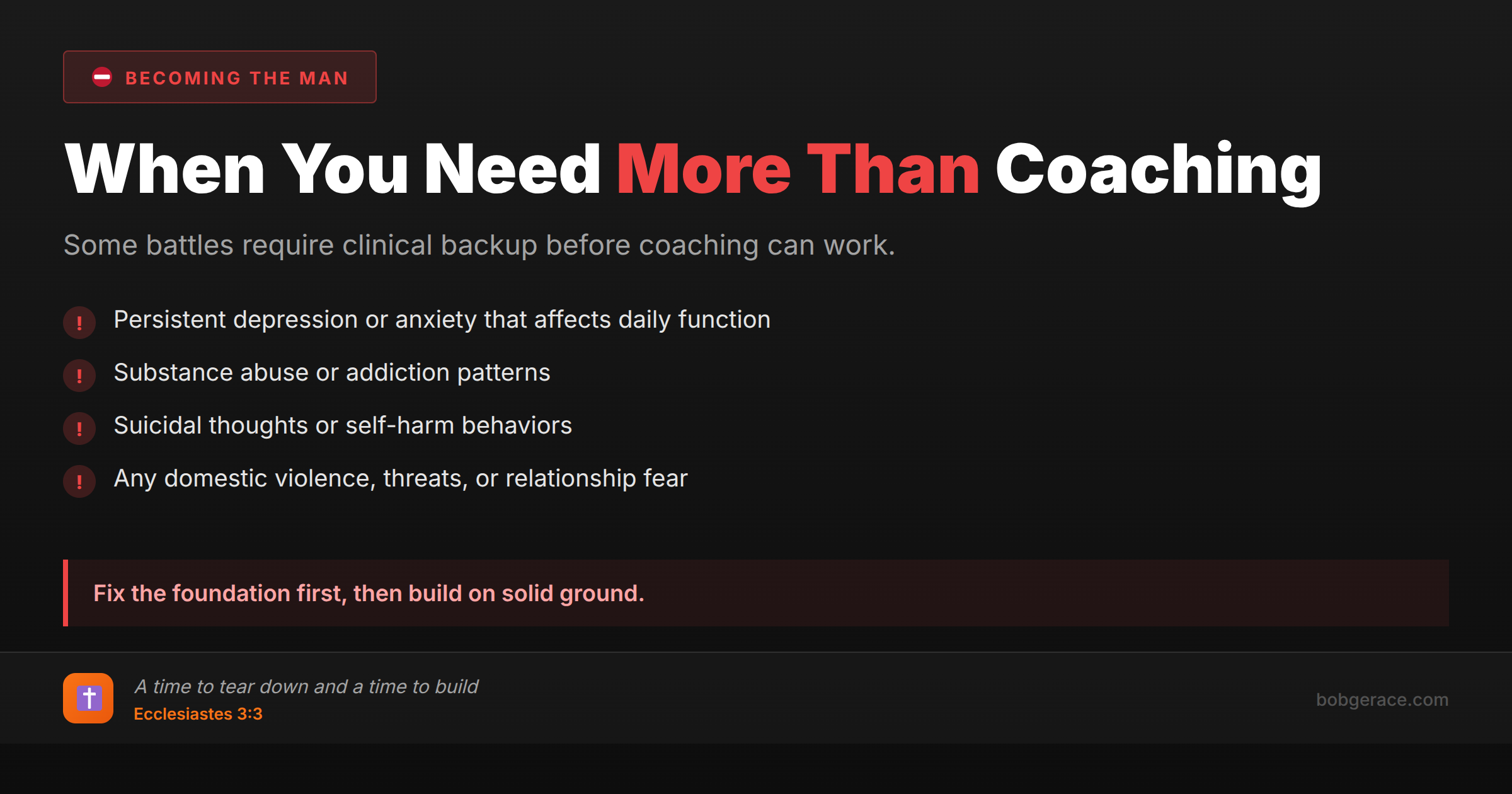
There are clear markers that indicate you need clinical therapy rather than or alongside coaching. If you're experiencing persistent depression, anxiety, substance abuse, suicidal thoughts, domestic violence, or untreated trauma, these require professional clinical intervention first. Coaching works best when you're emotionally stable enough to implement strategies and make behavioral changes. Other red flags include inability to function in daily life, complete emotional numbness, explosive rage episodes, or patterns that haven't improved despite multiple coaching attempts. Think of it this way: if your foundation is cracked, we need to fix that before we can build. Clinical therapy addresses the foundation; coaching helps you build on solid ground.
The Full Picture
Understanding when you need clinical intervention versus coaching isn't about failure—it's about getting the right tool for the job. I've seen too many people struggle unnecessarily because they tried to use coaching to address clinical issues, or avoided coaching because they thought their problems were "too big."
Clinical red flags include:
- Mental health crises: Active suicidal thoughts, severe depression that prevents daily functioning, panic attacks that interfere with life - Substance abuse: Using alcohol, drugs, or other substances to cope with marital stress - Domestic violence: Any physical, emotional, or sexual abuse—this requires immediate professional intervention - Untreated trauma: PTSD, childhood abuse, or recent traumatic events that haven't been properly addressed - Personality disorders: Narcissistic, borderline, or other personality disorders that require specialized treatment
You might need both therapy and coaching if:
- You're managing mental health issues but want practical marriage skills - Past trauma is addressed but you need help building healthy relationship patternss - You're in recovery and ready to rebuild your marriage - You have good individual mental health but need help with communication and conflict resolution
Coaching is right when:
- You're mentally and emotionally stable - You want to improve good relationships or fix specific patterns - You're ready to take action and implement changes - You need skills, strategies, and accountability rather than healing from deep wounds
The key is honest self-assessment. If you're barely keeping your head above water individually, we need to address that first.
What's Really Happening
From a clinical perspective, the distinction between coaching and therapy needs lies in your current level of psychological functioning and the nature of your presenting issues. Therapy is indicated when there are underlying mental health conditions, trauma responses, or safety concerns that require clinical intervention.
Severe depression often manifests as hopelessness, inability to experience pleasure, sleep disturbances, and thoughts of death. These symptoms create a neurochemical environment where coaching strategies simply cannot take root. Similarly, untreated anxiety disorders can trigger fight-or-flight responses that make rational communication impossible.
Trauma, particularly relational trauma, creates neural pathways that require specialized therapeutic techniques like EMDR or trauma-focused CBT. Coaching assumes you have the emotional regulation capacity to learn new skills—trauma disrupts this capacity at a neurological level.
Substance abuse indicates you're using external substances to manage internal emotional states. Until you develop healthy coping mechanisms through clinical treatment, coaching interventions will fail because the underlying self-medication pattern remains unchanged.
Personality disorders involve rigid, pervasive patterns of thinking and behaving that developed as early survival mechanisms. These require long-term therapeutic intervention to address core beliefs and attachment styles. Coaching works with flexible thinking patterns—personality disorders create inflexible ones.
The good news is that many people benefit from sequential or concurrent therapy and coaching. Therapy creates the foundation of emotional stability, while coaching builds practical skills on that foundation.
What Scripture Says
Scripture acknowledges that we sometimes need different types of help for different seasons of life. God provides wisdom, healing, and practical guidance through various means.
Proverbs 27:6 reminds us that "Wounds from a friend can be trusted, but an enemy multiplies kisses." Sometimes we need the deeper work of therapy to address wounds, while coaching provides the faithful guidance for growth.
Ecclesiastes 3:3 tells us there is "a time to tear down and a time to build." Clinical therapy often involves the tearing down work—addressing trauma, breaking unhealthy patterns, treating mental illness. Coaching focuses more on the building up—creating new skills and healthy patterns.
Galatians 6:2 instructs us to "Carry each other's burdens, and in this way you will fulfill the law of Christ." Some burdens require clinical expertise to carry properly. There's no shame in needing professional help—it's wisdom.
Proverbs 19:20 says "Listen to advice and accept discipline, and at the end you will be counted among the wise." Part of wisdom is recognizing what kind of advice and discipline you need. If you're in crisis, you need clinical intervention. If you're stable but want growth, coaching may be perfect.
Luke 14:28 teaches us to count the cost before building. Before building new marriage skills through coaching, we need to honestly assess whether our foundation is solid enough. Sometimes that foundation needs clinical repair first.
God wants you whole and healthy. Sometimes that requires therapy, sometimes coaching, sometimes both. The goal isn't to avoid help—it's to get the right help.
What To Do Right Now
-
1
Take an honest inventory of your mental health using online screening tools or talking to your doctor about depression, anxiety, or substance use
-
2
Ask yourself: 'Am I able to function in daily life, work, and basic responsibilities?' If no, prioritize clinical help first
-
3
Evaluate safety in your relationship—any violence, threats, or fear requires immediate professional intervention, not coaching
-
4
Consider whether past trauma or abuse is still actively affecting your daily emotional state and relationship responses
-
5
Schedule a consultation with a licensed therapist if you identified clinical markers—many offer brief assessments to determine appropriate care
-
6
Remember that seeking clinical help first doesn't disqualify you from coaching later—it creates a stronger foundation for coaching success
Related Questions
Ready to Get the Right Help?
Whether you need clinical support first or you're ready for coaching, I can help you determine the best path forward for your marriage.
Get Guidance →