What role might ADHD/depression/anxiety play?
6 min read
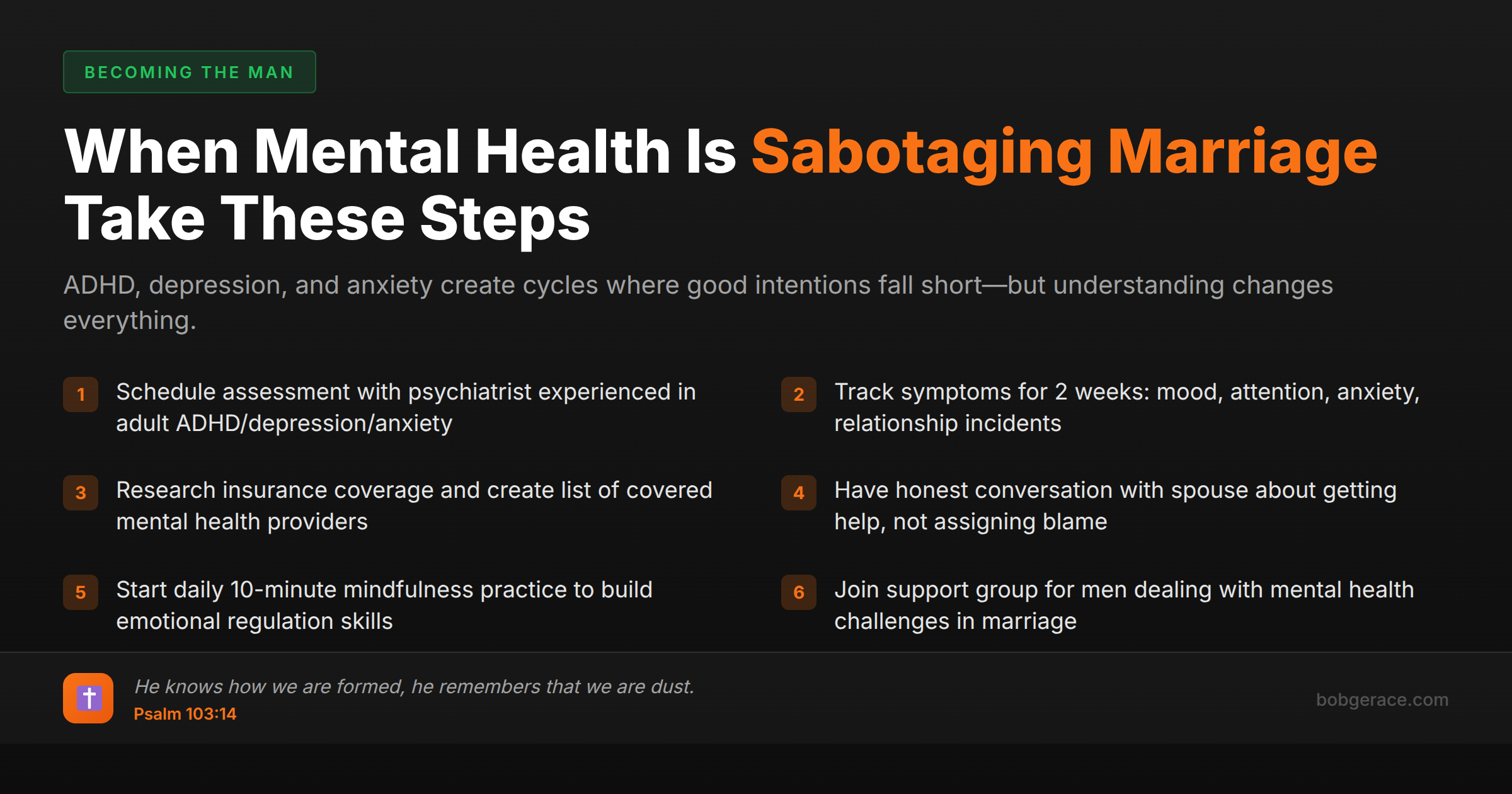
ADHD, depression, and anxiety can significantly impact marriage patterns, often creating cycles where good intentions repeatedly fall short. ADHD affects executive function, making it harder to follow through on commitments, remember important details, or regulate emotional responses. Depression can sap motivation and create withdrawal patterns that feel like rejection to spouses. Anxiety often leads to avoidance behaviors or overwhelming worry that interferes with daily functioning. These conditions don't excuse harmful behavior, but understanding their role helps couples develop realistic strategies. When undiagnosed or untreated, they create frustrating cycles where both spouses feel like failures. Professional assessment can provide clarity and open doors to effective treatment that supports both individual wellbeing and marriage health.
The Full Picture
Mental health conditions like ADHD, depression, and anxiety don't operate in isolation—they interact with marriage dynamics in complex ways that can leave both spouses feeling exhausted and confused.
ADHD's Impact on Marriage ADHD affects executive functioning, which includes working memory, emotional regulation, and task completion. In marriage, this might look like: - Forgetting important conversations or commitments - Difficulty following through on household responsibilities - Emotional reactivity that seems disproportionate - Hyperfocus on interests while neglecting relationship needs - Time management struggles that affect family schedules
Depression's Marriage Effects Depression creates biochemical changes that affect motivation, energy, and emotional connection: - Withdrawal from activities and relationships - Difficulty experiencing joy or pleasure - Increased irritability and negative thinking patterns - Physical symptoms like fatigue that impact daily functioning - Feelings of worthlessness that strain intimate connection
Anxiety's Relationship Dynamics Anxiety can create patterns that feel controlling or overwhelming to spouses: - Excessive worry about relationship security - Avoidance of situations that trigger anxiety - Physical symptoms that limit social or family activities - Need for constant reassurance - Difficulty making decisions due to fear of making wrong choices
The Intersection These conditions often co-occur and can mask each other. ADHD can lead to anxiety about performance. Depression can develop from chronic ADHD-related failures. Anxiety can create avoidance that looks like ADHD inattention. Without proper assessment, couples might spend years addressing symptoms instead of root causes.
What's Really Happening
From a clinical perspective, untreated mental health conditions create what we call 'systemic dysfunction' in marriages. The neurobiological reality is that these conditions affect brain regions responsible for executive functioning, emotional regulation, and decision-making.
In ADHD, the prefrontal cortex—our brain's CEO—struggles with working memory and impulse control. This isn't a character flaw; it's a neurological difference that requires specific strategies. When spouses don't understand this, they often interpret symptoms as carelessness or lack of caring, creating secondary trauma in the relationship.
Depression involves dysregulation of neurotransmitters like serotonin and dopamine, affecting mood, motivation, and pleasure responses. The depressed spouse isn't choosing to withdraw or be negative—their brain chemistry is literally working against connection and joy. Meanwhile, the non-depressed spouse often experiences their own depression from chronic stress and rejection.
Anxiety activates the amygdala's fight-or-flight response, making calm problem-solving nearly impossible. Anxious individuals aren't being dramatic—they're experiencing real physiological alarm signals that override rational thinking.
The crucial clinical insight is that these conditions create negative feedback loops. ADHD symptoms lead to relationship conflict, which increases anxiety and depression, which worsens ADHD symptoms. Breaking these cycles requires both individual treatment for the underlying conditions and couple interventions to rebuild trust and communication patterns.
Proper assessment can be life-changing, providing both explanation and hope for couples who've been struggling in confusion for years.
What Scripture Says
Scripture acknowledges human frailty while calling us to wisdom and mutual support in addressing our limitations.
Understanding Our Weaknesses *"He knows how we are formed, he remembers that we are dust."* (Psalm 103:14) God understands our human limitations, including neurological and biochemical challenges. This doesn't minimize personal responsibility but acknowledges that we're complex beings with real constraints.
Seeking Wisdom and Help *"Plans fail for lack of counsel, but with many advisers they succeed."* (Proverbs 15:22) Professional assessment and treatment align with biblical wisdom about seeking counsel. God often provides help through medical and mental health professionals.
Bearing One Another's Burdens *"Carry each other's burdens, and in this way you will fulfill the law of Christ."* (Galatians 6:2) Mental health challenges are legitimate burdens that spouses are called to bear together, not dismiss or minimize.
Hope for Healing *"And the God of all grace, who called you to his eternal glory in Christ, after you have suffered a little while, will himself restore you and make you strong, firm and steadfast."* (1 Peter 5:10) God's restoration often includes medical and therapeutic interventions that restore proper brain function.
Working Together *"Two are better than one, because they have a good return for their labor: If either of them falls down, one can help the other up."* (Ecclesiastes 4:9-10) Mental health challenges require teamwork—supporting each other through diagnosis, treatment, and ongoing management.
Personal Responsibility Within Limitations *"Each one should carry their own load."* (Galatians 6:5) While we bear each other's burdens, individuals are still responsible for seeking help and following treatment recommendations within their capabilities.
What To Do Right Now
-
1
Schedule professional assessment with a psychiatrist or psychologist experienced in adult ADHD, depression, and anxiety
-
2
Keep a symptom journal for 2 weeks tracking mood, attention, anxiety levels, and relationship incidents
-
3
Research your insurance coverage for mental health services and create a list of covered providers
-
4
Have an honest conversation with your spouse about seeking evaluation—frame it as getting help, not assigning blame
-
5
Implement one immediate coping strategy: daily 10-minute walks, basic sleep hygiene, or simple mindfulness practice
-
6
Connect with support resources like CHADD for ADHD, Depression and Bipolar Support Alliance, or Anxiety and Depression Association
Related Questions
- Is there something wrong with me?
- Do I have a personality disorder?
- Should I be on medication?
- What is 'complex trauma' and do I have it?
- Do I need therapy, coaching, or both?
- What assessments would help me understand myself?
- What is 'betrayal trauma' and do I have it?
- Why can't I stop obsessing over details?
- What is 'hypervigilance' and why am I doing it?
- How do I not lose my mind right now?
Also find Bob on
Subscribe for weekly videos on Christian marriage.
Your Marriage Isn't a Textbook Case
ADHD, depression, anxiety—they show up differently in your specific dynamic. A coach who knows your story can help you build strategies that actually fit your marriage, not just the diagnosis.
Talk to Bob →