What's the difference between personality disorder and personality style?
6 min read
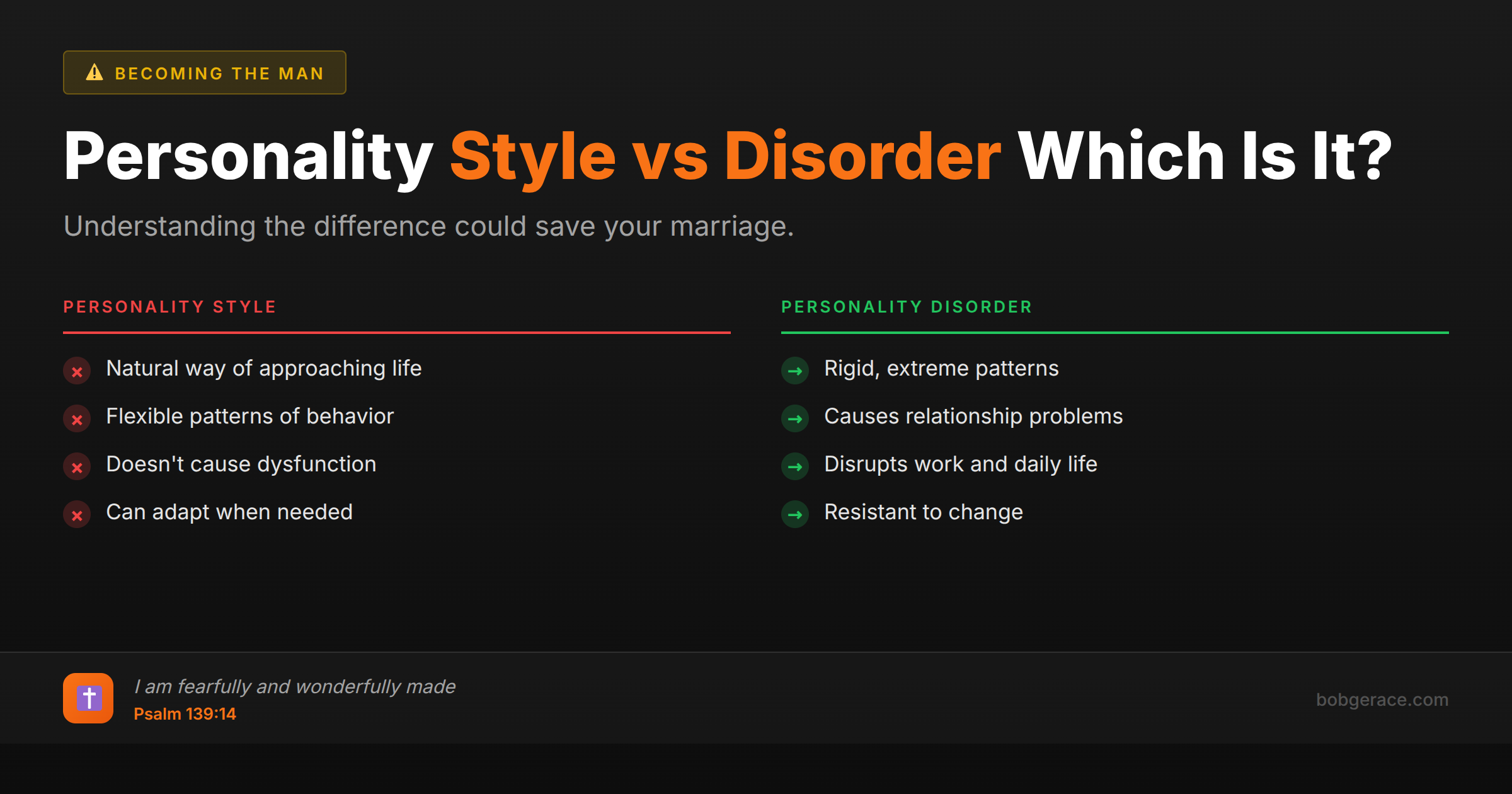
The difference between a personality disorder and a personality style is like the difference between a broken bone and being naturally athletic. A personality style is simply how someone naturally approaches life - their typical patterns of thinking, feeling, and behaving. We all have personality styles, and they're not inherently good or bad. A personality disorder, however, is when these patterns become so rigid, extreme, and dysfunctional that they consistently cause significant problems in relationships, work, and daily life. The key word is 'dysfunction.' While someone might have a naturally cautious personality style, a person with paranoid personality disorder experiences such extreme distrust that they can't maintain healthy relationships.
The Full Picture
Think of personality as existing on a spectrum. At one end, you have healthy personality styles - the unique ways we each navigate life. Some people are naturally more outgoing, others more reserved. Some are detail-oriented, others see the big picture. These differences make relationships interesting and complementary.
Personality styles are adaptive and flexible. Someone with a naturally organized style can still be spontaneous when the situation calls for it. They can adjust their approach based on circumstances and feedback from others.
Personality disorders, however, are rigid and maladaptive. The person becomes locked into patterns that consistently damage their relationships and quality of life. They struggle to adapt their behavior even when it's clearly not working. The patterns are pervasive - showing up across different relationships and situations - and they typically begin in early adulthood.
Here's what makes this tricky in marriage: we often attract partners whose personality styles complement ours. The organized person marries the spontaneous one. The cautious person marries the risk-taker. Early in the relationship, these differences feel exciting and balancing.
But if one partner's style crosses into disorder territory, what once seemed like an interesting quirk becomes a source of chronic conflict. The 'organized' partner becomes rigidly controlling. The 'spontaneous' partner becomes impulsively destructive. The 'cautious' partner becomes paralyzingly anxious.
The clinical threshold matters. Mental health professionals use specific criteria to determine when personality traits become a disorder. It's not just about having strong preferences - it's about patterns that consistently cause clinically significant distress or impairment in important areas of life.
What's Really Happening
In my practice, I see couples struggle with this distinction constantly. Partners often ask, 'Is my spouse just stubborn, or is there something more serious going on?' The answer lies in understanding three key factors: flexibility, functionality, and distress.
Flexibility refers to whether someone can modify their behavior when circumstances change or when they receive feedback. A person with a personality style might prefer structure but can roll with changes when needed. Someone with a personality disorder becomes increasingly rigid when stressed.
Functionality examines whether the person's patterns help them achieve their goals and maintain relationships. Personality styles generally serve the person well, even if they occasionally create minor friction. Personality disorders consistently undermine the person's ability to succeed in work, relationships, or personal satisfaction.
Distress considers both the person's own suffering and the impact on others. People with personality disorders often don't recognize their patterns as problematic - they blame others for relationship difficulties. Meanwhile, those around them experience chronic stress, confusion, and emotional exhaustion.
What complicates assessment is that personality disorders often intensify under stress - and marriage naturally creates stress. Someone might function reasonably well in other contexts but become highly dysfunctional in intimate relationships. This is why professional assessment is crucial when patterns are causing significant marital distress.
It's also important to understand that personality disorders exist on a continuum. Someone might have some traits without meeting full criteria for a diagnosis. This is where skilled clinical judgment becomes essential in determining the appropriate level of intervention and support.
What Scripture Says
Scripture acknowledges that we're all created with different temperaments and natural tendencies, while also calling us to growth and transformation. Psalm 139:14 reminds us, *'I praise you because I am fearfully and wonderfully made; your works are wonderful, I know that full well.'* God designed us each with unique personality traits that can serve His purposes.
However, Scripture also recognizes when our natural tendencies become destructive patterns. Proverbs 27:5-6 says, *'Better is open rebuke than hidden love. Wounds from a friend can be trusted, but an enemy multiplies kisses.'* Healthy personality styles allow us to receive correction and grow from it.
Ephesians 4:22-24 calls us to transformation: *'You were taught, with regard to your former way of life, to put off your old self, which is being corrupted by its deceitful desires; to be made new in the attitude of your minds; and to put on the new self, created to be like God in true righteousness and holiness.'*
When personality patterns become rigid and destructive, they resist this biblical call to growth. Proverbs 12:1 warns, *'Whoever loves discipline loves knowledge, but whoever hates correction is stupid.'* Personality disorders often involve an inability to receive correction or acknowledge destructive patterns.
Romans 12:2 encourages transformation: *'Do not conform to the pattern of this world, but be transformed by the renewing of your mind.'* This suggests that while we have natural patterns, we're called to allow God to reshape unhealthy ones.
Galatians 5:22-23 describes the fruit of the Spirit: *'love, joy, peace, forbearance, kindness, goodness, faithfulness, gentleness and self-control.'* These qualities can be developed regardless of our natural personality style, but personality disorders often block their development.
What To Do Right Now
-
1
Document patterns objectively - write down specific behaviors and their frequency without emotional commentary
-
2
Assess flexibility - note whether your spouse can adapt their behavior when circumstances require it or when you express concerns
-
3
Evaluate functionality - consider whether these patterns help or consistently hinder your spouse's success in work, friendships, and family relationships
-
4
Seek professional assessment - consult with a qualified mental health professional who can properly evaluate personality patterns
-
5
Focus on your own responses - regardless of diagnosis, work on your own emotional regulation and boundary-setting
-
6
Develop a support system - connect with others who can provide perspective and encouragement as you navigate this challenging situation
Related Questions
Need Help Navigating These Complex Patterns?
Understanding personality dynamics in marriage requires both clinical insight and practical wisdom. I can help you discern what you're dealing with and develop a healthy response.
Get Clarity →