What is 'complex trauma' and do I have it?
6 min read
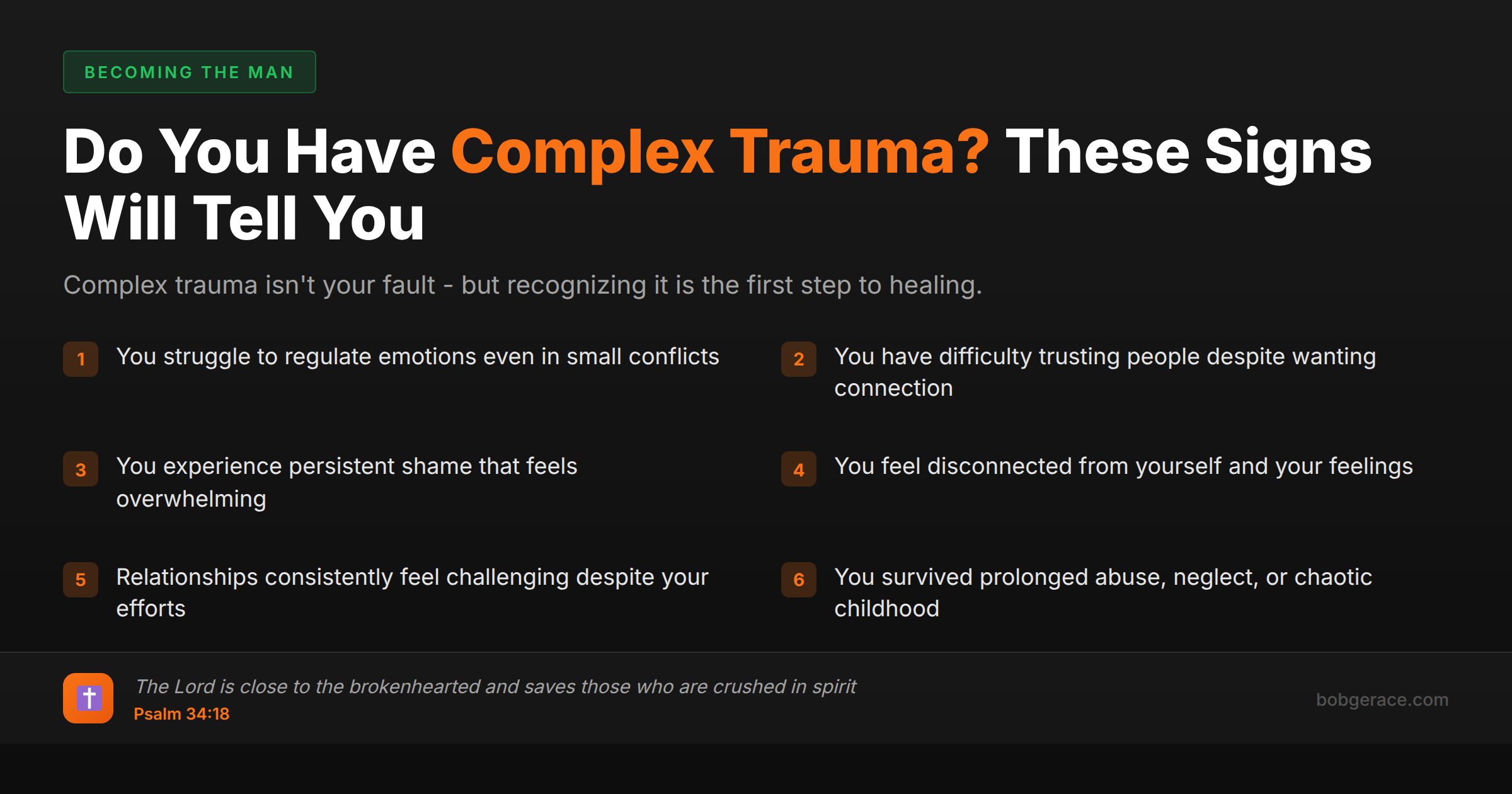
Complex trauma, also called Complex PTSD (C-PTSD), develops from prolonged, repeated exposure to traumatic experiences, typically in childhood or abusive relationships. Unlike single-incident trauma, complex trauma involves ongoing situations where escape wasn't possible - like chronic abuse, neglect, or living with addiction in the home. You might have complex trauma if you struggle with emotional regulation, have difficulty trusting others, experience persistent shame, feel disconnected from yourself, or find relationships consistently challenging despite your best efforts. These aren't character flaws - they're survival responses your brain developed to protect you. The good news? Complex trauma is treatable, and healing is absolutely possible with proper support and intervention.
The Full Picture
Complex trauma isn't just about what happened to you - it's about what didn't happen. While single-incident trauma involves one terrible event, complex trauma develops from repeated exposure to harmful situations over time, usually during childhood or in relationships where you couldn't escape.
Common sources include: - Childhood emotional, physical, or sexual abuse - Severe neglect or emotional unavailability from caregivers - Growing up with addiction, mental illness, or domestic violence - Being raised by narcissistic or severely dysfunctional parents - Prolonged medical trauma or hospitalization as a child - Adult relationships involving ongoing abuse or manipulation
Key symptoms that distinguish complex trauma: - Emotional dysregulation - Intense emotions that feel impossible to control - Negative self-concept - Deep shame, feeling fundamentally flawed or worthless - Interpersonal difficulties - Struggling with trust, boundaries, and healthy relationships - Dissociation - Feeling disconnected from yourself or your experiences - Hypervigilance - Constantly scanning for danger or rejection - Physical symptoms - Chronic pain, digestive issues, or unexplained medical problems
In marriage, complex trauma often shows up as fear of abandonment paired with fear of intimacy, difficulty communicating needs, explosive reactions to seemingly minor triggers, or feeling like you're 'too much' for your spouse. You might find yourself recreating familiar dynamics from childhood, even when you desperately want something different.
Understanding complex trauma isn't about excuses - it's about clarity. When you understand why your nervous system responds the way it does, you can begin the healing journey with compassion rather than self-condemnation.
What's Really Happening
Complex trauma fundamentally alters how the brain develops and processes information. When children experience chronic stress without adequate support, their developing nervous system adapts to survive in an unsafe environment. This isn't pathology - it's brilliant adaptation that unfortunately becomes problematic in adult relationships.
The key difference between PTSD and C-PTSD lies in developmental timing and relational context. Complex trauma typically occurs during critical developmental windows when we're forming our core sense of self and learning how relationships work. This means the trauma becomes woven into our identity and attachment patterns, not just our memory system.
Neurobiologically, we see dysregulation in three key areas: the brainstem (affecting basic functioning like sleep and appetite), the limbic system (emotional processing and memory), and the prefrontal cortex (executive functioning and self-awareness). This explains why people with complex trauma often feel like their reactions are bigger than the situation warrants - their alarm system is calibrated for survival, not thriving.
In my practice, I see complex trauma survivors exhibiting what I call 'relational whiplash' - desperately craving connection while simultaneously pushing it away. They've learned that people who are supposed to love you can also hurt you deeply. This creates an impossible bind: you need relationships to heal, but relationships feel dangerous.
Recovery requires specialized approaches that address not just symptoms, but the underlying attachment wounds and nervous system dysregulation. Traditional talk therapy alone often isn't sufficient - we need body-based interventions, trauma-informed therapy modalities, and often medication support to help regulate the nervous system while deeper healing occurs.
What Scripture Says
God's heart for trauma survivors is woven throughout Scripture. He doesn't minimize our pain or tell us to 'just get over it' - instead, He meets us in our brokenness with incredible tenderness.
God sees and cares about your pain: *'The Lord is close to the brokenhearted and saves those who are crushed in spirit'* (Psalm 34:18). Your trauma matters to God. He doesn't view your struggles as weakness or lack of faith - He draws near to those who are hurting.
Healing is a process, not an instant fix: *'He heals the brokenhearted and binds up their wounds'* (Psalm 147:3). Notice this is present tense - God IS healing, IS binding up. Healing isn't always instantaneous, and that doesn't reflect poorly on your faith. God often works through process, including therapy and medical intervention.
Your body matters to God: *'Do you not know that your bodies are temples of the Holy Spirit?'* (1 Corinthians 6:19). Trauma affects the whole person - body, mind, and spirit. Caring for your physical and mental health isn't selfish; it's stewarding what God has given you.
You are not defined by what happened to you: *'Therefore, if anyone is in Christ, the new creation has come: The old has gone, the new is here!'* (2 Corinthians 5:17). While trauma's effects are real, your identity isn't found in your wounds but in Christ's love for you.
God can bring beauty from ashes: *'To bestow on them a crown of beauty instead of ashes, the oil of joy instead of mourning'* (Isaiah 61:3). This doesn't mean your trauma was 'worth it,' but that God specializes in redemption and restoration.
Community is essential for healing: *'Carry each other's burdens, and in this way you will fulfill the law of Christ'* (Galatians 6:2). Healing happens in relationship - with God and with safe people who can walk alongside you.
What To Do Right Now
-
1
Take the Complex Trauma Self-Assessment - Look up validated screening tools like the ACE questionnaire or seek professional evaluation
-
2
Find trauma-informed professional help - Seek therapists specifically trained in complex trauma modalities like EMDR, IFS, or somatic therapy
-
3
Create immediate safety and stability - Establish basic self-care routines, safe relationships, and emotional regulation tools
-
4
Educate yourself about trauma - Read books like 'The Body Keeps the Score' or 'Complex PTSD' by Pete Walker to understand your experiences
-
5
Practice nervous system regulation - Learn grounding techniques, breathing exercises, and body-based interventions to manage symptoms
-
6
Build a support network - Connect with trusted friends, support groups, or trauma-informed communities for ongoing encouragement
Related Questions
- What is 'family of origin' work?
- What attachment style did I develop in childhood?
- What attachment injuries did I experience?
- How do childhood attachment wounds show up in marriage?
- What role did my childhood play in my anger patterns?
- What is 'repetition compulsion'?
- What is 'betrayal trauma' and do I have it?
- Is this PTSD?
- What does trauma recovery look like?
- What is 'stacked trauma' and does she have it?
Also find Bob on
Subscribe for weekly videos on Christian marriage.
This Work Goes Deeper With a Coach
Complex trauma shows up differently in every marriage. A coach who knows your story can help you see what's yours to heal and what's just noise.
Talk to Bob →