What does genuine repair look like for old wounds?
6 min read
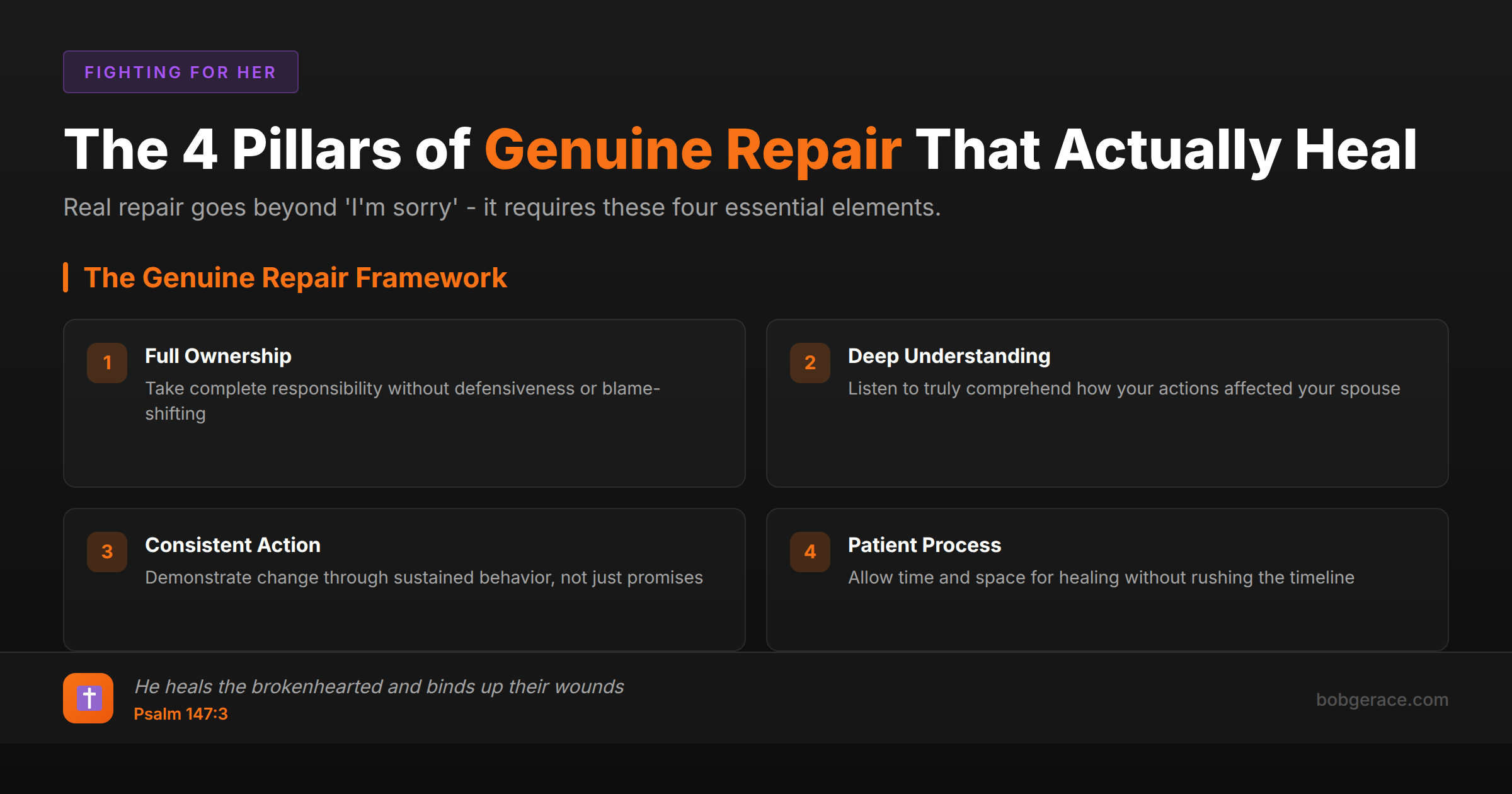
Genuine repair for old wounds goes far beyond saying 'I'm sorry.' It requires the wounded spouse to feel truly seen, heard, and understood in their pain. Real repair involves the offending partner taking full ownership without defensiveness, demonstrating deep understanding of the impact their actions had, and consistently showing up differently over time. The process isn't linear and can't be rushed. It requires the hurt partner to feel safe enough to be vulnerable again, which only happens through repeated experiences of safety and trustworthiness. Genuine repair creates space for grief, validates the reality of the harm done, and rebuilds connection through consistent, caring actions rather than just words.
The Full Picture
Most couples mistake apologies for repair. They think saying sorry, maybe buying flowers, and moving on constitutes healing. But old wounds—betrayals, abandonment, repeated dismissals—create deep ruptures that require intentional, sustained repair work.
Genuine repair starts with the wounded spouse feeling completely understood. Not just heard, but deeply comprehended. The partner who caused the harm must demonstrate they truly grasp not just what they did, but the full impact it had. This means understanding the layers: the immediate hurt, the broken trust, the fear it created, the way it changed how their spouse sees them and the relationship.
Time is a critical component. Old wounds didn't happen overnight, and they don't heal overnight. The offending partner must consistently show up with patience, understanding that their spouse's healing process can't be rushed or controlled. There will be setbacks, triggers, and moments when the wound feels fresh again.
Behavioral change is non-negotiable. Words without corresponding actions create more harm. If the wound came from emotional unavailability, repair means becoming emotionally present. If it came from broken promises, repair means becoming completely reliable. The change must be sustained long enough for the wounded spouse to experience a new normal.
The wounded spouse also has a role: being willing to acknowledge progress and gradually opening their heart again. But this can only happen in an environment of consistent safety and demonstrated change.
What's Really Happening
From a clinical perspective, old wounds create what we call attachment injuries—deep ruptures in the emotional bond between partners. These aren't simple disagreements; they're experiences that fundamentally shake someone's sense of safety and trust in the relationship.
When we examine genuine repair neurologically, we see that trust is rebuilt through repeated positive experiences. The brain needs consistent evidence that things are different now. One apology, no matter how heartfelt, can't override months or years of neural pathways created by hurt and disappointment.
The repair process //blog.bobgerace.com/4-crisis-theaters-christian-husband-must-master/:must address three levels: the cognitive (understanding what happened), the emotional (processing the feelings), and the somatic (healing the body's stress response). Many couples focus only on the cognitive level—talking through what happened—but ignore the emotional and physical impact of the wound.
I often see partners become frustrated when their spouse 'brings up old stuff.' But what's actually happening is that unrepaired wounds get triggered, and the nervous system responds as if the threat is current. Genuine repair calms this nervous system response by creating new, safe experiences that gradually override the old patterns.
The timeline varies significantly, but typically requires 6-18 months of consistent repair behavior before the wounded spouse feels genuinely safe again. Rushing this process or becoming impatient with setbacks often re-wounds and extends the healing timeline.
What Scripture Says
Scripture provides a powerful framework for understanding genuine repair. Psalm 147:3 tells us that God 'heals the brokenhearted and binds up their wounds.' This healing imagery shows us that wounds require careful, intentional binding—not just time alone.
Luke 19:8 shows us Zacchaeus's response after encountering Jesus: 'If I have cheated anybody out of anything, I will pay back four times the amount.' True repentance involves making amends that exceed the original harm. This isn't about earning forgiveness, but demonstrating the depth of our understanding and commitment to change.
Galatians 6:1 instructs us to 'restore such a one in a spirit of gentleness.' The word 'restore' (katartizo) means to mend, repair, or put in proper condition—like setting a broken bone. Healing requires both gentleness and proper alignment.
The parable of the unmerciful servant in Matthew 18:21-35 reveals that forgiveness is a process, not a single event. Peter asks if forgiving seven times is enough, and Jesus responds 'seventy-seven times'—indicating that repair often requires multiple attempts and sustained patience.
James 5:16 calls us to 'confess your sins to each other and pray for each other so that you may be healed.' Notice that healing comes through confession to the wounded party, not just to God. Repair requires vulnerability and accountability within the relationship itself.
Ephesians 4:32 reminds us to 'be kind and compassionate to one another, forgiving each other, just as in Christ God forgave you.' God's forgiveness provides the model—it's complete, sacrificial, and transformative.
What To Do Right Now
-
1
Take complete ownership without any defensiveness, blame-shifting, or minimizing—own the full impact of your actions on your spouse
-
2
Ask your spouse to help you understand the complete picture of how your actions affected them, then listen without defending
-
3
Identify specific behavioral changes needed and create a concrete plan for implementing them consistently
-
4
Demonstrate your changes through actions over time—repair happens through sustained behavioral change, not promises
-
5
Be patient with your spouse's healing process and triggers without pressuring them to 'get over it' or move on faster
-
6
Seek professional help if the wounds are deep or the repair process stalls—some injuries require clinical intervention
Related Questions
- What is 'accumulated resentment'?
- What are 'attachment injuries' and how many did I cause?
- What is an 'apology' vs. 'repair' vs. 'attunement'?
- What is 'felt understanding' and how do I give it?
- Can old attachment injuries be healed?
- What does reconciliation require that apology doesn't?
- What does 'taking responsibility' actually look like?
- How do I make amends for years of failure?
- What does real forgiveness look like?
- What does 'earning back' trust actually look like?
Also find Bob on
Subscribe for weekly videos on Christian marriage.
Repair Work That Fits Your Marriage
Old wounds don't heal on a template. A coach who knows your specific story can help you navigate what real repair looks like for you two.
Talk to Bob →