What is 'secondary emotion' and is anger covering something?
6 min read
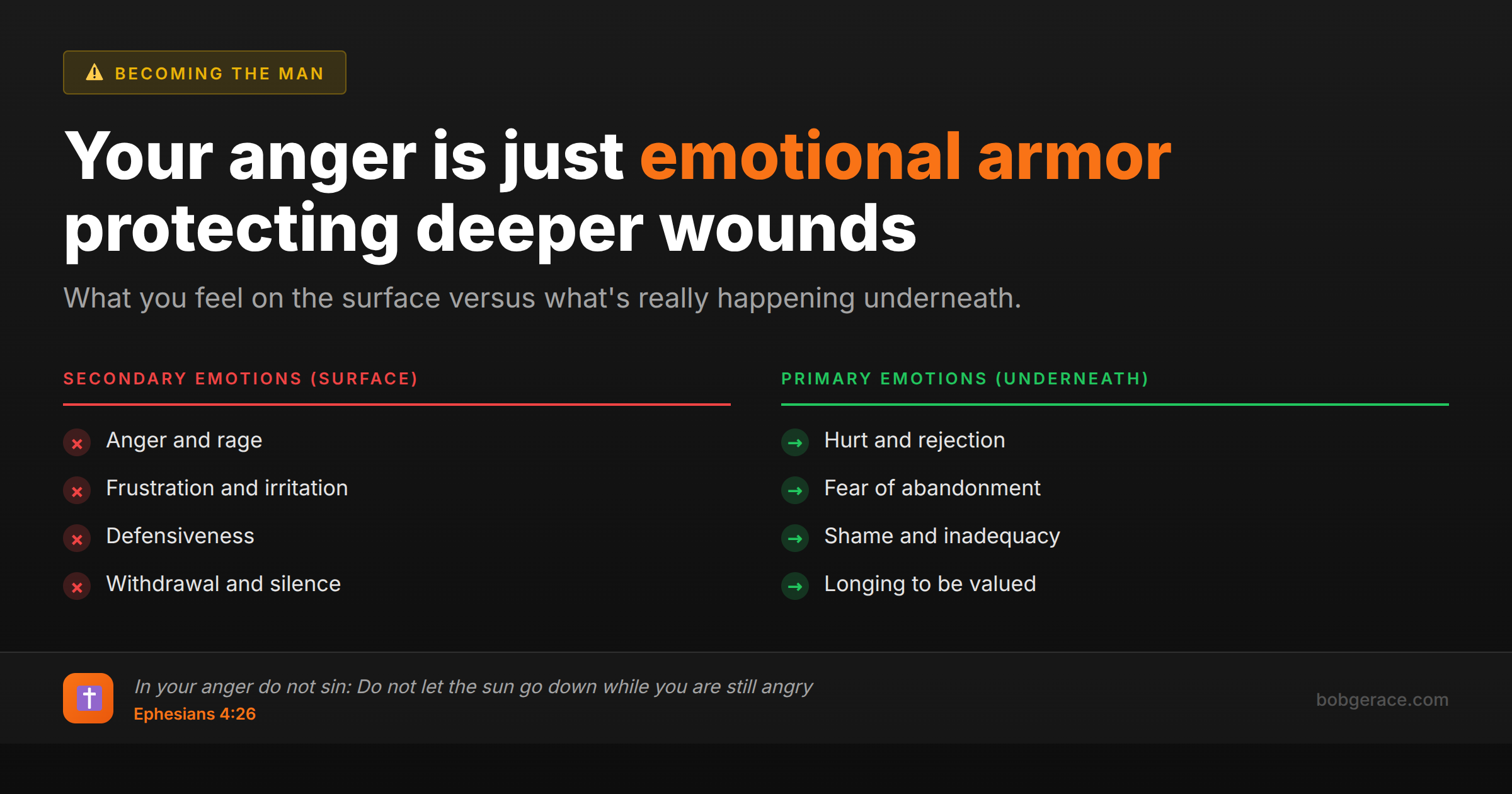
A secondary emotion is what you feel on the surface, while primary emotions are the deeper, more vulnerable feelings underneath. Anger is almost always a secondary emotion - it's your emotional bodyguard protecting you from feeling hurt, fear, rejection, or shame. When your spouse criticizes you, the hurt happens first (primary), but anger kicks in immediately after (secondary) because it feels safer and more powerful than admitting you're wounded. This isn't just psychology - it's how God designed us. Anger can serve a purpose, but when we stay stuck there without addressing what's really going on underneath, we miss the opportunity for true intimacy and healing in our marriages. The goal isn't to eliminate anger, but to understand what it's protecting and learn healthier ways to express those deeper needs.
The Full Picture
Think of emotions like an iceberg. What you see above water - that explosive anger, the cold shoulder, the sharp words - that's just the tip. The massive part hidden below the surface contains your real feelings: the hurt when your spouse dismisses your ideas, the fear that you're not enough, the shame about past failures, the loneliness of feeling unseen.
Anger feels powerful. Hurt feels vulnerable. That's why your brain defaults to anger - it's your emotional security system. When someone cuts you off in traffic, you don't think "I feel vulnerable and startled." You think "That idiot!" Anger gives you energy and focus. It makes you feel like you're doing something.
But here's the problem: anger often pushes away the very person you need most - your spouse. When you lead with anger in your marriage, you're essentially putting up a wall that says "Don't come closer" when what you really need is connection and understanding.
The anger isn't wrong - it's just incomplete. It's like a smoke alarm going off. The alarm isn't the problem; it's telling you there's a fire somewhere that needs attention. Your anger is telling you that something important to you is threatened or damaged. Maybe it's your need for respect, your desire for intimacy, your longing to feel valued.
Most people get stuck in anger because they don't know how to access what's underneath, or they're afraid that being vulnerable will make things worse. But marriages don't heal at the surface level. They heal when two people can be honest about their deeper needs and fears.
What's Really Happening
Neurologically, secondary emotions like anger activate faster than primary emotions because they engage the amygdala - your brain's alarm system. Primary emotions like sadness, fear, or hurt require more cortical processing, which takes milliseconds longer. This means anger literally beats vulnerability to the punch.
In my practice, I see this pattern constantly: a husband feels dismissed by his wife (hurt), but immediately responds with criticism or withdrawal (anger). A wife feels unsupported (fear), but expresses it through blame or control (anger). The secondary emotion becomes so automatic that people genuinely believe anger IS what they're feeling.
The therapeutic goal isn't anger management - it's emotional differentiation. We need to slow down the process enough to identify what's happening in that split second between the primary emotion and the secondary response. I often use the "emotional elevator" technique: when clients notice anger, we "go down one floor" to find what's underneath.
This is particularly crucial in marriage because intimate relationships are where our deepest wounds get triggered. Your spouse isn't just disagreeing with you about finances - they're activating old fears about security, worth, or control. Until you can identify and communicate these primary emotions, you'll keep having the same surface-level fights without ever addressing what's really wrong.
The beautiful thing is that primary emotions actually create connection when shared appropriately. "I'm furious" pushes people away. "I'm scared we're growing apart" invites them closer.
What Scripture Says
Scripture acknowledges the reality of anger while calling us to wisdom about how we handle it. "In your anger do not sin: Do not let the sun go down while you are still angry" (Ephesians 4:26). God doesn't condemn the emotion itself - He calls us to righteousness in our response.
Jesus himself experienced the full range of emotions, including anger, but His anger was always directed at injustice and sin, not at protecting His ego. "Jesus wept" (John 11:35) shows us that our Savior didn't hide behind anger when hurt and grief were appropriate.
"Above all else, guard your heart, for everything you do flows from it" (Proverbs 4:23). This isn't about building walls - it's about understanding what's really happening in your heart. When we're honest about our deeper needs and fears, we can bring them to God and to our spouse in healthy ways.
The goal is emotional honesty: "Therefore each of you must put off falsehood and speak truthfully to your neighbor, for we are all members of one body" (Ephesians 4:25). If anger is covering hurt, fear, or shame, then staying in anger is actually a form of dishonesty.
"A gentle answer turns away wrath, but a harsh word stirs up anger" (Proverbs 15:1). When you can identify and express your primary emotions with gentleness, you're much more likely to get the response you actually need from your spouse. "Be completely humble and gentle; be patient, bearing with one another in love" (Ephesians 4:2) - this is only possible when we're working from our authentic emotions, not our defensive ones.
What To Do Right Now
-
1
Practice the pause: When anger hits, count to 10 and ask "What else am I feeling right now?"
-
2
Name the primary emotion: Complete this sentence: "Underneath my anger, I'm feeling _____ because _____"
-
3
Share vulnerably: Instead of "You always..." try "I felt hurt when... and I need..."
-
4
Ask your spouse: "When you get angry, what do you think might be underneath that?"
-
5
Journal the pattern: Track your anger episodes for a week - note triggers and underlying feelings
-
6
Pray specifically: Ask God to help you be honest about your deeper emotions and needs
Related Questions
- What's underneath the anger — fear, shame, hurt?
- What's underneath my anger?
- Why does anger feel like the only accessible emotion?
- What is 'amygdala hijack' and how do I interrupt it?
- How do I identify what I'm feeling?
- What is emotional granularity?
- What is 'betrayal trauma' and do I have it?
- Why do I feel like I'm going to die?
- What does my rage communicate to her attachment system?
- How do I stay grounded when everything feels adversarial?
Also find Bob on
Subscribe for weekly videos on Christian marriage.
Your Marriage Has Its Own Anger Pattern
A coach who knows your story can help you see what your anger is actually protecting in your specific relationship—and what to do about it.
Talk to Bob →