What's the difference between justice and revenge?
6 min read
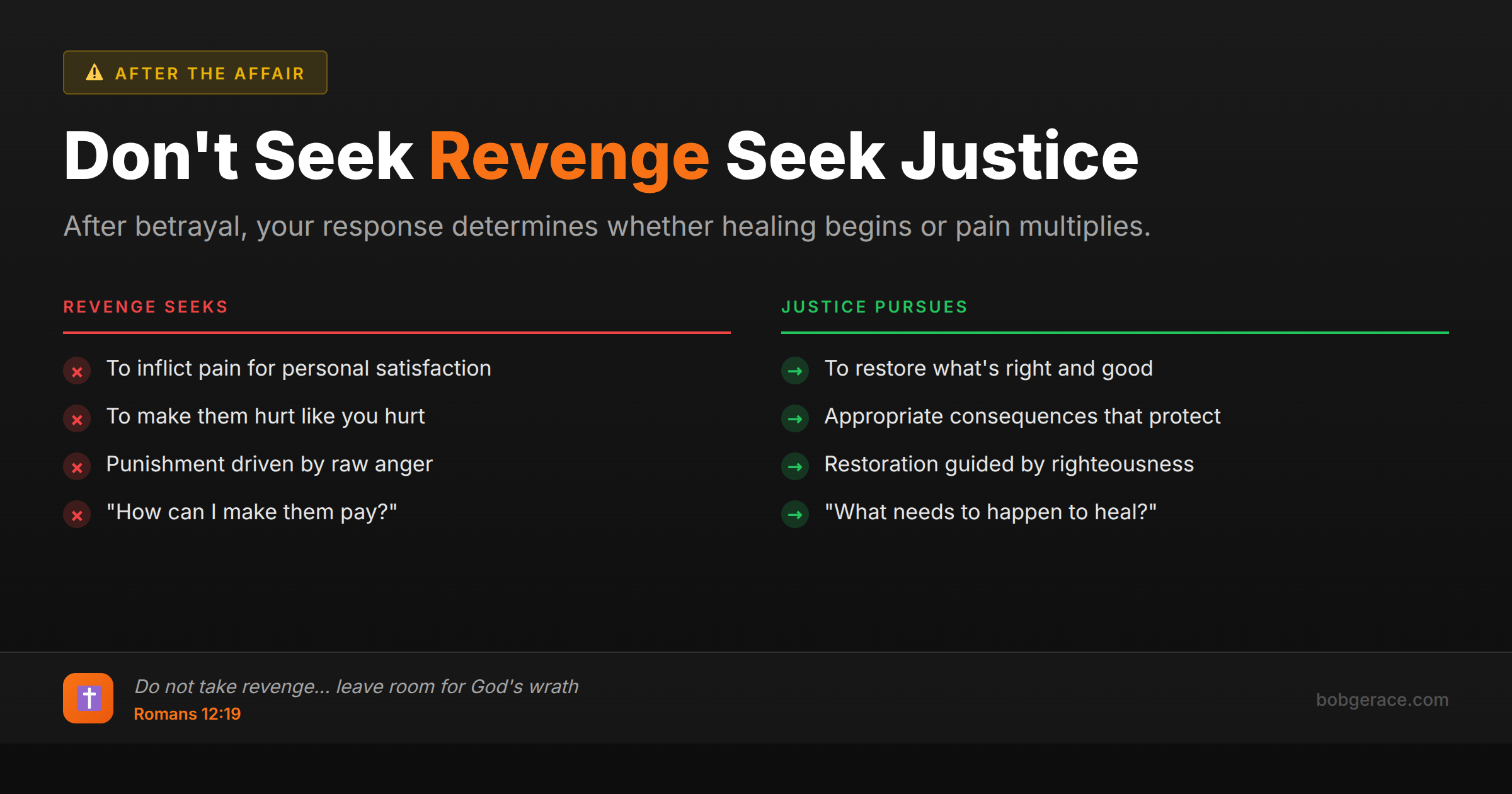
Justice seeks to restore what's right and protect what's good, while revenge seeks to inflict pain for personal satisfaction. When your spouse has an affair, justice means pursuing appropriate consequences that protect your family and uphold marriage vows. This might include accountability measures, counseling requirements, or even legal separation if needed. Revenge, on the other hand, is about making them hurt the way they hurt you. It's driven by anger and focuses on punishment rather than restoration. Justice asks 'What needs to happen to make this right?' while revenge asks 'How can I make them pay?' God calls us to pursue justice while leaving ultimate vengeance to Him.
The Full Picture
When you discover your spouse's affair, the line between justice and revenge can feel razor-thin. Your pain is real, your anger is justified, and your desire to see consequences is normal. But understanding the difference between these two responses will determine whether you move toward healing or deeper destruction.
Justice is restorative. It seeks to right wrongs, protect the innocent, and establish boundaries that prevent future harm. When applied to infidelity, justice might look like requiring your spouse to end all contact with the other person, attend individual counseling, be transparent with their devices, or even face temporary separation while they demonstrate genuine repentance. Justice protects your children from ongoing chaos, your marriage from further damage, and your spouse from continuing in destructive patterns.
Revenge is retaliatory. It's focused on inflicting pain equal to or greater than what you've suffered. Revenge might tempt you to have your own affair, publicly humiliate your spouse, destroy their reputation, or manipulate your children against them. While these responses feel justified in your pain, they actually multiply the damage to everyone involved.
The key difference lies in motivation and outcome. Justice seeks the good of everyone involved, even the one who caused the harm. It's willing to be difficult and uncomfortable if it leads to genuine change and healing. Revenge seeks satisfaction through suffering and often leaves everyone worse off than before.
Your marriage has been violated, and consequences are necessary. But let those consequences serve justice, not revenge.
What's Really Happening
From a psychological standpoint, the desire for revenge after betrayal is a natural trauma response. Your brain is trying to regain control and restore your sense of power after experiencing profound powerlessness. However, research consistently shows that revenge-seeking behaviors actually prolong trauma recovery and increase symptoms of anxiety and depression.
Justice-oriented responses, by contrast, correlate with better long-term outcomes for betrayed spouses. When you focus on appropriate consequences rather than retaliation, you maintain your moral center while still addressing the real issues. This doesn't mean being passive or permissive - healthy boundaries and firm consequences are essential for healing.
The neurological difference is significant. Revenge fantasies activate the same reward circuits as addictive substances, providing temporary relief but requiring escalation over time. Justice-seeking engages your prefrontal cortex - the rational, planning part of your brain - leading to more sustainable emotional regulation.
I often tell clients that revenge is like drinking poison and hoping the other person gets sick. It seems to offer power but actually gives your betrayer continued control over your emotional state. Justice, however, takes back your agency. You're not reacting to their choices; you're making proactive decisions about what your life and marriage will look like going forward.
This distinction becomes crucial when children are involved. Kids can sense the difference between a parent seeking healthy accountability versus one driven by vengeance, and it significantly impacts their own processing of the //blog.bobgerace.com/extended-family-boundaries-marriage-fortress/:family trauma.
What Scripture Says
Scripture makes a clear distinction between human justice and divine vengeance, calling us to pursue one while leaving the other to God. Romans 12:19 states, 'Do not take revenge, my dear friends, but leave room for God's wrath, for it is written: "It is mine to avenge; I will repay," says the Lord.' This doesn't mean we become doormats, but that we trust God's ultimate justice while pursuing earthly righteousness.
Micah 6:8 defines what God requires: 'To act justly and to love mercy and to walk humbly with your God.' Justice is literally a requirement, not an option. When your marriage vows have been broken, acting justly means establishing consequences that protect what's sacred and create accountability for restoration.
The difference in heart attitude is captured in 1 Peter 3:9: 'Do not repay evil with evil or insult with insult. On the contrary, repay evil with blessing, because to this you were called.' This doesn't eliminate consequences, but it transforms our motivation from inflicting pain to seeking redemption.
Proverbs 21:15 reminds us that 'When justice is done, it brings joy to the righteous but terror to evildoers.' True justice actually serves everyone's highest good, even when it's uncomfortable. Galatians 6:1 adds the restoration element: 'Brothers and sisters, if someone is caught in a sin, you who live by the Spirit should restore that person gently.'
Finally, Matthew 18:15-17 gives us Jesus' framework for addressing serious sin - direct confrontation, witnesses, church involvement, and ultimately separation if there's no repentance. This is justice in action: clear steps that protect the community while offering opportunity for restoration.
What To Do Right Now
-
1
Stop and pray before acting - Ask God to show you the difference between justice and revenge in your specific situation
-
2
Write down your motivations - Are you seeking restoration and protection, or are you trying to inflict pain?
-
3
Identify necessary consequences - What boundaries and accountability measures would actually help restore your marriage?
-
4
Seek godly counsel - Talk to a pastor, counselor, or trusted mentor about your planned responses before acting
-
5
Focus on protection, not punishment - Ask 'How do I protect our family?' rather than 'How do I make them suffer?'
-
6
Trust God with ultimate justice - Release your spouse to God's hands while taking appropriate action to protect what He's entrusted to you
Related Questions
- How do I love my enemy when he's sleeping with my wife?
- What does 'vengeance is mine' mean practically?
- How do I handle righteous anger without sin?
- What does it mean that he's not my real enemy?
- What does 'overcome evil with good' look like here?
- How do I pray for the other man?
- I can't control my anger
- What's the difference between righteous anger and unrighteous?
- What does 'be angry and sin not' mean?
- What does 'godly sorrow' look like in practice?
Also find Bob on
Subscribe for weekly videos on Christian marriage.
Hard to Know Which Line You're On
A coach who knows your marriage can tell you when you're protecting what's right and when you've crossed into payback. You don't have to figure out that line alone.
Talk to Bob →