How do I handle righteous anger without sin?
6 min read
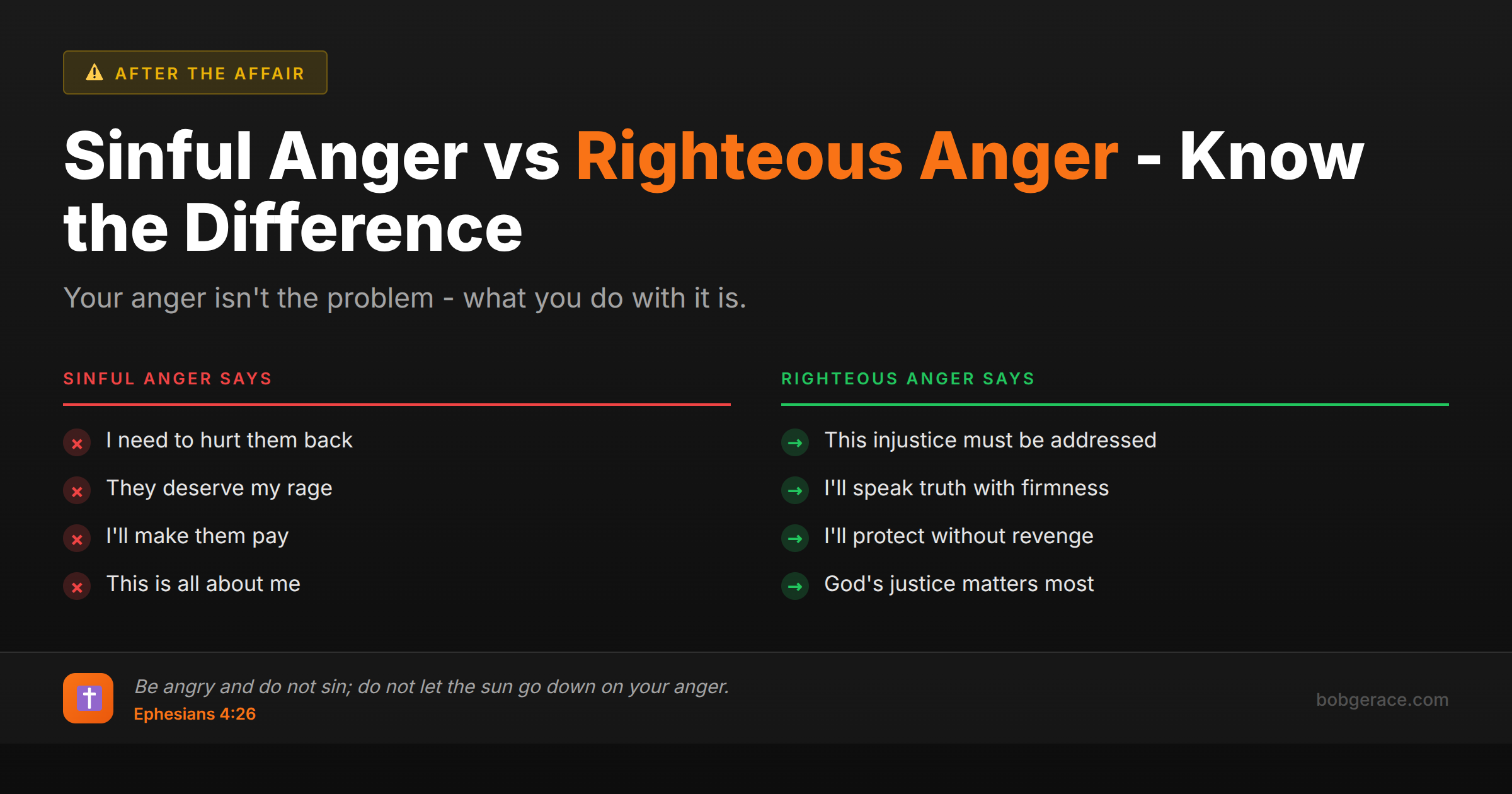
Righteous anger is anger that aligns with God's character and justice - it's anger at sin, betrayal, and injustice rather than selfish anger. The key is channeling this anger toward restoration rather than destruction. You handle it without sin by acknowledging it honestly before God, setting clear boundaries, and using that emotional energy to pursue what's right rather than revenge. This means speaking truth with firmness but not cruelty, taking protective action without being vindictive, and maintaining your integrity while addressing the wrong that's been done. Your anger can actually fuel righteous action when submitted to God's wisdom and timing.
The Full Picture
When your wife has been involved with another man, anger is not only natural - it's appropriate. There's a massive difference between selfish anger and righteous anger, and understanding this distinction is crucial for your healing and your marriage's future.
Righteous anger emerges from violated sacred boundaries. Your marriage covenant has been broken. Trust has been shattered. The very foundation of your relationship has been attacked. This isn't about your ego being bruised - this is about something holy being desecrated. God himself experiences anger when covenants are broken, when the vulnerable are harmed, when his design for relationships is trampled.
But here's where most men go wrong: they let righteous anger morph into sinful anger. Righteous anger seeks justice, restoration, and protection of what's sacred. Sinful anger seeks revenge, destruction, and self-gratification. Righteous anger is controlled and purposeful. Sinful anger is explosive and chaotic.
The challenge is that both types of anger feel identical in your body. Your heart pounds, your jaw clenches, your mind races with scenarios of confrontation. The physical sensations don't distinguish between righteous and sinful anger - only your choices do.
Your righteous anger can actually serve your marriage if you handle it correctly. It can fuel your determination to fight for what's right, establish healthy boundaries, and refuse to enable destructive behavior. It can give you the strength to have difficult conversations, make hard decisions, and stand firm when pressure mounts to just "get over it."
The goal isn't to eliminate your anger - it's to steward it wisely. Your anger is telling you something important: this matters, this is wrong, and action is required.
What's Really Happening
From a clinical perspective, what you're experiencing is a complex emotional response to betrayal trauma. Your anger serves multiple psychological functions that are actually adaptive and necessary for healing.
Your anger is protecting your psychological integrity. When core beliefs about your marriage, your worth, and your safety are shattered, anger mobilizes your emotional resources to rebuild //blog.bobgerace.com/extended-family-boundaries-marriage-fortress/:boundaries and restore a sense of control. This is your psyche's way of saying, "This violation will not be tolerated or normalized."
Neurologically, you're dealing with an activated threat response system. The betrayal has triggered your amygdala - the brain's alarm system - which floods your body with stress hormones. Your anger is actually your nervous system's attempt to regain equilibrium and prepare for protective action.
However, there's a critical window where healthy anger can become destructive. Research shows that when anger is suppressed or expressed inappropriately, it can lead to depression, anxiety, and relationship deterioration. The key is what we call "constructive anger expression" - using the emotional energy to create positive change rather than destruction.
Healthy anger processing involves three components: acknowledgment (recognizing and validating your anger), analysis (understanding what specifically triggered it and what needs to change), and action (taking constructive steps that align with your values and goals). Men who successfully navigate betrayal trauma learn to use their anger as fuel for rebuilding rather than revenge.
Your anger also serves as a compass pointing toward your deepest values. The intensity of your emotional response reflects how much your marriage and commitment mean to you. This emotional intensity, when properly channeled, can become the driving force behind genuine healing and restoration.
What Scripture Says
Scripture doesn't condemn anger - it provides a framework for handling it righteously. The Bible shows us that anger itself isn't sin, but our response to anger can either honor God or dishonor Him.
"Be angry and do not sin; do not let the sun go down on your anger." (Ephesians 4:26) This verse gives us explicit permission to be angry while commanding us not to let that anger lead us into sin. Notice it doesn't say "don't be angry" - it assumes you will be angry and gives you boundaries for handling it.
"The anger of man does not produce the righteousness of God." (James 1:20) Human anger, when driven by selfish motives, cannot achieve God's purposes. But this verse distinguishes between man's anger and God's righteous anger, suggesting there's a type of anger that does align with God's righteousness.
"A man of wrath stirs up strife, and one given to anger causes much transgression." (Proverbs 29:22) This warns against being controlled by anger rather than controlling your anger. The issue isn't the emotion itself but being enslaved to it.
"Refrain from anger, and forsake wrath! Fret not yourself; it tends only to evil." (Psalm 37:8) When anger becomes consuming worry and vengeful planning, it leads to evil. But when anger motivates you to pursue justice and protection, it serves righteousness.
"Love is patient and kind; love is not jealous or boastful; it is not arrogant or rude. Love does not insist on its own way; it is not irritable or resentful." (1 Corinthians 13:4-5) Even righteous anger must be expressed through the filter of love - seeking the highest good for all involved, including consequences that lead to repentance and restoration.
Jesus himself displayed righteous anger when he cleansed the temple (Matthew 21:12-13), showing us that anger at sin and injustice can be holy when it seeks to restore God's order rather than serve selfish interests.
What To Do Right Now
-
1
Pause and pray before speaking or acting - Give God access to your anger before you give anyone else access to it. Ask Him to show you the difference between righteous conviction and selfish rage.
-
2
Identify what specifically triggered your anger - Write down exactly what happened and why it violates your values. This helps you address the real issue rather than reacting to secondary emotions like fear or hurt.
-
3
Set a 24-hour rule for major decisions - Righteous anger can fuel good decisions, but it needs time to separate from adrenaline and emotion. Sleep on it, pray about it, then act with clarity.
-
4
Channel anger into protective action, not punitive action - Use your emotional energy to establish boundaries, have honest conversations, and take steps that protect your marriage rather than punish your spouse.
-
5
Speak truth with controlled intensity - Your anger can give weight to your words without making them weapons. Practice saying what needs to be said with firmness but without cruelty.
-
6
Seek wise counsel before taking irreversible steps - Find a mature Christian friend, pastor, or counselor who can help you discern whether your planned actions align with righteousness or revenge.
Related Questions
Need Help Processing Your Anger?
Working through righteous anger requires wisdom and guidance. Don't navigate this alone when professional support can help you channel your emotions constructively.
Get Support →