How do I stay connected while enforcing boundaries?
6 min read
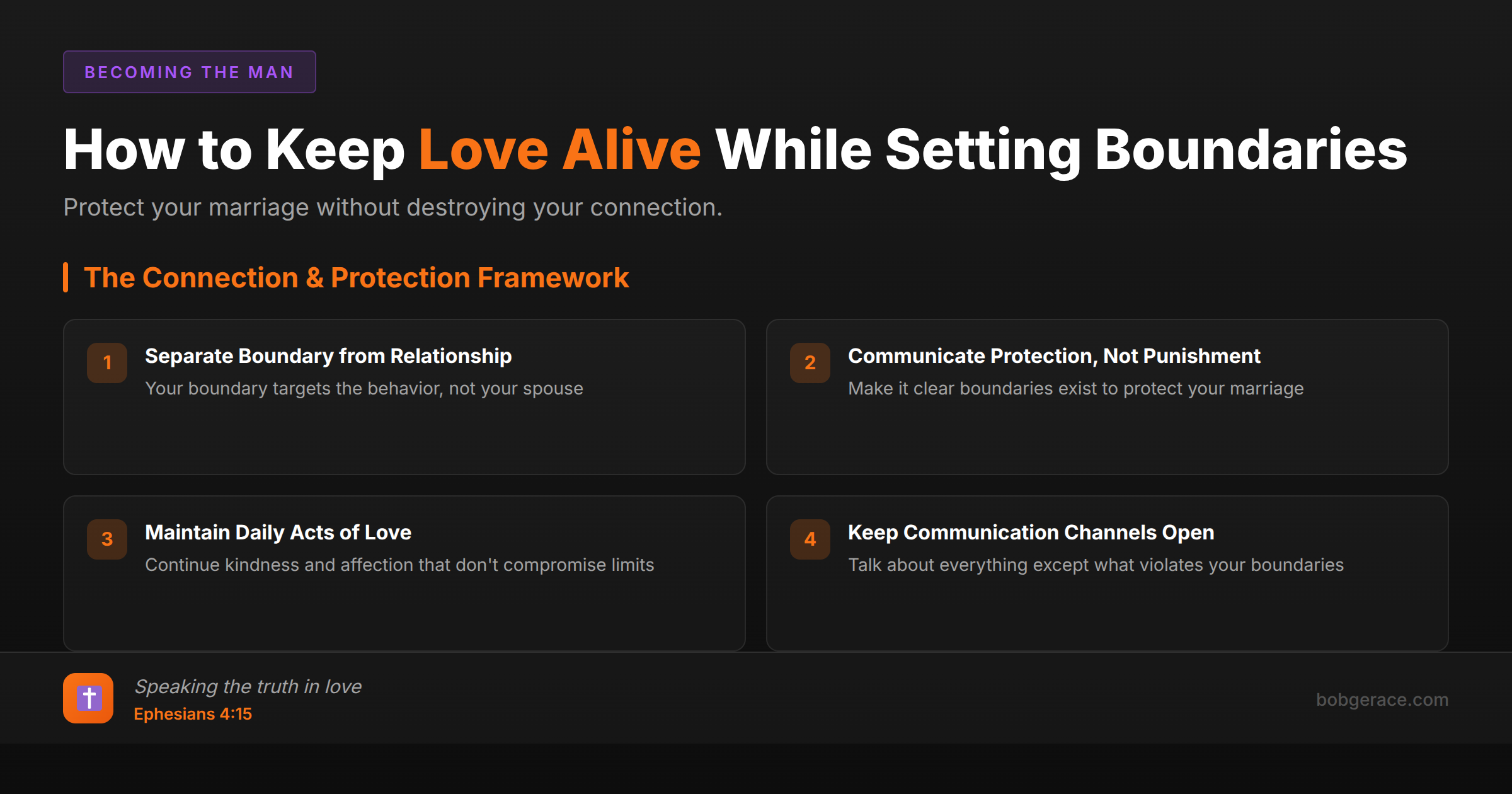
Staying connected while enforcing boundaries requires a delicate balance of firmness and love. You can maintain emotional intimacy by clearly communicating that your boundaries exist to protect your marriage, not punish your spouse. Express your feelings openly while remaining consistent with your limits. The key is separating the boundary from the relationship itself. Your boundary addresses the behavior or situation involving another man, but your love and commitment to your spouse remains constant. Make this distinction clear through your words and actions. Continue daily acts of kindness, maintain physical affection when appropriate, and keep communication channels open about everything except what violates your established boundaries.
The Full Picture
When another man enters your marriage picture, you're facing one of the most challenging relationship dynamics possible. You need boundaries to protect your marriage, but you also desperately want to stay connected to your spouse. This creates what feels like an impossible tension.
The truth is, healthy boundaries actually create better connection, not less. But it doesn't feel that way initially. When you're enforcing a boundary about contact with another man, your spouse might withdraw, get angry, or accuse you of being controlling. You might feel like you're losing them completely.
Here's what's really happening: boundaries create safety, and safety allows for authentic intimacy. Without boundaries, you're both operating in chaos - you're anxious and hypervigilant, while your spouse is likely confused about where they stand. Nobody can connect deeply in that environment.
The connection you maintain while enforcing boundaries looks different from before. It's more intentional, more honest, and often more vulnerable. You're not pretending everything is fine while seething inside. Instead, you're saying, "I love you enough to fight for us, and that means I won't accept certain behaviors."
This requires exceptional emotional maturity from both of you. You must learn to hold two truths simultaneously: you love your spouse deeply, and you won't tolerate behavior that damages your marriage. Your spouse must learn that your boundaries aren't punishment - they're an invitation back to authentic intimacy.
The goal isn't to control your spouse's every move or emotion. It's to create an environment where real connection can flourish again, free from the toxicity that another man's involvement brings to your relationship.
What's Really Happening
From a clinical perspective, you're navigating what we call "secure functioning" while under extreme relational stress. When another man is involved, your attachment system is in overdrive, triggering fight-or-flight responses that make connection feel impossible.
Boundaries serve a crucial psychological function here - they help regulate both partners' nervous systems. Without clear boundaries, you're both living in chronic activation. You're hypervigilant about every text, every conversation, every interaction. Your spouse is dealing with their own internal conflict, often feeling torn between competing attachments.
The key insight is that boundaries must be relational, not punitive. Research shows that successful boundary-setting in crisis situations includes three elements: clarity about the specific behavior, clear consequences, and consistent reassurance about the underlying relationship. You're essentially saying, "This behavior stops, here's what happens if it doesn't, and I'm still committed to us."
Neurologically, your spouse's brain is likely in a state of cognitive dissonance when another man is involved. Part of them knows this threatens your marriage, while another part may be experiencing the dopamine rush of new connection. Boundaries help interrupt these neural pathways and create space for healthier attachment patterns to re-emerge.
The attachment repair happens gradually as you demonstrate that boundaries and love coexist. Your consistent enforcement, paired with ongoing emotional availability, helps your spouse's nervous system learn that safety and connection are possible within your marriage's structure.
What Scripture Says
Scripture provides a clear framework for balancing love and boundaries, especially when protecting the sacred covenant of marriage. Ephesians 4:15 calls us to speak "the truth in love," which perfectly captures the heart of boundary-setting - you're addressing harmful behavior while maintaining your loving commitment.
Matthew 18:15-17 gives us Jesus's model for addressing harmful behavior: "If your brother or sister sins, go and point out their fault, just between the two of you." This isn't about punishment - it's about restoration. Your boundaries serve the same purpose, creating a pathway back to authentic intimacy.
Proverbs 27:6 reminds us that "wounds from a friend can be trusted." Sometimes the most loving thing you can do is say no to behavior that's destroying your marriage. Your spouse might not understand this initially, but faithful boundaries demonstrate deeper love than permissive enabling.
1 Corinthians 13:4-7 describes love as patient and kind, but also notes that "it does not dishonor others." When another man becomes inappropriate priority in your spouse's life, this dishonors your marriage covenant. Biblical love doesn't tolerate dishonor - it addresses it directly while maintaining commitment to the person.
Galatians 6:1-2 instructs us to "restore gently" while "carrying each other's burdens." This is your calling - to restore your marriage relationship through loving boundaries while still supporting your spouse through their struggle. The goal is always restoration, not punishment, but restoration requires clear limits on destructive behavior.
What To Do Right Now
-
1
Clearly communicate that your boundaries protect your marriage, not punish your spouse - have this conversation when you're both calm
-
2
Continue daily acts of kindness and affection that don't compromise your established boundaries
-
3
Schedule regular check-ins to discuss how you're both feeling about the relationship, separate from boundary violations
-
4
Express appreciation when your spouse respects your boundaries, reinforcing positive behavior
-
5
Maintain your own emotional availability while staying firm on non-negotiables about contact with the other man
-
6
Seek couples counseling to have professional guidance in balancing connection and boundaries during this crisis
Related Questions
Get Professional Help Balancing Connection and Boundaries
Navigating boundaries while maintaining connection requires expert guidance. Don't try to figure this out alone when your marriage is at stake.
Work With Me →