What does she need to release the resentment?
6 min read
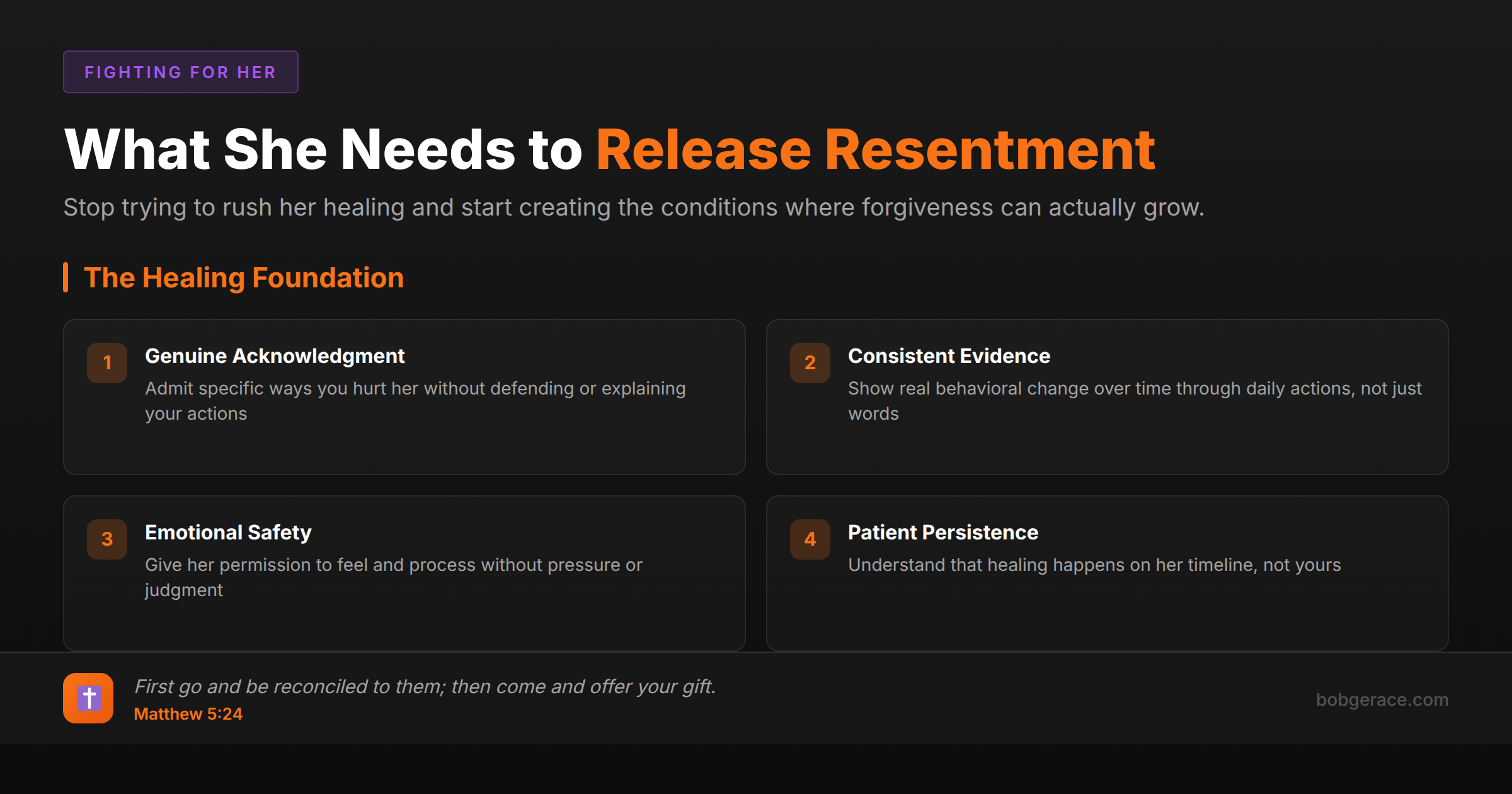
She needs three fundamental things to release resentment: genuine acknowledgment of the pain caused, consistent evidence of real change over time, and the safety to process her emotions without judgment or pressure. This isn't about one conversation or apology - it's about creating sustained conditions where healing can naturally occur. The mistake most husbands make is rushing this process or trying to logic her out of her feelings. Resentment is emotional scar tissue that formed as protection. She needs to feel truly seen, heard, and validated before that protection becomes unnecessary. Only then can genuine forgiveness and restoration begin.
The Full Picture
Resentment isn't something your wife chose or something she's holding onto to punish you. It's an emotional response to repeated hurt that has crystallized over time. Think of it as emotional scar tissue - it formed to protect her heart from further damage.
Here's what actually needs to happen for that resentment to dissolve:
First, she needs genuine acknowledgment - not just "I'm sorry you feel that way" but "I see how my actions hurt you, and I understand why you built these walls." She needs to know you truly comprehend the impact of your behavior, not just the facts of what happened.
Second, she needs evidence of sustainable change. One good week doesn't erase years of disappointment. She's been trained by experience to expect letdown, so she needs consistent proof over months that things are genuinely different. This is why the "honeymoon phase" after a marriage crisis rarely lasts - real change takes time to demonstrate.
Third, she needs emotional safety. This means space to feel angry, hurt, or disappointed without you getting defensive, shutting down, or trying to fix it immediately. She needs permission to heal at her own pace without pressure or timelines.
Fourth, she needs to see true remorse, not just regret. Regret says "I wish this hadn't happened because it's causing me problems." Remorse says "I'm grieved that I caused you this pain, regardless of how it affects me."
The process isn't linear. Some days she'll seem more open, others she'll pull back. This isn't manipulation - it's normal healing. Your consistency during her inconsistency is what proves the change is real.
What's Really Happening
From a clinical perspective, resentment serves a protective function in relationships. When someone experiences repeated relational injuries without adequate repair, the brain essentially creates an emotional firewall to prevent further harm.
For women specifically, research shows that resentment often builds differently than it does for men. Women tend to be more attuned to relational nuances and emotional safety cues. When these safety signals are repeatedly violated, the nervous system shifts into a chronic state of vigilance.
To release resentment, she needs what we call "corrective emotional experiences" - new interactions that contradict the old patterns her brain learned to expect. This requires:
Neuroplasticity activation through consistent positive experiences. The brain needs to literally rewire its expectations about the relationship. This takes approximately 90 days of consistent new patterns to begin, and 6-12 months to solidify.
Validation of her emotional experience. Her feelings need to be normalized, not pathologized. When partners say "you need to just get over it," they're actually reinforcing the protective resentment by invalidating her reality.
Co-regulation opportunities. She needs to experience your calm, consistent presence during her emotional activation. When you remain grounded while she processes difficult emotions, it helps regulate her nervous system.
The key insight is that resentment isn't a choice she's making - it's an automatic protective response. Trying to convince her to "choose forgiveness" without addressing the underlying safety needs is like asking someone to remove their coat while they're still standing in the cold.
What Scripture Says
God's design for healing relationships gives us a clear framework for releasing resentment. The Bible doesn't minimize the reality of hurt or rush the process of healing.
Matthew 5:23-24 teaches us the importance of making things right: *"Therefore, if you are offering your gift at the altar and there remember that your brother or sister has something against you, leave your gift there in front of the altar. First go and be reconciled to them; then come and offer your gift."* The responsibility for initiating reconciliation lies with the one who caused the offense.
Luke 17:3-4 shows us the process: *"If your brother or sister sins against you, rebuke them; and if they repent, forgive them. Even if they sin against you seven times in a day and seven times come back to you saying 'I repent,' you are to forgive them."* Notice that repentance precedes forgiveness - genuine acknowledgment and turning from the behavior.
Ephesians 4:32 calls us to: *"Be kind and compassionate to one another, forgiving each other, just as in Christ God forgave you."* But this follows verse 31, which says to *"Get rid of all bitterness, rage and anger, brawling and slander, along with every form of malice."* The process involves removing the conditions that create resentment.
Psalm 147:3 reminds us that *"He heals the brokenhearted and binds up their wounds."* God acknowledges that wounds need binding - they don't just disappear because we decide they should.
Galatians 6:1 instructs: *"Brothers and sisters, if someone is caught in a sin, you who live by the //blog.bobgerace.com/spiritual-warfare-christian-marriage-destruction/:Spirit should restore that person gently."* The emphasis is on gentle restoration, not forced compliance.
God's pattern is clear: acknowledgment of wrong, genuine repentance, patient restoration, and gentle healing. Resentment dissolves in an environment of safety, truth, and consistent love.
What To Do Right Now
-
1
Stop pressuring her to "get over it" and instead ask "What do you need from me to feel safe again?"
-
2
Write a detailed acknowledgment letter admitting specific ways your actions hurt her, without defending or explaining
-
3
Identify three concrete behavioral changes you'll make and ask for her input on what changes matter most to her
-
4
Create consistent daily practices that demonstrate your commitment (prayer time, check-ins, acts of service)
-
5
Give her permission to have bad days and difficult emotions without taking it personally or trying to fix it
-
6
Seek professional help or pastoral counseling to guide you through the long-term process of rebuilding trust
Related Questions
- What is 'accumulated resentment'?
- How does unaddressed hurt compound?
- What does genuine repair look like for old wounds?
- What is an 'apology' vs. 'repair' vs. 'attunement'?
- What is 'felt understanding' and how do I give it?
- Can old attachment injuries be healed?
- What does real forgiveness look like?
- What's the difference between forgiveness and reconciliation?
- What are 'attachment injuries' and how many did I cause?
- What does 'taking responsibility' actually look like?
Also find Bob on
Subscribe for weekly videos on Christian marriage.
She Knows When You're Guessing
You can't script this kind of healing. A coach who knows your marriage helps you read what she actually needs right now—not what worked for someone else's wife.
Talk to Bob →