What is 'release' vs. 'reconciliation'?
6 min read
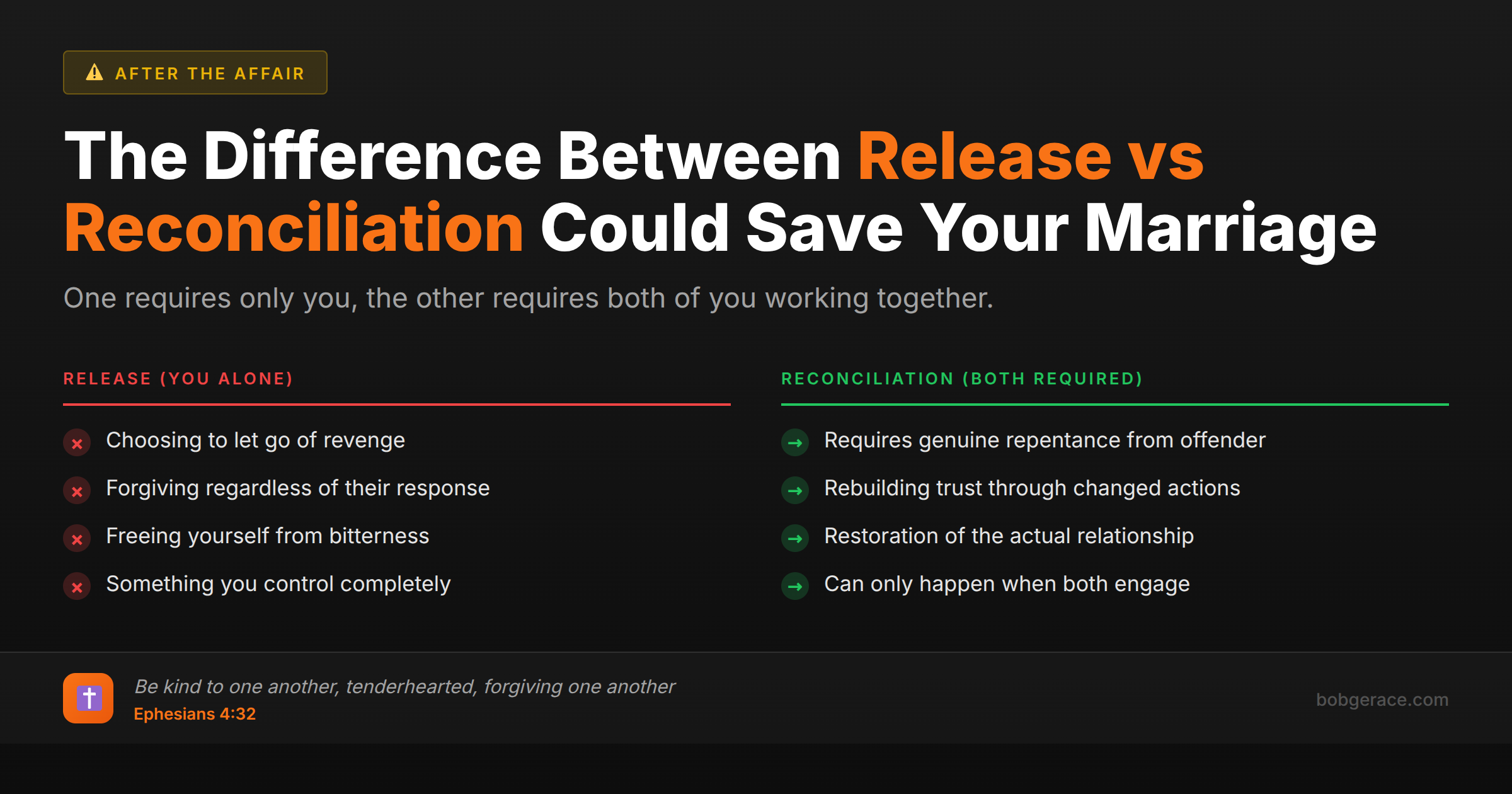
Release and reconciliation are two distinct biblical concepts that many couples confuse. Release is the unilateral act of letting go of your right to revenge and choosing to forgive - it's something you do regardless of the other person's response. You release someone from the debt they owe you emotionally and spiritually, freeing yourself from bitterness. Reconciliation, however, requires two people. It's the restoration of relationship that happens when both parties engage in genuine repentance, confession, and rebuilding trust. You can always choose to release someone, but reconciliation requires the offending party to acknowledge wrongdoing, demonstrate genuine remorse, and commit to change. Understanding this difference is crucial for your emotional health and making wise decisions about your marriage's future.
The Full Picture
Here's what I see happening in marriages all the time: Someone gets hurt, and they're told to "just forgive and move on." But nobody explains that forgiveness has different levels and outcomes. This confusion keeps couples stuck in unhealthy cycles.
Release is your personal decision to let go of anger, resentment, and the desire for revenge. It's a gift you give yourself, not your spouse. When you release someone, you're saying, "I'm not going to let this poison me anymore." You can release someone who's never apologized, who's still hurting you, or who's completely unrepentant. This is about your heart's freedom, not theirs.
Reconciliation is completely different. It's the rebuilding of relationship, and it requires participation from both people. True reconciliation involves acknowledgment of wrongdoing, genuine remorse, a commitment to change, and time to rebuild trust through consistent actions.
Here's the critical part: You can release without reconciling. In fact, sometimes release is what allows you to see clearly whether reconciliation is wise or even possible. Some situations require release with boundaries. Others allow for release that leads to full reconciliation.
The pressure to reconcile quickly often comes from misunderstanding what forgiveness actually requires. Churches, families, and even counselors sometimes push for premature reconciliation, which can be dangerous and re-traumatizing. Wise forgiveness knows the difference and chooses the appropriate response.
What's Really Happening
From a psychological perspective, conflating release and reconciliation creates significant therapeutic problems. When clients are pressured to reconcile without proper groundwork, we often see trauma responses, anxiety, and a erosion of healthy boundaries.
Release is an internal process that activates the brain's natural healing mechanisms. When we choose to let go of resentment, we literally change our neural pathways and reduce the stress hormones that keep us in fight-or-flight mode. This is why release can happen unilaterally - it's about your brain's health, not the relationship's status.
Reconciliation, however, requires what we call 'earned security.' The offending party must demonstrate through consistent actions that they're safe to trust again. Without this process, attempting reconciliation often triggers hypervigilance and emotional dysregulation. The wounded person's nervous system remains activated because the threat hasn't actually been addressed.
I frequently see clients who've been told that maintaining boundaries means they haven't 'really forgiven.' This is psychologically harmful and often spiritually abusive. Healthy boundaries after betrayal aren't evidence of unforgiveness - they're evidence of wisdom and self-care.
The most successful reconciliations I witness happen when both parties understand that release comes first, followed by a careful, intentional process of //blog.bobgerace.com/trust-rebuilding-marriage-patient-work/:rebuilding trust. Rushing this process typically results in surface-level peace that crumbles under pressure.
What Scripture Says
Scripture makes clear distinctions between these concepts, though they're often taught together. Understanding what God's Word actually says brings tremendous clarity.
On Release and Forgiveness: *"Be kind to one another, tenderhearted, forgiving one another, as God in Christ forgave you"* (Ephesians 4:32). This command doesn't require the other person's participation - it's something you choose to do.
*"And whenever you stand praying, forgive, if you have anything against anyone, so that your Father also who is in heaven may forgive you your trespasses"* (Mark 11:25). Notice this is about your heart before God, not about restoring relationship.
On Reconciliation and Accountability: *"If your brother sins against you, go and tell him his fault, between you and him alone. If he listens to you, you have gained your brother"* (Matthew 18:15). Reconciliation requires the other person to 'listen' - to receive correction and respond appropriately.
*"Pay attention to yourselves! If your brother sins, rebuke him, and if he repents, forgive him"* (Luke 17:3). The Greek word for 'repents' here means to change one's mind and direction. True reconciliation requires genuine repentance.
On Wisdom and Boundaries: *"Do not give dogs what is holy, and do not throw your pearls before pigs"* (Matthew 7:6). Jesus himself taught about appropriate boundaries and not exposing yourself to those who would harm what's precious.
God models both concepts perfectly: He offers forgiveness freely, but reconciliation with Him requires repentance, confession, and turning from sin.
What To Do Right Now
-
1
Assess your heart honestly - Are you holding onto anger, resentment, or desire for revenge? If so, work on release first, regardless of your spouse's response.
-
2
Identify what actually happened - Write down the specific actions that caused harm, without minimizing or exaggerating. This clarity is essential for both release and any potential reconciliation.
-
3
Determine if reconciliation is appropriate - Has your spouse acknowledged wrongdoing, shown genuine remorse, and demonstrated commitment to change through actions, not just words?
-
4
Set healthy boundaries while you process - Protect yourself emotionally and physically while you work through release. This isn't punishment; it's wisdom and self-care.
-
5
Don't rush the process - Release takes time, and reconciliation takes even longer. Resist pressure from others to 'get over it' or reconcile quickly without proper foundation.
-
6
Seek wise counsel - Get guidance from mature believers who understand both biblical forgiveness and healthy relationship dynamics. Don't walk this path alone.
Related Questions
- What does biblical forgiveness require of me?
- Can I forgive without trusting?
- What's the difference between forgiveness and reconciliation?
- Does forgiveness mean no consequences?
- How do I forgive when she hasn't fully repented?
- What does forgiveness require from the offender?
- What is a boundary vs. an ultimatum?
- How do I hold boundaries without hardening my heart?
- What does grace look like practically?
- How do I honor her autonomy while fighting for us?
Also find Bob on
Subscribe for weekly videos on Christian marriage.
Not Sure How This Applies to Your Marriage?
Release and reconciliation look different in every story. A coach who knows your situation can help you discern which step you're actually facing right now.
Talk to Bob →