How will he handle my doubt if he's genuine?
6 min read
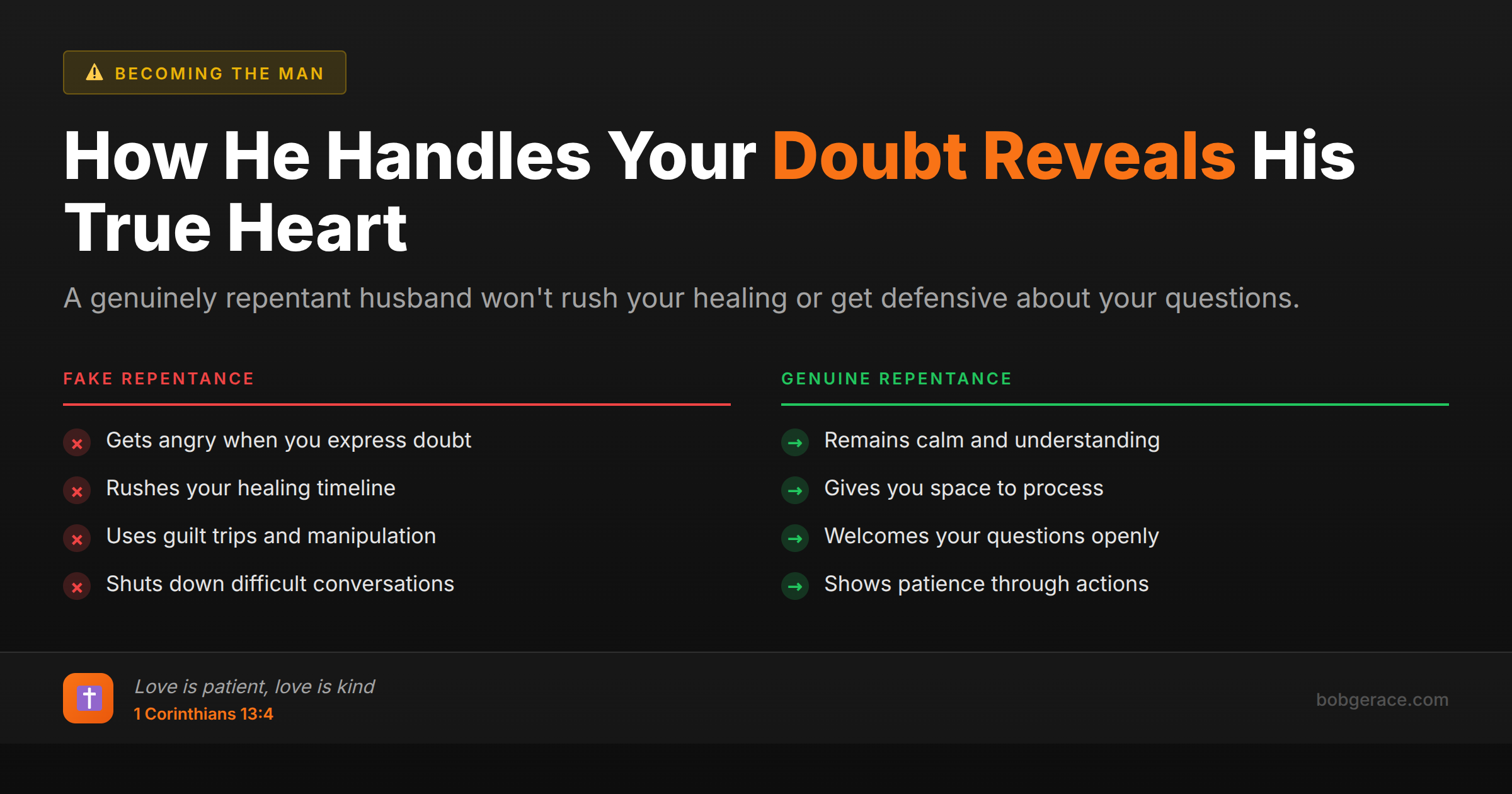
A genuinely repentant husband will handle your doubt with patience, understanding, and consistency. He won't get defensive, angry, or try to rush your healing process. Instead, he'll acknowledge that your doubt is a natural response to whatever breach of trust occurred. He'll demonstrate his genuineness through sustained actions, not just words. You'll see him maintaining transparency, following through on commitments, and accepting that rebuilding trust takes time. He won't manipulate you with guilt trips or emotional pressure, but will give you space to process while consistently showing up with integrity.
The Full Picture
When trust has been broken in marriage, doubt becomes a natural protective mechanism. Your heart and mind are doing exactly what they should do - protecting you from further harm while assessing whether it's safe to trust again.
A genuine husband understands this completely. He recognizes that your doubt isn't an attack on his character, but a reasonable response to whatever happened. He won't take it personally because he's focused on your healing, not his own comfort.
You'll notice several key differences in how a genuine man responds to doubt versus someone who's just saying what you want to hear. A genuine husband will:
- Welcome your questions rather than deflecting them - Maintain consistency in his responses over time - Show patience with your healing timeline - Take responsibility without making excuses - Demonstrate change through sustained action
Contrast this with manipulative responses like getting angry when questioned, rushing you to "get over it," or making you feel guilty for not trusting immediately. These reactions reveal someone more concerned with their own comfort than your wellbeing.
The genuine husband also understands that rebuilding trust is a process, not an event. He won't expect your doubt to disappear overnight just because he's apologized or made promises. Instead, he'll recognize that trust is rebuilt through hundreds of small, consistent actions over time.
Most importantly, he'll maintain this patient, understanding approach even when it's difficult for him. His genuineness will be proven not just in the good moments, but in how he handles the frustrating, uncomfortable conversations about trust.
What's Really Happening
From an attachment perspective, doubt after betrayal or broken trust represents a healthy adaptive response. Your attachment system is essentially running a safety assessment - gathering data to determine whether this person is truly safe to depend on again.
A genuinely repentant partner will understand this instinctively, even if they can't articulate the psychology behind it. They'll recognize that your doubt serves a protective function and won't try to short-circuit that process.
What we see clinically is that authentic change involves what we call 'earned security.' This means the offending partner must demonstrate consistent, trustworthy behavior over time to earn back secure attachment. They can't demand it, manipulate it, or rush it.
The genuine partner will also show emotional regulation when faced with your doubt. Instead of becoming dysregulated themselves - getting defensive, angry, or withdrawn - they'll maintain a calm, reassuring presence. This co-regulation actually helps your nervous system begin to feel safe again.
We also observe that genuine partners will often seek their own help and support rather than making you responsible for managing their emotions about your doubt. They'll work with counselors, mentors, or accountability partners to process their own feelings, ensuring they can show up for you without making their discomfort your problem.
This pattern of behavior - patience, consistency, emotional regulation, and taking personal responsibility - creates the conditions where secure attachment can gradually be restored.
What Scripture Says
Scripture provides clear guidance on how genuine repentance and love should respond to doubt and broken trust. The Bible doesn't expect blind trust but rather demonstrates that trust must be earned and proven over time.
Love is patient: "Love is patient, love is kind. It does not envy, it does not boast, it is not proud" (1 Corinthians 13:4). A husband walking in genuine love will demonstrate patience with your doubt because love itself is patient.
Gentleness in restoration: "Brothers and sisters, if someone is caught in a sin, you who live by the Spirit should restore that person gently" (Galatians 6:1). If Scripture calls for gentleness in restoring others, how much more should a husband be gentle with his wife's healing process?
Proving genuine repentance: "Produce fruit in keeping with repentance" (Matthew 3:8). Jesus himself taught that genuine repentance must be demonstrated through sustained action, not just words. Your husband should understand this principle.
Wisdom in trust: "The simple believe anything, but the prudent give thought to their steps" (Proverbs 14:15). Scripture actually commends careful discernment rather than naive trust. Your caution is wisdom, not weakness.
Bearing with one another: "Be completely humble and gentle; be patient, bearing with one another in love" (Ephesians 4:2). A genuine husband will bear with your doubt as part of loving you well during this difficult season.
Testing the spirits: "Dear friends, do not believe every spirit, but test the spirits to see whether they are from God" (1 John 4:1). If we're called to test spiritual matters, certainly we should test whether someone's repentance and change are genuine.
Scripture consistently supports the idea that trust should be rebuilt through proven character over time, and that a loving response includes patience with the process.
What To Do Right Now
-
1
Pay attention to his immediate response when you express doubt - does he get defensive or remain calm and understanding?
-
2
Notice whether his words match his actions consistently over time, not just in isolated moments
-
3
Observe how he handles your questions - does he welcome them or try to shut down the conversation?
-
4
Watch for signs of emotional manipulation like guilt-trips, rushing your timeline, or making your doubt about his feelings
-
5
Look for evidence that he's taking personal responsibility for his own emotional processing rather than making you manage his discomfort
-
6
Trust your instincts - if something feels off about his responses, don't dismiss that feeling just because he's saying the right words
Related Questions
Need Help Discerning Genuine Change?
Don't navigate this alone. I'll help you recognize the difference between genuine repentance and empty promises.
Get Support →